
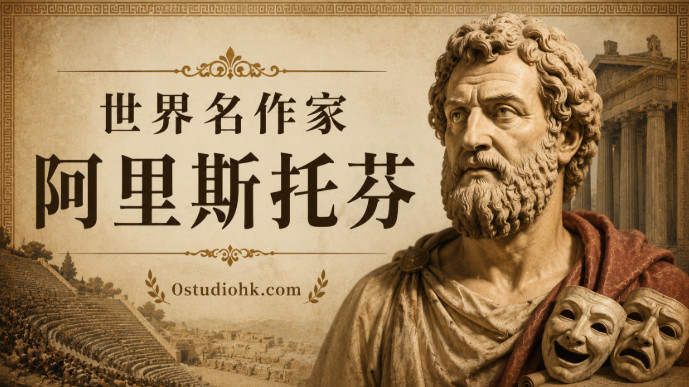
阿里斯托芬是古希臘最偉大的喜劇作家,也是西方戲劇史上最重要的諷刺文學代表人物。他以幽默、機智與大膽批判聞名,透過戲劇反映政治、戰爭與人性,開創喜劇藝術的新境界。
Aristophanes transformed comedy into a powerful form of social commentary. Through wit, satire, and unforgettable characters, he challenged political leaders, questioned public opinion, and created plays that remain surprisingly relevant more than two thousand years later.
中文版本
阿里斯托芬(Aristophanes,約公元前446年至前386年)出生於古希臘雅典,正值雅典民主制度最繁榮,同時也是文化與哲學高度發展的黃金時代。然而,這段繁榮並沒有持續太久,雅典很快陷入長達數十年的伯羅奔尼撒戰爭,人民飽受戰亂與政治鬥爭之苦。阿里斯托芬正是在這樣的時代背景下展開創作,他並不像悲劇作家探討命運與神祇,而是以尖銳的諷刺筆法描寫現實社會,把政客、將軍、哲學家甚至整個民主制度搬上舞台,讓觀眾在笑聲中反思社會問題,因此被後世尊稱為「喜劇之父」。歷史記載,他一生創作約四十部喜劇,現存完整作品十一部,是研究古希臘喜劇最重要的文學遺產。他的作品融合歌唱、舞蹈、誇張表演與機智對話,既充滿娛樂性,也具有深刻思想。其中,《利西翠妲》是最著名的代表作之一,故事描寫希臘婦女為了迫使男人停止戰爭,決定集體拒絕與丈夫同房,希望藉此促成和平。這部作品以幽默方式反映人民厭倦戰爭,也展現女性智慧與勇氣,至今仍被世界各地劇團重新演出。《雲》則將當時著名哲學家蘇格拉底塑造成一位古怪老師,透過誇張情節諷刺新興教育與辯論技巧,引發後世許多討論。雖然戲劇中的蘇格拉底並非歷史真實形象,但作品成功反映當時社會對思想變革的疑慮。《鳥》描寫兩位雅典人離開現實世界,在天空建立理想國度,希望逃離政治與戰爭,最終卻發現新的權力體制同樣會產生腐敗,表達人類難以真正擺脫權力與欲望的循環。《青蛙》則讓酒神狄俄尼索斯前往冥界,希望尋找偉大的悲劇作家重振雅典文化,作品同時向埃斯庫羅斯與歐里庇得斯兩位悲劇大師致敬,也是世界文學史最早探討文學評論與藝術價值的重要作品之一。阿里斯托芬最大的特色,在於他毫不畏懼批評當權者。他經常直接點名政治人物,揭露官僚腐敗、戰爭利益、民眾盲從及社會荒謬,因此部分作品曾引起強烈爭議。然而,他相信喜劇的真正價值,不只是讓觀眾發笑,而是透過笑聲提醒人們保持理性,勇於質疑權威。他善於結合幻想與現實,讓鳥會說話、青蛙唱歌、神明走入人間,看似荒誕的情節,其實映照真實世界的人性與制度。他的作品語言生動、節奏明快,即使相隔兩千多年,許多諷刺內容依然令人產生共鳴。阿里斯托芬晚年仍持續創作,約於公元前386年逝世。他留下的不只是古希臘喜劇,更建立了政治諷刺、社會批判與黑色幽默的文學傳統,深刻影響後來的羅馬戲劇、莎士比亞喜劇以及現代舞台劇、電影與諷刺文學。今天,他被公認為世界戲劇史最重要的喜劇作家之一,也證明真正的幽默並非逃避現實,而是勇敢面對現實最有力的方式。
English Version
Aristophanes is celebrated as the greatest comic playwright of ancient Greece and one of the earliest masters of political satire in world literature. Born in Athens around 446 BCE, he lived during an era of extraordinary cultural achievement that also witnessed the devastating Peloponnesian War. While philosophers debated truth and generals pursued military glory, Aristophanes used the theatre to question both. His plays entertained audiences with outrageous humor while challenging powerful leaders, fashionable ideas, and public opinion. This unique combination of comedy and criticism established a dramatic tradition that continues to influence writers and performers today. Ancient sources suggest that Aristophanes composed around forty plays, eleven of which survive in complete form. These works provide an invaluable window into Athenian society, revealing its politics, customs, education, and everyday concerns through laughter rather than solemn history. His comedies blended music, dance, fantasy, and clever dialogue into lively theatrical spectacles unlike anything seen before. Among his most famous works is Lysistrata, in which the women of Greece organize a remarkable protest by refusing intimacy with their husbands until the men agree to end the war. Beneath its comic premise lies a powerful appeal for peace and a sharp criticism of endless conflict. The play remains one of the world’s most frequently performed anti-war comedies. Another celebrated work, The Clouds, presents a satirical version of Socrates as the head of a school where clever arguments triumph over truth. Although historically inaccurate, the play reflects widespread public anxiety about changing educational values and intellectual trends in Athens. In The Birds, two dissatisfied Athenians establish an imaginary city in the sky, hoping to escape the corruption of human society. Yet their utopian experiment gradually reproduces the same struggles for power they sought to leave behind, suggesting that ambition and authority remain constant features of human nature. The Frogs offers an equally imaginative journey, sending the god Dionysus to the underworld in search of a great tragedian capable of restoring Athenian culture. The resulting contest between Aeschylus and Euripides is often regarded as one of history’s earliest works of literary criticism presented through drama. Aristophanes possessed extraordinary courage as a playwright. Unlike many writers of his time, he openly criticized influential politicians, military leaders, and public institutions by name. His willingness to mock authority occasionally provoked controversy, yet it also demonstrated his belief that comedy should serve democracy by encouraging citizens to think independently. His plays frequently combined mythical creatures, talking animals, and impossible adventures with recognizable social realities, creating stories that were both entertaining and intellectually provocative. Although more than two millennia have passed since they were first performed, the themes of political ambition, misinformation, war, and human vanity remain strikingly familiar. Aristophanes died around 386 BCE, leaving behind a legacy that shaped the future of comic theatre across Europe. From Roman playwrights to Shakespeare, from satirical novels to modern political comedy, countless artists have drawn inspiration from his fearless imagination. His enduring achievement reminds audiences that laughter is not merely a source of amusement but also one of the most effective ways to question power, defend freedom of thought, and better understand the human condition.
總評
阿里斯托芬以喜劇揭露政治、戰爭與人性的矛盾,建立西方諷刺戲劇的重要傳統。他的作品證明,幽默不只是娛樂,更是推動社會反思的重要力量。
Aristophanes elevated comedy into a fearless form of social criticism. His timeless plays continue to demonstrate that wit, imagination, and laughter can expose truth as effectively as any serious work of literature.