
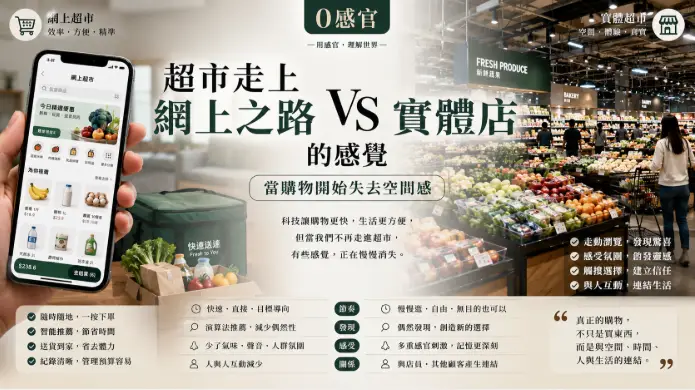
超市走上網上之路 VS 實體店的感覺|當購物開始失去空間感 | Online Supermarkets vs Physical Stores: What We Lose When Shopping Leaves the Real World | 0感官
當超市開始走向網上,購物變得更快、更方便,但有些感覺也慢慢消失了。少了走動、少了停留、少了偶然發現,我們得到效率,同時也失去了一部分生活感。
As supermarkets move online, shopping becomes faster and more efficient, yet something subtle disappears. Without movement, browsing, or unexpected discoveries, convenience may quietly replace part of the everyday experience.
中文
以前走進超市,是一種很實際的生活行為,但同時也是一種空間體驗。你會推著購物車,在貨架之間慢慢移動,看見原本沒有打算購買的東西,有時會停下來比較,有時只是單純看看。整個過程雖然平凡,但它其實包含了很多細微的感受,例如燈光、氣味、人與人之間的距離,甚至是背景聲音,這些東西平時不會特別注意,但當它們消失的時候,你才會發現,原來它們一直都是購物的一部分。當超市開始走向網上,很多事情都改變了。你不再需要真正進入空間,只要打開手機,就可以快速完成整個過程。搜尋列代替了貨架,演算法代替了走動,而推薦系統則開始取代原本那些偶然的發現。從效率來看,這種方式確實方便了很多,你不用排隊、不用搬重物,也不用花時間在通道之間移動,所有東西都變得直接而快速。但當購物開始變成一連串點擊,有些原本屬於生活的節奏,也開始慢慢消失。以前在超市裡,你可能會因為看到季節商品,而突然想改變晚餐的想法,也可能因為看到某個熟悉品牌,而想起過去的記憶。這些感覺,很難被搜尋功能取代。網上購物最大的改變,不只是形式,而是它改變了人與商品之間的關係。在實體店裡,你是「經過之後看見」,而在網上,你往往是「知道之後才搜尋」。這種差異,看似很小,但其實改變了整個購物方式。當一切都變得目標導向,人就會越來越少停留,也越來越少探索。你不再慢慢逛,而是快速完成,而當購物失去探索感,它也開始失去一部分生活感。當然,網上超市也有它的優勢,對於忙碌的人來說,它節省了大量時間,對於行動不便的人,它甚至提供了另一種自由。問題從來不在於哪一種方式比較好,而是當效率成為唯一標準之後,我們是否也慢慢失去了一些原本不容易察覺的感受。也許真正重要的,不是完全回到實體店,而是在便利與感受之間,找到一個新的平衡。當你下一次打開網上超市,也許可以想一想,你得到的是方便,還是你只是習慣了更快地完成一切。當購物不再需要走進空間,我們失去的,也許不只是空間本身,而是那些原本存在於日常之中的微小感受。
English Version
Shopping at a supermarket used to be more than a practical routine. It was also a physical experience shaped by movement, atmosphere, and unexpected moments. Walking through aisles, pausing in front of shelves, noticing unfamiliar products, or simply observing other people created a rhythm that extended beyond the act of buying. Many of these details felt ordinary and insignificant at the time, yet they quietly formed part of everyday life. The lighting, background sounds, spacing between people, and even the act of carrying a basket contributed to a sense of presence that was rarely questioned. As supermarkets increasingly move online, this experience changes fundamentally. Instead of entering a physical space, people now open an app, type keywords into a search bar, and complete purchases within minutes. Algorithms replace wandering, recommendations replace discovery, and convenience becomes the dominant value. From a practical perspective, this shift offers undeniable advantages. It saves time, removes physical effort, and allows shopping to fit seamlessly into busy schedules. For many individuals, especially those with limited mobility or demanding routines, online supermarkets provide a level of accessibility and efficiency that physical stores cannot easily match. Yet something subtle is lost in the transition. In a physical supermarket, encounters with products often happen unexpectedly. A seasonal display might inspire a meal idea, or a familiar item on a shelf could trigger a memory. These spontaneous interactions emerge naturally from moving through space. Online shopping, however, tends to be driven by intention from the start. People search for what they already know they need, reducing opportunities for exploration and surprise. This changes the relationship between individuals and products. Instead of discovering through experience, shopping becomes increasingly task-oriented and predictive. Over time, the process grows more efficient but less sensory. The issue is not that online shopping is inherently worse, but that efficiency gradually becomes the only standard by which value is measured. When speed dominates every interaction, slower forms of engagement begin to disappear. The supermarket stops being a place within everyday life and becomes another interface to complete as quickly as possible. Perhaps the real question is not whether physical stores or online platforms are better, but whether convenience alone is enough to sustain a meaningful experience. A balanced future may not require rejecting technology, but rather recognizing what should not be lost in the pursuit of efficiency. The next time you order groceries online, it may be worth considering not only what you gained in convenience, but also what quietly disappeared when shopping no longer required entering a real space.