
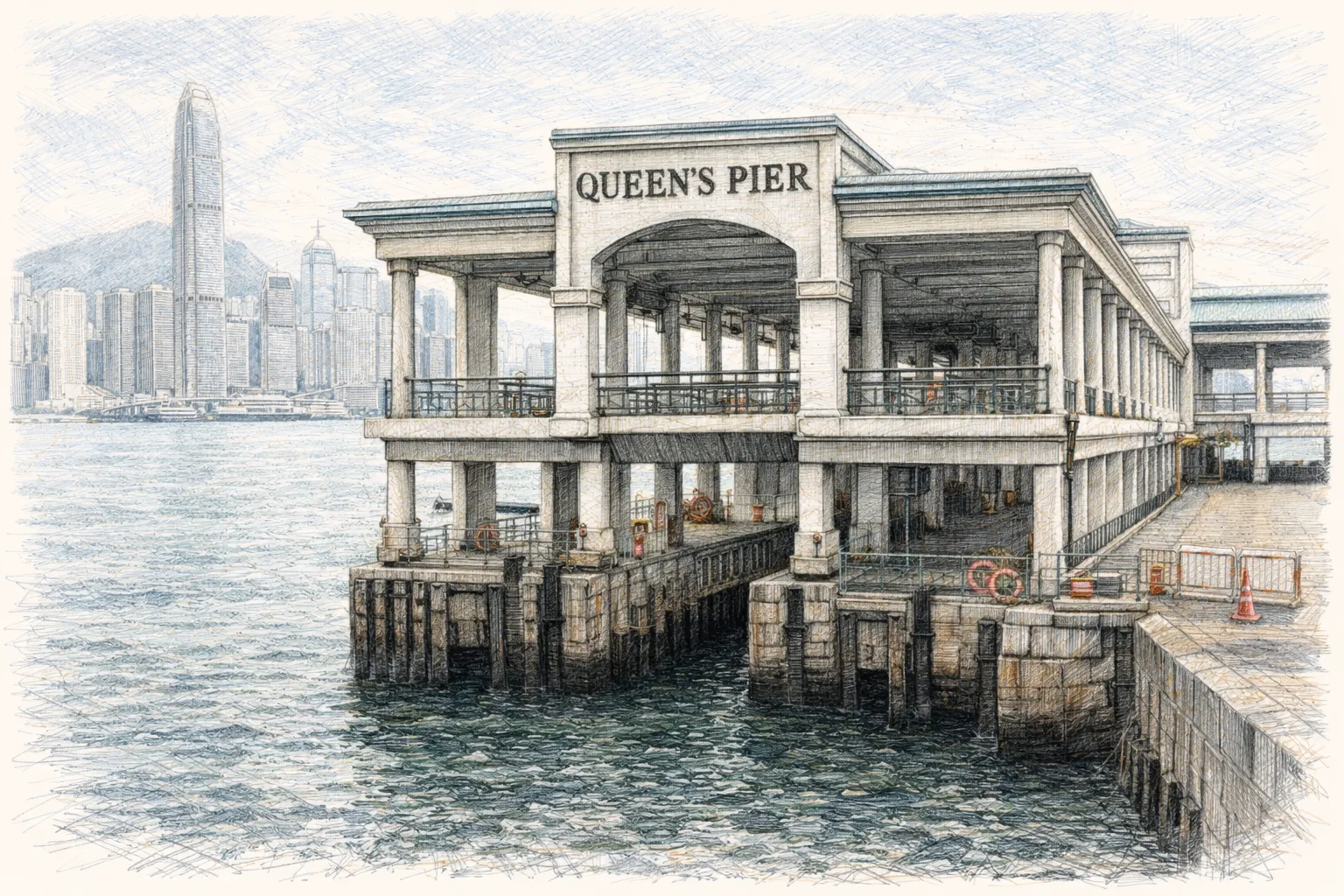
皇后碼頭|一個離開後仍被記得的地方 | Queen’s Pier Memories|A Place That Lives On After It Disappeared from Hong Kong | 【包羅萬有】第 4 章
城市的發展與變遷是一個持續進行的過程,在這個過程中,許多看似平凡無奇的地方,往往因為功能性或經濟效益的考量而被取代或消失。然而,這些地方的消失,並不僅僅是物理空間的改變,更牽動著居民的情感與記憶。皇后碼頭便是一個典型的例子,它從一個平凡的交通設施,轉變為一個象徵城市記憶與情感連結的重要符號。
皇后碼頭的歷史並不悠久,其設計也並非出自名家之手。作為一個簡單的交通樞紐,它承載著接送、等候與離別的功能。對於大多數人來說,這樣的地方往往只是日常生活中的一部分,並不會引起特別的注意。然而,正是這種平凡無奇,使得它融入了無數人的日常記憶之中。那些吹過臉龐的海風、陽光灑落在地面的影子,以及人們匆匆經過時的腳步聲,構成了城市生活中不可或缺的一部分。
當皇后碼頭面臨拆除時,人們才意識到它的重要性。這並非因為它具有特殊的歷史價值或建築美學,而是因為它承載了無數人的生活片段與情感記憶。有人回想起在碼頭上迎接親友的場景,有人記得第一次搭船時的興奮心情,也有人僅僅因熟悉的環境即將消失而感到惋惜。這些情感並非來自於建築物本身,而是來自於與之相關的生活經驗與情感連結。
城市的變遷往往帶有一種無情的特質。當新的建設取代舊有空間時,城市似乎很快適應了這樣的改變,但對於居民而言,內心的空白卻難以填補。這種空白並非來自於功能性的缺失,而是情感上的斷層。當一個熟悉的地方消失,那種改變不再是抽象的概念,而是具體地影響到每個人的生活。皇后碼頭的拆除便是一個典型案例,提醒我們城市發展不僅僅是物理空間的更新,更涉及到居民對城市的認同與歸屬感。
在這樣的背景下,我們不得不反思:是否只有在失去之後,我們才會意識到某些地方的重要性?這種後知後覺,不僅揭示了我們對日常環境的不敏銳,也反映了城市規劃中對地方記憶與情感連結的忽視。事實上,地方記憶是城市文化的重要組成部分,它不僅關乎歷史遺跡或名勝古蹟,也涵蓋了那些看似平凡但深具意義的場所。
如何在城市發展與地方記憶之間取得平衡,是當前城市規劃面臨的一大挑戰。一方面,城市需要隨著時代進步而進行基礎設施的更新,以滿足日益增長的人口需求和經濟發展;另一方面,我們也必須認識到,那些看似不起眼的小角落,實際上承載著居民對城市最真實而深刻的情感連結。因此,在規劃新建設時,我們應該慎重考慮如何保留這些地方記憶,使城市發展不僅僅停留在功能性的層面,更能夠滿足人們對文化與情感歸屬的需求。
皇后碼頭的故事告訴我們,城市並非僅由高樓大廈與現代化基礎設施構成,而是由無數被忽略過、又被懷念過的小角落交織而成。這些地方雖然可能不起眼,但正是它們構成了城市生活的基礎,也讓居民能夠在其中找到歸屬感。在面對未來的城市發展時,我們應該更加重視這些地方所承載的情感價值。
同時,作為城市中的個體,我們也應學會更加用心地感受周遭環境,珍視那些看似平凡但卻深具意義的地方。我們無法阻止城市變遷,但可以選擇更有意識地去記錄、去珍惜,以免再一次陷入「失去之後才看見」的遺憾。透過這樣的方式,我們不僅能夠更好地理解自己與城市之間的關係,也能夠為未來的城市規劃提供更多元且深刻的視角。
皇后碼頭雖然已經成為過去,但它所留下的不僅僅是回憶,更是一種關於如何看待城市發展與地方記憶的方法。它提醒我們,在追求現代化與進步的同時,不應忽視那些平凡卻深具意義的小角落。最終,真正能夠讓一座城市充滿生命力的,不僅是其外在的繁華與現代化設施,更是其內在的人文溫度與情感連結。
English Version
In the ever-changing landscape of Hong Kong, where buildings rise and fall with remarkable speed, certain places continue to exist not through physical presence but through memory, emotion, and collective imagination, and Queen’s Pier stands as one of the most compelling examples of such a transformation. Once located along the waterfront in Central, the pier was not only a point of arrival and departure but also a space of gathering, ceremony, and everyday passage, where individuals crossed paths and moments accumulated quietly over time. Its architectural simplicity contrasted with the significance it carried, serving as a symbolic gateway that connected the city to both the sea and its colonial past, while also functioning as a public space accessible to anyone who passed through. Over the years, the pier became associated with official ceremonies, farewells, and arrivals, embedding itself into the historical narrative of Hong Kong in ways that extended beyond its physical structure. Yet, like many urban spaces subjected to redevelopment, Queen’s Pier was eventually dismantled, its removal marking not only a physical loss but also the beginning of a new phase in its existence, one defined by absence rather than presence. The disappearance of the pier did not erase its meaning; instead, it transformed the way it was remembered, shifting it from a functional location into a symbolic site within the collective consciousness of the city. Photographs, stories, and personal recollections began to take on greater importance, reconstructing the pier in fragments that allowed it to persist in memory even as its original form was no longer accessible. This process of remembering highlights a broader aspect of urban life, where places are not solely defined by their material existence but by the experiences and meanings attached to them by those who inhabit or pass through them. In this sense, Queen’s Pier continues to exist as a layered memory, where different generations recall it in different ways, shaped by their own encounters and interpretations. For some, it represents a connection to a specific historical moment; for others, it evokes a sense of loss tied to the rapid pace of change that characterizes the city. The tension between development and preservation becomes particularly visible in cases like this, where the removal of a structure prompts reflection on what is gained and what is lost in the process of transformation. The waterfront, once anchored by the presence of the pier, has since been redefined, incorporating new elements that reflect contemporary needs and aesthetics, yet the absence of the original structure creates a space that is filled not only with new functions but also with memory. Walking along the area today, one may not see the pier as it once was, but its presence can still be felt through imagination, through historical references, and through the awareness that the space carries a past that is no longer visible. This invisible layer of the city adds depth to the experience of place, reminding observers that urban environments are shaped as much by what is no longer there as by what remains. The story of Queen’s Pier also reflects the role of public space in shaping identity, where locations that allow for open access and shared experience become embedded within the cultural fabric of a community, making their disappearance particularly significant. As Hong Kong continues to evolve, the memory of places like Queen’s Pier serves as a reminder of the city’s complexity, where progress and preservation coexist in an ongoing dialogue that shapes how the past is understood and how the future is imagined. Ultimately, Queen’s Pier is no longer just a structure that once stood by the water; it has become a symbol of memory itself, illustrating how places can continue to live on through the stories people tell, the images they keep, and the emotional connections that persist long after the physical space has disappeared.