
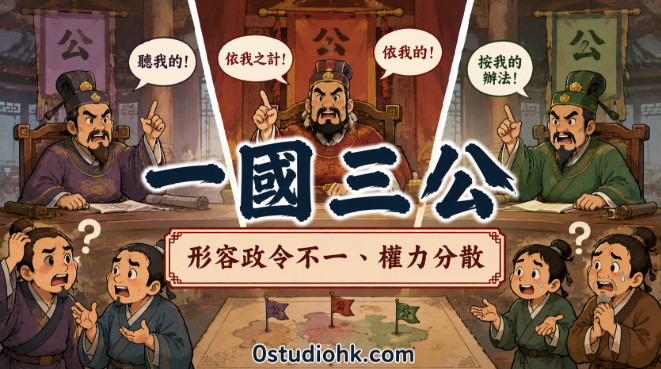
成語「一國三公」意思與典故:形容政令不一、權力分散 | The Meaning of “Yi Guo San Gong”: A Chinese Idiom About Divided Authority
「一國三公」是中國古代著名成語,用來形容一個國家或組織內同時存在多個掌權者,各自發號施令,導致政令混亂、權責不清。這個成語不僅反映古代政治現象,也常用來比喻現代管理缺乏統一領導的情況。
English Version
“Yi Guo San Gong” is a classic Chinese idiom describing a situation where multiple leaders hold competing authority within the same organization or state. It highlights the confusion and inefficiency caused by divided leadership.
「一國三公」字面意思是「一個國家同時有三位執掌大權的人」,比喻政權分散、領導者眾多,導致命令彼此衝突,人民無所適從。這個成語出自《左傳》,與春秋時代晉國的政治局勢有關。當時國家大權逐漸落入幾個強大的家族手中,各方勢力互相牽制,形成政令不統一的局面,因此被形容為「一國三公」。後來,這個成語便被用來比喻任何團體、企業或組織中,同時存在多個決策中心,各人各有主張,缺乏一致方向。當命令互相矛盾時,不僅容易降低效率,也可能造成內部混亂與資源浪費。因此,「一國三公」通常帶有負面的警惕意味,提醒管理者建立清楚的權責制度與統一的決策機制。現代社會中,企業若部門主管各自下令、政府機構若政策互相衝突,甚至家庭成員對孩子教育方式完全不同,都可借用這個成語形容。它所傳達的重點並非反對分工合作,而是強調領導必須協調一致,才能有效推動工作、凝聚團隊,避免因權力分散而影響整體發展。
English Version
The idiom “Yi Guo San Gong” literally means “one state with three chief rulers.” It describes a situation in which authority is divided among several powerful leaders, resulting in conflicting orders and ineffective governance. The expression originates from the Zuo Zhuan, which records political events during China’s Spring and Autumn Period. At that time, the State of Jin experienced growing influence from several powerful noble families. Instead of one clear center of authority, multiple factions exercised control, creating confusion and weakening the government’s ability to govern effectively. From this historical background, the idiom evolved into a broader metaphor for organizations lacking unified leadership. Today, it is commonly used to describe companies, institutions, or teams where multiple managers issue inconsistent instructions, leaving employees uncertain about priorities. The idiom emphasizes that successful leadership depends on coordination rather than competing authority. While collaboration among leaders is valuable, clear responsibility and consistent decision-making are essential for stability and efficiency. “Yi Guo San Gong” therefore serves as a warning against fragmented management and encourages organizations to establish unified direction, effective communication, and well-defined leadership structures.
小故事:
古時有一座繁榮的小城,由於原來的城主年老體弱,便同時任命三位大臣管理城中的大小事務。一位負責商業,一位負責治安,另一位負責建設。本來大家都認為能互相合作,但不久後卻開始各自發布不同命令。商人收到三種不同的稅收規定,工匠同時接到三份互相衝突的工程安排,守城士兵也不知道究竟該聽誰指揮。百姓每天奔波詢問,卻始終得不到一致答案,小城的秩序逐漸混亂。這時,一位年長學者向城主建議,應建立統一決策制度,三位大臣先共同討論,再由一人正式發布命令。城主接受建議後,所有重大決策都經過協調,命令也只有一個版本。沒過多久,商業恢復繁榮,百姓重新安居樂業。人們感慨地說:「若是一國三公,再好的制度也難以發揮作用;唯有齊心一致,才能真正治理好一座城市。」這個故事後來流傳開來,成為提醒後人重視團隊合作與統一領導的重要寓言。
English Version
Long ago, a prosperous city appointed three senior officials to govern after its aging ruler became unable to manage daily affairs alone. One official supervised trade, another oversaw public security, and the third directed construction projects. At first, the arrangement appeared practical because each leader possessed valuable experience. However, problems soon emerged. Merchants received different tax policies from each official, builders were ordered to begin conflicting projects, and soldiers were uncertain whose commands should take priority. Ordinary citizens became increasingly frustrated as every office offered different answers to the same questions. Seeing the growing confusion, a respected scholar visited the ruler and explained that divided authority inevitably creates disorder unless leadership is coordinated. He proposed that the three officials discuss important matters together but appoint one representative to announce all final decisions. The ruler accepted the suggestion. From then on, every major policy followed a unified process, and public instructions became consistent. Within months, trade flourished again, disputes declined, and the city’s prosperity returned. The people realized that talent alone cannot guarantee success when leadership is fragmented. A shared vision and clear authority are equally important. The story became a lasting lesson that organizations thrive when leaders cooperate under a unified direction rather than competing for influence.
結語
「一國三公」提醒我們,無論是國家、企業或團隊,都需要清晰的權責與一致的方向。當決策能夠統一、溝通保持順暢,組織才能有效運作,避免因多頭領導而陷入混亂,這正是這個成語歷久不衰的啟示。
English Version
“Yi Guo San Gong” teaches that unity in leadership is essential for lasting success. Clear responsibility, effective communication, and coordinated decision-making allow organizations to move forward with confidence and avoid the confusion caused by competing authority.