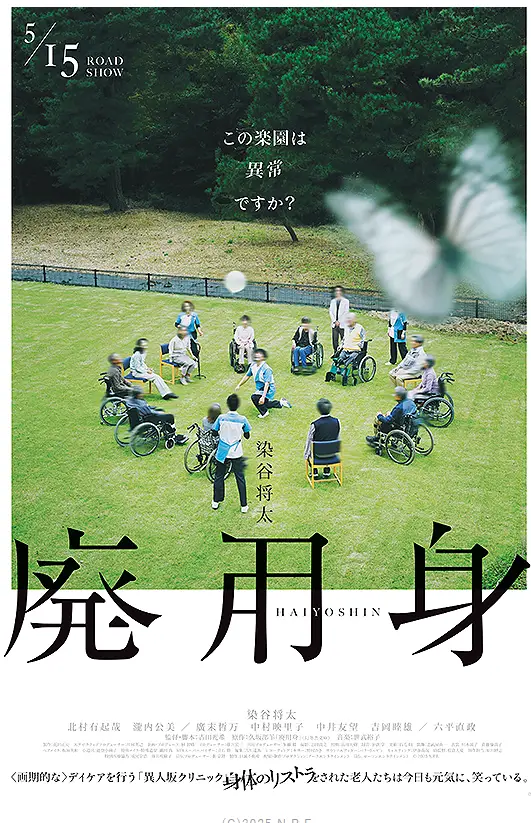
《廃用身》是由𠮷田光希執導的日本人性懸疑電影,改編自現役醫師兼作家久坂部羊於2003年發表的同名小說。電影以高齡醫療與照護問題為核心,透過一種充滿爭議性的治療方法,探討醫學倫理、社會成本與人類尊嚴之間的界線。作品融合心理驚悚與社會寫實,在冷靜壓抑的氛圍之中,逐漸揭開理性與瘋狂之間令人不安的距離。
Directed by 𠮷田光希, Haiyoshin is a Japanese human suspense film adapted from the debut novel by physician and author 久坂部羊. Centered around elderly care and controversial medical treatment, the movie explores the fragile boundary between efficiency, ethics, and human dignity. Combining psychological tension with social realism, the film gradually transforms a seemingly revolutionary medical concept into a disturbing examination of morality and obsession.
電影內容
《廃用身》的故事發生於名為「異人坂診所」的日間照護中心。這裡聚集許多年老病患,他們長期受到身體退化、疾病與孤獨困擾。在這個看似平靜的地方,院長漆原糾秘密推行一種極具爭議性的醫療方法。這種療法圍繞所謂「廃用身」概念,也就是那些因麻痺或長期退化而被認為無法恢復功能的肢體。漆原認為,人類過度執著於無法使用的身體部分,不但增加照護成本,也讓患者與家屬長期活在痛苦之中。他提出一套近乎革命性的醫療理論,希望透過「合理化」方式減輕高齡照護壓力。更令人震驚的是,接受治療的老人們似乎真的產生了某些「正面效果」。有人變得更加開朗,有人性格變得溫和,也有人重新感受到活著的輕鬆感。這些結果讓部分患者與家屬開始相信漆原的理念。然而隨著療法逐漸擴散,某些令人不安的問題也開始浮現。出版社編輯矢倉察覺這套理論可能顛覆日本高齡醫療體系,因此主動接近漆原,希望將他的思想出版成書。起初,矢倉對漆原抱持某種敬佩與好奇,但隨著內部告發與患者家庭中的衝擊事件接連發生,他逐漸意識到這場「醫療革命」背後隱藏的危險。電影最大的特色,在於它並沒有簡單將漆原塑造成瘋狂反派。相反地,他的理念某程度上帶有現實合理性。面對高齡化社會、醫療資源不足與長期照護負擔,電影提出一個極具挑釁性的問題:如果某些痛苦真的無法消除,人類是否有權以效率與理性重新定義「活著」的價值?這種問題讓作品充滿強烈道德不安感。漆原逐漸從理想主義者走向危險狂氣的過程,也成為電影核心。染谷将太在片中的演出極具壓迫感,他讓角色同時具有醫生的冷靜理性與近乎宗教式的偏執。觀眾會不斷在「他是否真的錯了」與「他已經跨越界線」之間動搖。電影同時描寫日本社會面對老齡化問題時的焦慮。高齡者不只是需要被照顧的人,也逐漸成為制度與家庭壓力的一部分。影片中的照護場景、病患家庭與醫療機構,都充滿疲憊與無力感。這種寫實氣氛讓電影即使帶有懸疑與恐怖元素,依然保持強烈現實感。導演𠮷田光希以安靜冷淡的影像風格營造壓抑氛圍,大量使用醫療空間與沉默場景,使整體情緒逐漸累積不安。電影中的恐怖並非來自超自然,而是來自「理性過度延伸後的人性崩壞」。當醫療開始只剩效率與數字,人是否還能保有真正尊嚴?《廃用身》透過這個尖銳問題,把醫療倫理、人性與社會制度推向極限,也成為一部令人深思的現代人性驚悚電影。
English Version
Haiyoshin takes place inside a day-care medical facility known as Ijinzaka Clinic, where elderly patients struggling with illness, paralysis, and physical decline gather in search of care and stability. Behind the clinic’s calm atmosphere, however, director Urushibara Tadashi has secretly developed a controversial medical philosophy centered around the concept of “haiyoshin” — body parts considered permanently useless due to paralysis or irreversible deterioration. Urushibara believes that modern society clings too strongly to physical functions that can no longer recover, creating unnecessary suffering for patients, families, and healthcare systems alike. His radical treatment approach aims to reduce the emotional and financial burden of elderly care through what he considers a more rational understanding of the human body. What makes the situation especially unsettling is that the treatment appears to produce unexpectedly positive effects. Patients reportedly become emotionally lighter, calmer, and psychologically more stable. Some regain emotional peace after years of pain and frustration. These outcomes begin attracting attention and curiosity, particularly from editor Yagura, who senses that Urushibara’s ideas could revolutionize Japan’s aging healthcare system. Fascinated by the doctor’s philosophy, he approaches him with the idea of publishing a book about the treatment. Yet as internal whistleblower reports emerge and a shocking incident occurs within a patient’s household, admiration gradually turns into suspicion and fear. One of the film’s most disturbing qualities is its refusal to portray Urushibara as a simplistic villain. His ideas contain an uncomfortable degree of logic, especially within a society facing severe aging-population problems, rising healthcare costs, and emotional exhaustion among caregivers. The film raises deeply provocative ethical questions: if suffering cannot truly be eliminated, does society have the right to redefine the meaning of human dignity in the name of efficiency and rationality? This moral ambiguity gives the story its intense psychological tension. Urushibara’s transformation from idealistic innovator into someone drifting toward dangerous extremism becomes the emotional center of the film. 染谷将太 delivers a chilling performance that balances calm intellectual control with unsettling fanaticism. The audience is constantly pulled between understanding his logic and recognizing the terrifying consequences of his worldview. The movie also functions as a broader reflection on contemporary Japanese anxieties surrounding aging and long-term care. Elderly individuals are portrayed not only as vulnerable patients but also as emotional and financial burdens placed upon families and institutions already struggling to cope. Scenes within homes, care facilities, and medical environments are filled with exhaustion, quiet resentment, and emotional isolation. This social realism grounds the film’s suspense in recognizably human fears. Director Mitsuki Yoshida creates an atmosphere of psychological discomfort through restrained visuals, cold medical spaces, and prolonged silence. The horror within Haiyoshin does not come from supernatural forces but from the terrifying possibility of human compassion becoming consumed by pure rationality. The film suggests that when medicine begins valuing efficiency above humanity, society risks losing its understanding of dignity itself. Through this unsettling premise, Haiyoshin becomes more than a suspense film — it transforms into a disturbing meditation on ethics, aging, and the fragile boundary separating healing from destruction.
影片簡介(預告片/片段)
高齡醫療與人性倫理逐漸失控的心理懸疑電影。
A psychological suspense film exploring aging, medical ethics, and the danger of extreme rationality.
電影資料
導演:𠮷田光希
類型:懸疑、心理驚悚、社會劇情、日本電影
製片公司:日本電影製作
上映年份:2020年代
主要演員
染谷将太
北村有起哉
六平直政
瀧内公美
總結
《廃用身》以高齡醫療為切入點,深入探討效率、倫理與人類尊嚴之間的危險界線。電影透過冷靜而壓抑的氛圍,把現代社會對老齡化與醫療制度的不安轉化為令人毛骨悚然的人性驚悚,帶來極強思考餘韻。
Haiyoshin is a disturbing yet thought-provoking human suspense film that confronts the ethical tensions between medical efficiency and human dignity. Through psychological unease and social realism, the movie transforms contemporary fears about aging and healthcare into a chilling exploration of morality and obsession.