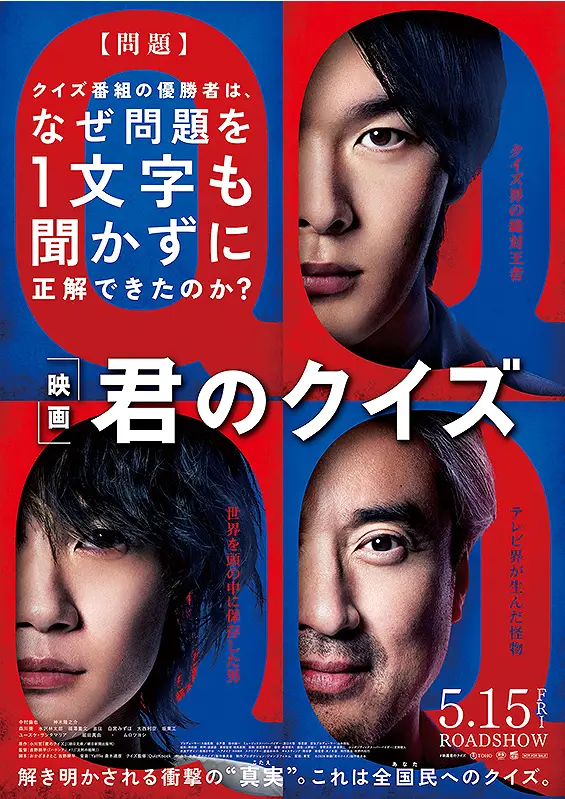
《君のクイズ》是由吉野耕平執導的日本懸疑電影,改編自直木賞作家小川哲於2022年發表的同名暢銷小說。電影以電視問答節目作為舞台,結合推理、心理戰與知識競賽元素,描繪一場看似不可能發生的「零文字正答」事件。作品不只是關於解開謎題,更深入探討記憶、理解與「知道答案」這件事本身的本質,在緊張節奏之中展現極具現代感的知性懸疑魅力。
Directed by 吉野耕平, Your Quiz is a Japanese mystery film adapted from the bestselling novel by Naoki Prize-winning author 小川哲. Set within the world of competitive quiz television, the story revolves around an impossible event known as the “zero-character answer,” where a contestant correctly answers a question before a single word has been read aloud. Combining psychological suspense, intellectual competition, and philosophical mystery, the film explores the nature of memory, knowledge, and human perception in a highly original way.
電影內容
《君のクイズ》的故事從日本最高人氣的電視問答節目「Q-1 Grand Prix」決賽開始。節目以高額獎金與激烈競爭吸引全國關注,而決賽舞台上站著兩位頂尖玩家。一方是被稱為「問答界絕對王者」的三島玲央,他擁有驚人的知識量與冷靜邏輯,是觀眾眼中的完美冠軍;另一方則是神秘天才本庄絆,他被稱為「把世界儲存在腦中的男人」,記憶力與直覺都近乎異常。比賽進入最後關鍵時刻時,一件不可思議的事情發生了。在最終早押し問題尚未讀出任何文字之前,本庄竟突然按下回答鈕,並且準確說出正確答案。全場瞬間陷入震驚與混亂,而三島也完全無法理解眼前發生的事情。因為按照規則與常識,這種「零文字正答」根本不可能存在。比賽結束後,三島無法放下這個謎團,開始獨自調查本庄究竟如何做到這件事。隨著調查深入,電影逐漸從單純推理轉變成對「知識本質」的探索。三島發現,本庄並不只是擁有超凡記憶力,他對世界的理解方式本身就與常人不同。電影最吸引人的地方,在於它把問答比賽拍成一場心理迷宮。角色之間的對決不只是知識量競爭,更像對思考方式與認知能力的較量。電影中的問題與答案,不斷挑戰觀眾對「理解」的想像。人真的能在問題出現之前就知道答案嗎?還是答案其實早已存在於對世界的觀察與推理之中?這種設定讓作品充滿哲學意味。導演吉野耕平以大量VFX與視覺化演出,把角色腦中的推理與記憶空間具象化。問答玩家思考時,大量資訊、圖像與語言像迷宮般在腦內展開,使電影不只是單純對話推理,而帶有近乎科幻的知性氛圍。尤其三島與本庄的對決,像兩種不同思維模式之間的衝突。三島相信邏輯與努力,本庄則像憑直覺與感知直接抵達答案。這種對比令整部電影始終保持緊張感。電影同時也描寫競爭與孤獨。兩位主角都因過度專注知識世界,而與普通人產生距離。他們的人生幾乎都被「回答問題」這件事所定義,但在追求正確答案過程中,也逐漸失去與他人真正交流的能力。片中的電視節目製作人坂田則代表娛樂與商業化力量,他更重視節目效果與收視率,而非真相本身。這種角色讓電影進一步探討現代媒體如何消費「天才」與競爭。中村倫也與神木隆之介的對手戲是電影最大亮點之一。兩人分別演出理性與神秘感極強的角色,使整部作品始終維持難以預測的氣氛。《君のクイズ》不只是問答題材電影,更是一部關於思考、記憶與人類理解能力的人性推理劇。它透過一個不可能事件,把觀眾一步步帶進知識與真相交錯的迷宮之中,也讓人重新思考「知道」究竟意味著什麼。
English Version
Your Quiz begins during the live finale of “Q-1 Grand Prix,” Japan’s most popular televised quiz competition, where enormous prize money and national attention turn intellectual performance into a form of spectacle. Facing each other in the championship match are two legendary contestants. Mishima Reo is known as the absolute king of the quiz world, admired for his immense knowledge, composure, and razor-sharp logical thinking. Opposing him is Honjo Kizuna, an enigmatic genius often described as “the man who stores the world inside his mind.” As the final buzzer round begins, something impossible occurs. Before the host can even read a single character of the final question aloud, Honjo suddenly presses the answer button and gives the correct response. The audience erupts in confusion. According to every known rule of quiz competition and common sense itself, such a feat should be impossible. Yet Honjo answers perfectly and wins the tournament. Unable to accept what he witnessed, Mishima becomes obsessed with uncovering the truth behind the so-called “zero-character correct answer.” What begins as a mystery investigation gradually evolves into a deeper exploration of knowledge, perception, memory, and human cognition. As Mishima studies Honjo’s past and thought process, he starts realizing that Honjo’s intelligence may operate according to entirely different principles from ordinary understanding. One of the film’s greatest strengths is the way it transforms quiz competition into psychological warfare. The characters are not merely competing through memorized information but through fundamentally different ways of perceiving the world. The movie repeatedly challenges the audience to reconsider what it truly means to “know” something. Can a person arrive at an answer before hearing the question? Or are answers already hidden within patterns, intuition, and accumulated perception long before words are spoken? These ideas give the story a philosophical depth beyond conventional mystery narratives. Director Kohei Yoshino visualizes the inner thought processes of the contestants using elaborate visual effects and stylized imagery. Information, memories, words, and associations unfold like vast labyrinths inside the characters’ minds, creating a cinematic representation of intellectual thinking itself. This gives the film an atmosphere somewhere between psychological thriller and cerebral science fiction. The contrast between Mishima and Honjo becomes especially compelling. Mishima represents logic, discipline, and structured reasoning, while Honjo appears to access knowledge through instinctive perception and overwhelming mental intuition. Their rivalry creates continuous tension because neither fully understands the other’s way of thinking. Beneath the intellectual suspense, the film also explores themes of isolation and identity. Both protagonists have become emotionally disconnected from ordinary life because their existence revolves entirely around knowledge and competition. In dedicating themselves to finding correct answers, they have lost the ability to connect naturally with others. Meanwhile, television producer Sakata represents the commercialization of intelligence, caring less about truth than about spectacle, ratings, and entertainment value. Through him, the movie critiques modern society’s tendency to consume genius as performance. Performances by 中村倫也 and 神木隆之介 provide the emotional and psychological core of the story. Their contrasting energies — one grounded and analytical, the other mysterious and unreadable — maintain a constant atmosphere of uncertainty. Your Quiz ultimately becomes more than a mystery about a quiz show. It is a thought-provoking exploration of human intelligence, memory, perception, and the endless desire to uncover truth. Through one impossible question, the film leads viewers into a fascinating maze where knowledge itself becomes the greatest mystery.
影片簡介(預告片/片段)
一場「零文字正答」事件,揭開知識與真相的心理迷宮。
A mysterious “zero-character answer” leads into a psychological maze of knowledge and truth.
電影資料
導演:吉野耕平
類型:懸疑、推理、心理劇、日本電影
製片公司:日本電影製作
上映年份:2020年代
主要演員
中村倫也
神木隆之介
ムロツヨシ
總結
《君のクイズ》把問答競賽轉化成一場關於知識、記憶與人類理解能力的深層推理。電影透過充滿哲學意味的懸疑設定與視覺化思考空間,呈現現代人對「正確答案」的執著與迷惘,是一部兼具娛樂性與思想性的知性懸疑作品。
Your Quiz transforms a television quiz competition into a fascinating intellectual mystery about memory, perception, and the meaning of knowing. Through psychological tension and stylish visual storytelling, the film explores humanity’s obsession with answers while questioning the very nature of truth itself.