
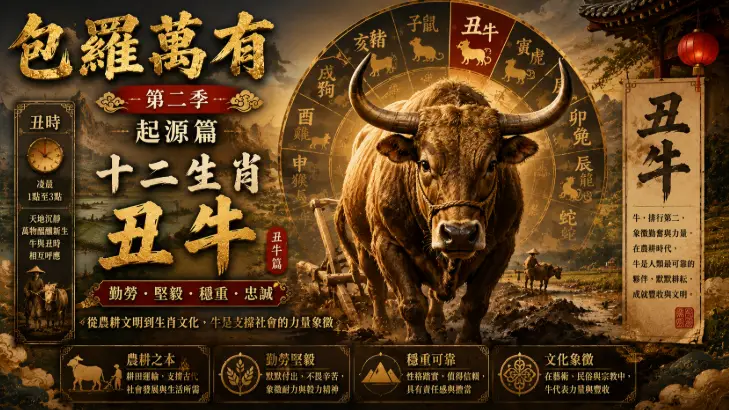
包羅萬有 第二季 起源篇|十二生肖 丑牛的起源與勤勞精神 | Origins Series Season 2 | The Ox in the Chinese Zodiac and the Spirit of Endurance
丑牛在十二生肖中象徵勤勞、穩重與堅毅精神。從古代農耕文明到民間信仰,牛一直是華人文化中不可缺少的重要象徵,也代表人類與土地之間最深厚的聯繫。
The Ox represents endurance, strength, and dedication in the Chinese Zodiac. For thousands of years, this hardworking animal has stood at the center of agricultural life and cultural tradition, symbolizing humanity’s deep connection to the land.
中文
丑牛是十二生肖中的第二位,在中國傳統文化裡象徵勤奮、忍耐與穩重。自古以來,牛一直是農耕社會最重要的動物之一,無論耕田、運輸還是日常勞作,都與人類生活密不可分。因此,牛不只是家畜,更被視為支撐文明發展的重要力量。在流傳已久的生肖神話中,玉皇大帝舉辦動物競賽決定生肖順序,牛原本憑藉勤力與耐力一路領先,但在最後關頭被老鼠借勢超前,因此成為第二位生肖。雖然沒有奪得第一,但牛沉默堅毅、不計較得失的形象,反而更深植人心。這個故事也讓丑牛成為努力與奉獻精神的重要象徵。中國古代社會以農立國,而牛正是農業生產的核心動力。在沒有機械化的年代,一頭牛足以決定一家農戶的生計與糧食收成。春耕時節,農民會牽牛翻土播種,而牛亦被視為帶來豐收與希望的重要存在。部分地方甚至有「敬牛節」與祭牛習俗,用以感謝牛一年辛勞。從這些民俗可以看出,古人對牛懷有深厚敬意,而非單純視為牲畜。十二地支中的「丑」,除了代表生肖牛,也對應凌晨一時至三時。古人認為這段時間天地仍處於沉靜狀態,萬物正在醞釀新生,而牛則象徵穩定與大地力量,因此與丑時互相呼應。這種結合反映古代中國人將自然觀察、時間哲學與動物文化融合的智慧。隨着生肖文化發展,丑牛逐漸擁有更豐富的性格象徵。在民間觀念中,屬牛的人通常被認為誠實可靠、責任感強、做事踏實,而且擁有堅持到底的耐力。雖然有時顯得固執,但也因此容易獲得信任。這些生肖性格觀念雖然沒有科學根據,但多年來已成為華人文化的重要部分,甚至影響婚配、命理與人生觀念。除了民俗文化外,牛在中國藝術與歷史中亦經常出現。歷代畫家常以牧童與水牛作為田園生活象徵,表達人與自然和諧共處的理想。在道教與佛教文化裡,牛亦帶有修行與忍耐意義。例如禪宗「十牛圖」便以尋牛過程比喻修心與覺悟。由此可見,牛不只是農耕動物,更成為精神文化的重要象徵。隨着中國文化傳播世界,生肖牛亦成為全球華人熟悉的文化符號。每逢牛年,各地都會推出以牛為主題的新年裝飾、藝術作品與賀年商品,象徵勤奮、平安與穩定。今天即使進入科技社會,牛所代表的價值依然受到重視。丑牛不只是生肖故事中的角色,更承載了中國人對努力、誠信與土地精神的集體記憶。經過數千年演變,牛依然是華人文化中最具力量與親切感的傳統象徵之一。
English Version
The Ox is the second animal in the Chinese Zodiac and has long symbolized endurance, honesty, stability, and hard work in Chinese culture. Throughout ancient agricultural history, the Ox played an essential role in farming communities, helping people plough fields, transport goods, and sustain daily life. More than just livestock, the Ox became a symbol of civilization itself, representing the strength and perseverance required to survive and prosper. According to the well-known zodiac legend, the Jade Emperor organized a race to determine the order of the zodiac animals. The Ox, known for its endurance and determination, led most of the journey and was expected to finish first. However, the clever Rat secretly rode on the Ox’s back and jumped ahead at the final moment, leaving the Ox in second place. Rather than weakening the Ox’s image, this story strengthened its association with patience, humility, and selfless dedication. In ancient China, agriculture formed the foundation of society, and the Ox was central to that way of life. Before modern machinery, the strength of an Ox could determine whether a farming family survived harsh seasons or enjoyed a successful harvest. During spring planting periods, farmers relied heavily on Oxen to prepare the land, making them symbols of abundance and prosperity. Some regions even developed ceremonies and festivals dedicated to honoring Oxen for their contribution to rural life. These traditions reveal the deep respect ancient communities held for the animal. Within the traditional system of Earthly Branches, the Ox corresponds to the branch “Chou,” representing the period between 1 a.m. and 3 a.m. Ancient Chinese philosophy viewed this quiet period as a moment when life energy slowly emerged from stillness, matching the calm and grounded nature associated with the Ox. This connection illustrates how early Chinese thinkers combined astronomy, timekeeping, and symbolic animal meanings into a unified worldview. As zodiac traditions evolved, the Ox also became associated with certain personality traits. People born in the Year of the Ox are commonly believed to be dependable, disciplined, responsible, and determined. They are often described as patient workers who value honesty and persistence. While zodiac personality theories are cultural beliefs rather than scientific truths, they continue to influence social customs and personal identity across many Chinese communities today. The image of the Ox also occupies an important place in Chinese art, philosophy, and religion. Traditional paintings often portray water buffaloes alongside children and peaceful countryside scenes, symbolizing harmony between humans and nature. In Zen Buddhist culture, the famous “Ten Ox Herding Pictures” use the Ox as a metaphor for spiritual discipline, self-discovery, and enlightenment. These deeper symbolic meanings transformed the Ox from a farming animal into a representation of inner strength and moral character. As Chinese culture spread globally, the Ox became one of the most recognizable symbols of Lunar New Year celebrations. During the Year of the Ox, decorations, artwork, festivals, and cultural products frequently emphasize themes of diligence, peace, resilience, and prosperity. Even in the modern technological age, the values represented by the Ox remain deeply admired. More than simply a zodiac animal, the Ox stands as a lasting reminder of humanity’s relationship with labor, patience, and the enduring spirit of perseverance that has shaped Chinese civilization for thousands of years.