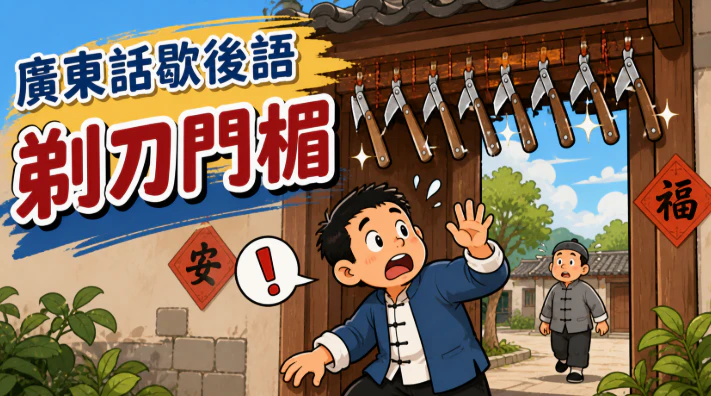
剃刀門楣:做人太過火|Going Too Far: When Behavior Crosses the Line|廣東話歇後語

做事有分寸,做人有界線,一旦過了頭,往往適得其反。《剃刀門楣:做人太過火》正是提醒人們把握分寸的重要。
There is a fine line in how we act and behave—once crossed, things can quickly turn negative. This Cantonese saying highlights the consequences of going too far.
意思
中文
「剃刀門楣:做人太過火」這句廣東話歇後語,以一個誇張而危險的畫面作比喻:把鋒利的剃刀掛在門楣之上,任何人進出都可能被割傷,顯然已經超出合理與安全的範圍。這種極端的設置引申為做人做事過於激烈、過火或不留餘地,令他人感到壓迫甚至受傷。「太過火」不單指情緒上的失控,也包括行為上的過度,例如說話太尖銳、處事太強硬,或在競爭中不顧後果。這句歇後語帶有明顯的警示意味,提醒人們在表達立場或追求目標時,需要保留空間與分寸,否則容易破壞關係或造成反效果。在人際互動中,適度往往比極端更有效,因為過度的表現雖然短暫強烈,但難以長久維持。這句話反映出一種重視平衡與節制的智慧,強調在行動與情緒之間找到恰當的位置。
English Version
This idiom draws on a striking and dangerous image: placing sharp razors above a doorway, where anyone passing through risks being cut. The setup is clearly excessive and unsafe, symbolizing behavior that has gone beyond reasonable limits. Figuratively, it refers to actions or attitudes that are overly extreme, aggressive, or lacking restraint. “Going too far” can manifest in many ways—harsh words, rigid decisions, or intense emotional reactions that push others away. The phrase carries a cautionary tone, warning that excessive behavior often leads to negative consequences, including damaged relationships and unintended harm. It reflects a broader cultural emphasis on balance and moderation, suggesting that effectiveness lies not in intensity, but in control. By maintaining proportion and awareness, individuals can avoid crossing the line where assertiveness turns into excess.
用法
中文
這句歇後語常用於批評或提醒他人行為過火,例如說話過於尖刻或處事過於激烈。亦可用於自我反省,例如:「我頭先可能有啲剃刀門楣,太過火。」語氣多帶警告或反思意味。
English Version
This expression is often used to point out when someone’s behavior is excessive or overly harsh. It can also be used in self-reflection to acknowledge that one may have crossed the line.
小故事:
中文
阿Ken在公司一向以效率高見稱,但他做事過於強勢,經常直接批評同事的錯誤,甚至在會議中毫不留情地指出問題。起初大家覺得他只是要求高,但時間一久,同事開始對他敬而遠之。有一次,他在會議中再次用強烈語氣批評一位新同事,令對方當場尷尬不已。會後,上司私下提醒他:「你呢種做法有啲似剃刀門楣,做人太過火,會傷到人。」這句話讓阿Ken開始反思自己的態度。他逐漸學會在指出問題時加入建設性建議,語氣也變得溫和。隨著改變,團隊氣氛改善,合作更加順暢。這次經歷讓他明白,真正的能力不只是效率,更在於如何讓他人願意一起前進。
English Version
Ken was known in his company for his efficiency, but his approach was often too aggressive. He would openly criticize colleagues’ mistakes, sometimes harshly, even during meetings. At first, others saw him as demanding, but over time, they began to distance themselves. One day, he sharply criticized a new colleague in front of everyone, leaving the person visibly embarrassed. After the meeting, his manager spoke to him privately: “Your approach is going too far—it’s hurting people.” The comment made Ken reflect on his behavior. He began to adjust his tone, offering constructive feedback instead of blunt criticism. Gradually, the team atmosphere improved, and collaboration became smoother. Through this experience, Ken realized that true effectiveness lies not only in getting results, but in bringing people along in the process.
結語
中文
過度只會帶來反效果,分寸才是長久之道。懂得收放,才能走得更遠。
English Version
Excess often leads to backlash, while balance ensures longevity. Knowing when to hold back is a true strength.