
香港戲院街的年代:那些排隊買票與滿座掌聲的日子 | Hong Kong Cinema Streets: The Era of Queues, Tickets, and Applause | 今日回望 | 第十九章
在串流平台與多廳戲院出現之前,看電影曾經是一種非常隆重的城市活動。
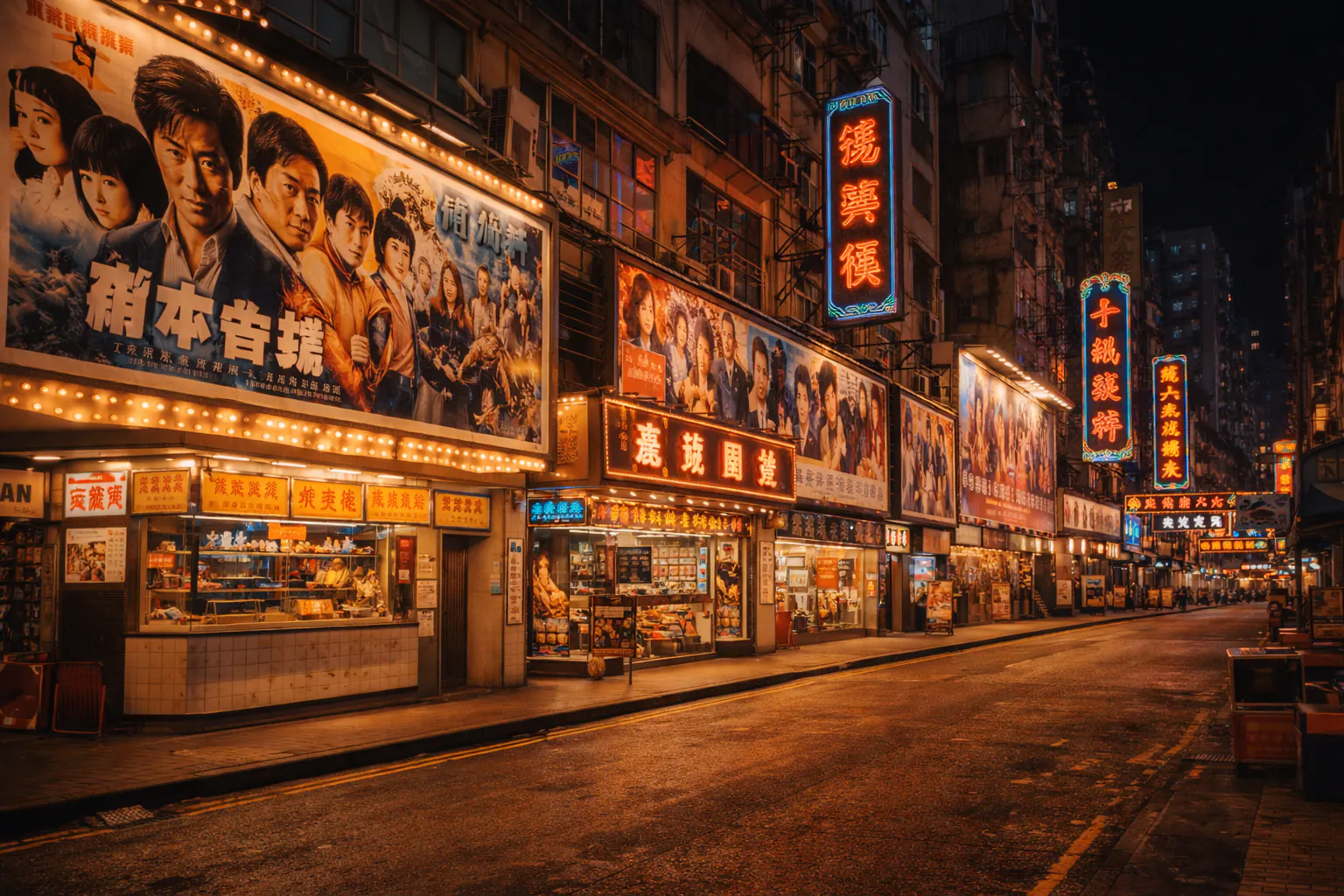
在香港的許多舊區裡,曾經存在著一種特別的街道景象。
那就是戲院街。
Before online booking and multiplex convenience, cinema streets in Hong Kong were alive with anticipation. Long queues, glowing marquees, and the buzz of eager audiences defined the experience. These streets were more than entertainment hubs—they were shared cultural spaces where excitement built before the film even began, leaving behind memories that still echo today.
在過去的香港,一條街上可能有兩三間戲院,甚至更多。每到晚上,整條街燈火通明,電影海報掛滿門口,街坊與影迷聚集在戲院外。
這些地方成為城市夜生活的一部分。
在上世紀五十年代至九十年代,香港電影產業十分繁榮。大量本地電影上映,各種戲院也遍佈不同地區。
旺角、油麻地、尖沙咀、銅鑼灣與北角等地,都曾經有著名戲院。
每當新電影上映,戲院門口往往會聚集不少觀眾。
有人提早到場排隊買票,有人站在海報前討論電影內容,也有人只是經過,卻被戲院外的熱鬧氣氛吸引。
這些畫面,在當時的香港街頭非常常見。
戲院外牆通常掛著巨大的電影海報。
海報上印著主演演員與電影名稱,色彩鮮明,有些甚至用手繪方式完成。這些海報不只宣傳電影,也成為街道的一部分。
很多人路過戲院時,會停下腳步看看海報。
如果看到熟悉的明星名字,就可能決定買票進場。
在那個年代,看電影是一種社交活動。
朋友相約一起看電影,情侶約會也常常選擇戲院。週末晚上,戲院門口特別熱鬧。
售票窗口前排著長長的人龍。
售票員在玻璃窗後面快速售票,觀眾拿到票後,走進戲院大門。進場後,觀眾會找到自己的座位,等待電影開始。
舊式戲院的空間通常非常寬敞。
大廳天花很高,座位排列整齊,前方是一個巨大的銀幕。燈光逐漸變暗時,整個戲院變得安靜。
電影開始播放時,觀眾的注意力全部集中在銀幕上。
如果電影情節精彩,戲院裡常常會出現掌聲與笑聲。有些動作場面甚至會引來觀眾喝采。
這種集體觀影的氣氛,是很多人難忘的經驗。
在香港電影最繁榮的年代,一些電影上映時甚至會出現「滿座」的情況。
戲院門口掛出滿座牌,代表所有座位已經售罄。
這樣的場景,也顯示出當時電影文化的熱度。
除了電影本身,戲院周圍的環境也非常熱鬧。
街邊小食攤、報紙檔與餐廳集中在附近。觀眾看完電影後,常常會到附近吃宵夜或聊天。
整個區域因此充滿活力。
然而,隨著時間推移,電影觀看方式逐漸改變。
大型商場內的多廳戲院開始出現,觀影環境更加現代化。觀眾可以在同一間戲院選擇不同電影與不同放映時間。
這種新模式逐漸取代了舊式戲院。
許多老戲院因為經營困難而結業,一些建築被拆卸或改建成其他用途。
曾經熱鬧的戲院街,也慢慢變得安靜。
那些巨大海報與閃亮燈牌逐漸消失。
對於曾經在那個年代看電影的人來說,這些變化帶來一點懷念。
因為舊戲院不只是電影播放的地方,它也是城市文化的一部分。
很多人的青春與回憶,都與那些戲院有關。
有人記得第一次與朋友看電影的興奮,有人記得某部經典電影帶來的感動,也有人記得戲院散場後走在街上的夜晚。
這些片段,構成了香港電影文化的一部分。
今天的電影觀看方式已經變得非常方便,人們可以在家中透過網絡觀看電影。
但那些曾經熱鬧的戲院街,仍然存在於城市記憶裡。
在那些燈光明亮的夜晚,戲院門口排著長隊,人群期待著電影開始。
那是一個屬於銀幕與掌聲的年代。
也是香港城市文化最精彩的一段時光。
English Version
There was a time when going to the cinema in Hong Kong was not a quiet, solitary activity but a lively and collective experience. Entire streets were defined by the presence of theatres, their facades illuminated by bright signage and large film posters that captured the imagination of passersby. These cinema streets were vibrant corridors of anticipation, where the act of watching a film began long before stepping into the auditorium. People gathered outside in long, winding queues, each person holding the same expectation—the promise of a story waiting to unfold on the big screen. The queue itself was part of the ritual. It was not uncommon for people to wait patiently, sometimes for hours, especially when a highly anticipated film was released. Conversations flowed easily among strangers, sparked by shared excitement or curiosity. There was a sense of collective participation, as if everyone in line was already part of the same audience before the film even started. This atmosphere created a unique bond, turning what could have been a simple wait into an experience filled with energy and connection. Ticket booths played a central role in this scene. Small windows framed by metal grilles became the gateway to another world. The exchange was brief but meaningful—money passed through, tickets returned, and with them, access to a moment of escape. The physical ticket itself carried significance, often kept as a small souvenir of the experience. Unlike digital confirmations today, these paper tickets had a tangible presence, reinforcing the sense that something special was about to happen. Once inside, the cinema offered a different kind of immersion. Large screens, dim lighting, and the collective silence of the audience created an environment where attention was fully focused. Reactions were shared in real time—laughter, gasps, applause—each emotion amplified by the presence of others. The communal nature of the experience made every screening slightly different, shaped by the audience as much as by the film itself. This shared engagement added depth to the act of watching, transforming it into something more than passive consumption. Cinema streets also reflected the diversity of Hong Kong’s film culture. Local productions stood alongside international releases, offering a wide range of choices that catered to different tastes. Posters displayed outside theatres served as visual invitations, each one competing for attention through bold imagery and dramatic titles. These streets became informal galleries of storytelling, where the city’s cinematic identity was constantly on display. As technology and consumer habits evolved, the landscape of cinema began to change. Multiplexes replaced standalone theatres, and online booking eliminated the need for physical queues. While these developments brought convenience and efficiency, they also altered the social dimension of the experience. The spontaneous interactions, the shared anticipation, and the vibrant street atmosphere gradually faded, replaced by quieter, more individualized forms of viewing. Yet, the memory of Hong Kong’s cinema streets continues to resonate because it represents a time when entertainment was deeply intertwined with public space and community. It was an era when watching a film was not just about the story on the screen, but about the journey leading up to it—the wait, the crowd, the collective excitement. These elements created a richness that extended beyond the film itself, embedding the experience within the fabric of everyday life. The legacy of these cinema streets serves as a reminder that cultural experiences are shaped not only by content but by context. It highlights the importance of shared spaces in creating meaningful connections and underscores the value of moments that bring people together. Although the physical landscape has changed, the spirit of those bustling streets endures in memory, continuing to influence how people think about cinema and community.