
舊式茶餐廳的時光:那些屬於香港人的日常味道 | Old-Style Cha Chaan Teng: Everyday Flavors and the Soul of Hong Kong | 今日回望 | 第十七章
在香港這個城市裡,有一種餐廳幾乎陪伴了每一代人成長。
它沒有華麗裝潢,也沒有複雜料理,但卻是很多人每天都會經過的地方。
Cha chaan tengs once defined the rhythm of daily life in Hong Kong—places where quick meals, familiar faces, and local flavors came together. More than eateries, they were social spaces filled with warmth and routine. As time moves on, these traditional cafés gradually fade, leaving behind not only tastes, but memories of a uniquely Hong Kong way of living.
那就是茶餐廳。
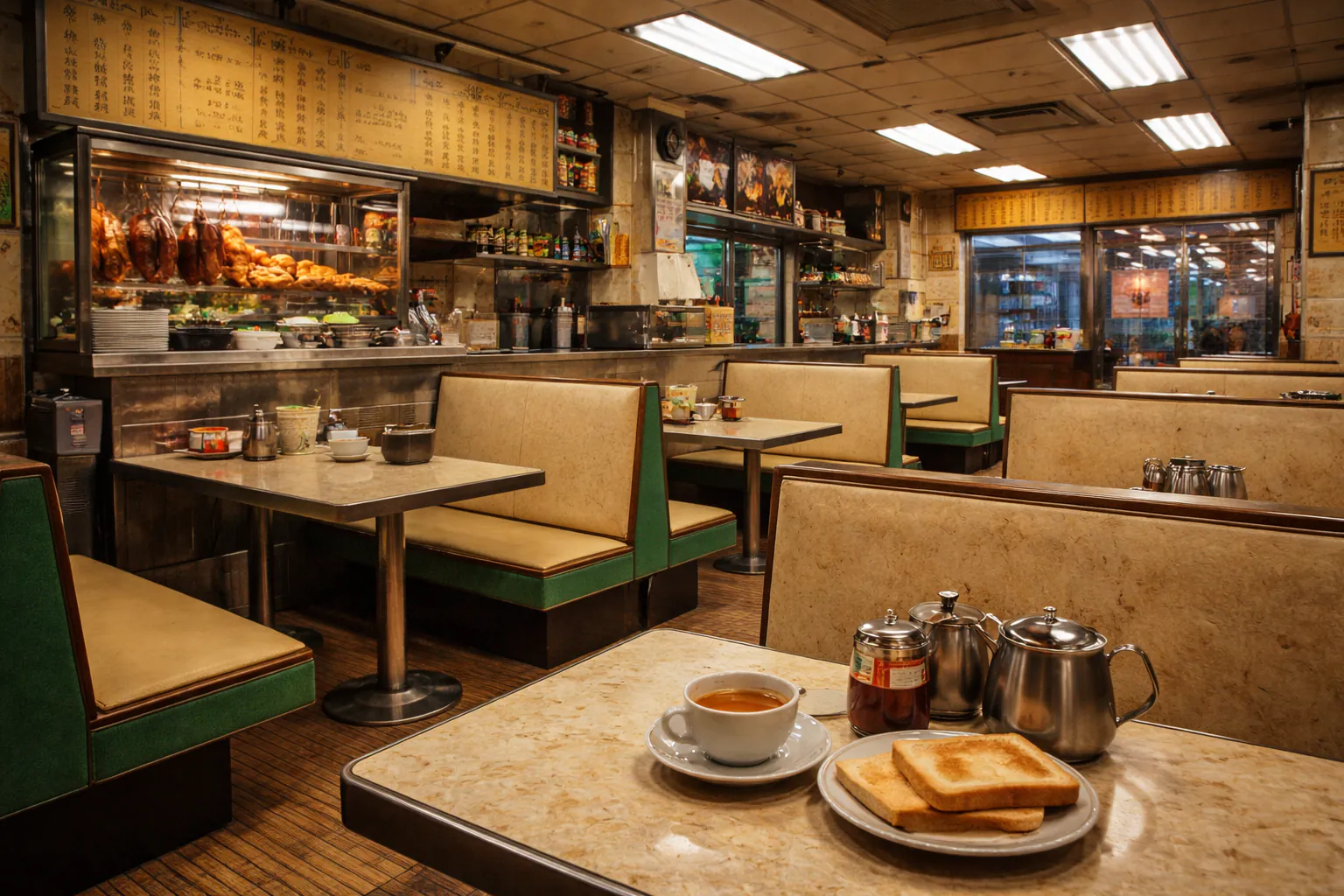
在過去的香港,茶餐廳幾乎遍佈每一個社區。屋邨樓下、街角轉彎處、舊唐樓地舖,都可能看到一家茶餐廳。
玻璃櫥窗裡掛著燒味,門口貼著餐牌,裡面是整齊排列的卡座與圓桌。
早上七點左右,茶餐廳已經開始營業。
剛開門時,店內瀰漫著奶茶與烘多士的香味。師傅在廚房裡忙碌,煎蛋、炒蛋、烤麵包的聲音不斷傳出。
街坊陸續走進餐廳,開始一天的早餐。
對許多香港人來說,茶餐廳早餐是一種熟悉的生活節奏。
一杯熱奶茶、一份火腿通粉或多士,再加一隻煎蛋,就是很多人最簡單的早餐。
有些人習慣在上班前到茶餐廳坐一會兒,看報紙或與朋友聊天。短短的十幾分鐘,卻是一天中最放鬆的時刻。
茶餐廳的特色之一,是它的速度。
在繁忙時段,侍應會快速記下顧客的點餐,然後大聲把菜名傳到廚房。廚房師傅動作熟練,很快便把餐點準備好。
整個過程像一種節奏明快的合作。
對很多第一次到香港的遊客來說,茶餐廳的氣氛可能顯得有些急促。但對本地人而言,這正是茶餐廳文化的一部分。
茶餐廳的餐單也十分多樣。
除了早餐,還有各種港式食品。例如菠蘿包、西多士、叉燒飯、咖喱牛腩飯,以及各式炒粉麵。
中午時段,許多上班族會到茶餐廳吃午餐。
一份碟頭飯加一杯凍飲,就是最常見的組合。價格相對實惠,份量也足夠,因此成為很多人的日常選擇。
下午時分,茶餐廳又有另一種氣氛。
有些人會來喝下午茶,點一杯奶茶或咖啡,再配上一件蛋撻或菠蘿包。店內氣氛比早上與中午稍微輕鬆。
這段時間,也常常能看到學生或街坊坐在餐廳聊天。
茶餐廳之所以特別,是因為它融合了不同文化。
早年的香港受到中西文化影響,許多西式食品逐漸被本地化。例如法式吐司變成西多士,西式咖啡與港式奶茶一起出現在餐單上。
這種文化融合,形成了香港獨特的飲食風格。
其中最具代表性的飲品之一,就是絲襪奶茶。
茶葉經過多次沖泡,再用布袋過濾,最後加入淡奶。這種做法讓奶茶味道濃郁,也成為香港飲食文化的重要象徵。
對許多香港人而言,一杯好的奶茶往往代表一家茶餐廳的水準。
然而,隨著城市發展,茶餐廳的環境也逐漸改變。
一些老店因租金上升而結業,有些則被連鎖餐廳取代。新的餐廳裝潢更加現代化,但氣氛與過去略有不同。
曾經熟悉的舊式茶餐廳,也逐漸變得稀少。
那些帶有歲月痕跡的木椅、舊式瓷磚地板、牆上的餐牌字樣,都慢慢成為回憶的一部分。
然而,即使城市不斷改變,茶餐廳仍然存在於香港生活之中。
每天早上,仍然有人走進餐廳點一份早餐;中午時段,仍然有上班族坐在桌旁吃碟頭飯;下午茶時間,仍然有人慢慢喝著奶茶。
這些看似普通的場景,其實構成了城市的日常。
茶餐廳不只是餐廳,它更像是一個社區空間。
街坊在這裡相遇,朋友在這裡聊天,家庭在這裡聚餐。
許多人的生活故事,也在這些桌椅之間發生。
當人們回想起香港的味道時,往往會想到茶餐廳。
那杯奶茶的香味、煎蛋的味道、以及餐廳裡忙碌而熟悉的聲音。
這些元素,構成了香港最真實的生活風景。
而那些舊式茶餐廳的時光,也會一直留在城市的記憶之中。
English Version
There was a time when stepping into a cha chaan teng felt like entering the heartbeat of Hong Kong. These modest eateries, often tucked between busy streets and residential blocks, were woven seamlessly into the fabric of everyday life. From early morning breakfasts to late afternoon tea, they served as gathering places where people from all walks of life crossed paths. Office workers, students, retirees, and families all found their place within these compact yet vibrant spaces, united by the simple act of sharing a meal. The atmosphere of a traditional cha chaan teng was unmistakable. The clatter of porcelain cups, the rhythmic calls of waiters taking orders, and the steady hum of conversation created a soundscape that was both chaotic and comforting. Tables were often placed close together, leaving little room for privacy but plenty of opportunity for connection. This closeness fostered a unique sense of community, where strangers became familiar faces over time. It was not uncommon to overhear snippets of conversation, creating a subtle bond among those who shared the space. The menu of a cha chaan teng reflected Hong Kong’s cultural hybridity. Dishes blended Western influences with local tastes, resulting in creations that were both familiar and distinct. A plate of macaroni soup with ham, a crispy pineapple bun paired with butter, or a cup of strong milk tea became staples that defined the experience. These meals were not about refinement or presentation; they were about comfort, speed, and consistency. Each dish carried a sense of reliability, offering a taste that customers could return to again and again. Service in these establishments followed its own rhythm—efficient, direct, and often without unnecessary pleasantries. Orders were taken quickly, and meals arrived with remarkable speed. While this approach might seem abrupt to outsiders, it reflected an understanding of the city’s pace. In a place where time was always in short supply, the ability to deliver satisfying meals swiftly was not just appreciated—it was essential. Beneath this efficiency, however, there was an unspoken familiarity between staff and regular customers, a quiet recognition that went beyond words. As Hong Kong evolved, so too did its dining culture. Modern cafés and international chains began to replace traditional cha chaan tengs, offering more polished environments and standardized menus. Rising rents and changing consumer preferences made it increasingly difficult for these old establishments to survive. The disappearance of cha chaan tengs is not merely a shift in dining options; it represents a transformation in how people interact with their surroundings. The casual, unpretentious nature of these cafés is gradually giving way to spaces that prioritize aesthetics and branding over authenticity. Yet, the memory of old-style cha chaan tengs remains deeply rooted in the collective consciousness of the city. They are remembered not just for their food, but for the sense of belonging they created. They were places where routines were formed, where friendships were nurtured, and where the ordinary moments of life took on quiet significance. In their simplicity, they captured something essential about Hong Kong—a resilience, a practicality, and a warmth that thrived within limited space. The legacy of cha chaan tengs continues to influence contemporary culture. Even as new interpretations emerge, there is a growing appreciation for the authenticity and character of the original experience. Efforts to preserve these spaces, whether through documentation or revival, reflect a desire to hold onto something that feels increasingly rare. They remind us that food is not just sustenance, but a medium through which culture, memory, and identity are expressed. The story of the old-style cha chaan teng is ultimately a story about connection. It speaks to a time when everyday spaces carried extraordinary meaning, when a simple meal could anchor a sense of place and community. Though many of these cafés have faded, their spirit endures—in the flavors that linger, in the memories they created, and in the enduring idea that the simplest experiences are often the most meaningful.