
屋邨小店的年代:那些陪伴香港人成長的士多與街坊生意 |The Era of Neighborhood Shops in Hong Kong: Small Stores That Grew Up with a Generation | 今日回望 | 第九章
屋邨小店的年代
在香港的舊屋邨裡,曾經有一種很熟悉的風景。
那不是大型商場,也不是連鎖品牌,而是一間間細小的街坊小店。
它們可能只有幾十呎,但卻陪伴了整個屋邨的日常生活。
In Hong Kong’s public housing estates, small neighborhood shops quietly shaped everyday life. These modest stores were more than places to buy essentials—they were part of growing up, of familiar faces and daily routines. Hidden within residential blocks, they carried warmth, connection, and memories that continue to define a shared sense of community.
對很多香港人來說,童年的記憶往往不是在購物中心,而是在屋邨樓下的小店。那裡有士多、文具店、補鞋店、鎖匙店、修理電器的小鋪。每天經過,看似普通,卻構成了社區最真實的樣子。
今天,當不少屋邨翻新,街舖被連鎖店取代,這些小店也慢慢消失。
但在許多人的記憶裡,那些屋邨小店的年代,仍然十分清晰。
在早年的公共屋邨設計裡,樓下通常會有一排小舖。
這些店舖不是為了吸引遊客,而是為了服務居民。
一個屋邨,就像一個小社區。
居民不需要走遠,就能買到生活所需。
早上,街坊會到士多買報紙和麵包。
中午,有人到茶餐廳吃碟頭飯。
下午,小朋友放學後會到文具店買橡皮擦、原子筆或者貼紙。
這些店舖雖然簡單,但卻有一種商場沒有的溫度。
很多屋邨士多,都是家庭經營。
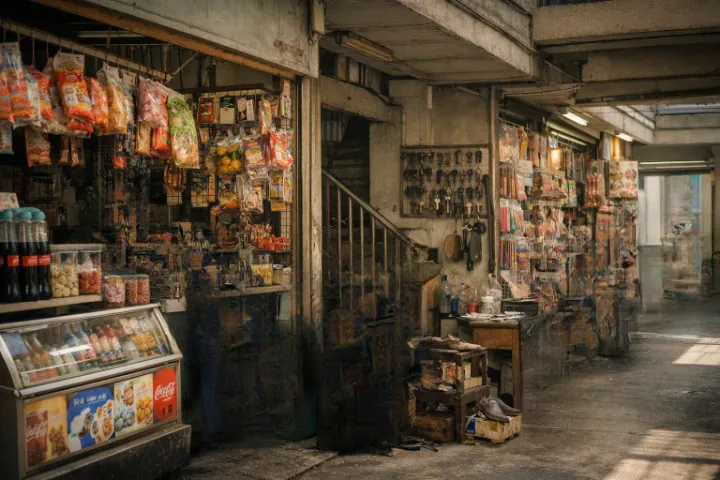
店舖裡通常堆滿貨品。牆上掛著零食,櫃檯旁邊放著玻璃罐,裡面裝著糖果、話梅、山楂餅。雪櫃裡則有玻璃樽汽水、維他奶、雪條。
對小朋友來說,士多是一個小小的世界。
放學後,只要幾塊錢,就能買到一包薯片、一支雪條或者一粒口香糖。很多人也記得,小時候常常站在士多門口,花很長時間選零食。
有些老闆甚至會記得每個小朋友喜歡吃什麼。
除了士多,屋邨裡還有很多不同的小店。
文具店是學生常去的地方。
開學季節,店裡會擺滿書套、筆袋、練習簿。
老闆熟悉附近學校的書單,有時學生一說班級,老闆就知道要準備什麼。
補鞋店則是另一種存在。
以前很多人會修理舊鞋,而不是直接丟掉。
補鞋師傅坐在小小的舖位裡,用工具把鞋底重新釘好。
對一些街坊來說,這些師傅甚至認識了十多年。
還有鎖匙店。
一條小街可能只有一間,但整個屋邨的人都會去那裡配鎖匙。
店裡掛滿不同形狀的鎖匙胚,機器運作時會發出金屬摩擦的聲音。
這些小店,也記錄著居民的生活。
很多老闆在同一個地方開店幾十年。
他們看著小朋友長大,看著屋邨的改變。
有些居民甚至會說,某間士多比自己住在這裡的時間還長。
在那個年代,買東西不只是交易。
街坊與店主之間往往很熟悉。
有些小朋友忘記帶錢,老闆會說:「下次先畀啦。」
有些老人家行動不便,店主會幫忙把東西送到樓下。
這種人情味,是很多大型商場難以取代的。
隨著城市發展,香港的零售環境逐漸改變。
大型超市與連鎖便利店開始進入屋邨。
它們的貨品更多,營業時間更長,也有統一管理。
對不少居民來說,這些店舖確實更方便。
但同時,一些經營多年的小店卻難以競爭。
租金上升,經營成本增加,加上顧客習慣改變,不少屋邨小店逐漸結業。
有些地方的舊商場重建,原本的小舖位被重新規劃,變成大型連鎖店的空間。
當最後一間小店關門,整條街的氣氛也會改變。
有些人會突然發現,曾經每天經過的那家士多,再也沒有亮燈。
對年輕一代來說,屋邨小店可能只是一段模糊的印象。
但對很多在七、八十年代長大的人而言,那些店舖是生活的一部分。
很多回憶,其實都發生在這些地方。
有人第一次自己買零食,是在士多。
有人第一次買漫畫,是在屋邨書報攤。
有人第一次學會與陌生人聊天,也是從這些小店開始。
這些細小的店舖,見證了一個社區的成長。
即使城市不斷變化,香港人的生活方式也不斷改變,但屋邨小店留下的記憶,仍然存在於很多人的心中。
有時候,當我們經過一條舊街,看見仍然亮著燈的小士多,會突然想起很多年前的畫面。
那些玻璃罐裡的糖果、門口掛著的零食、還有店主熟悉的笑容。
或許有一天,這些小店會完全消失。
但在城市的記憶裡,它們曾經存在過。
在一個不太大的舖位裡,陪伴了一整代香港人的日常生活。
而那些屋邨小店的年代,也會繼續留在許多人的回憶之中。
English Version
Within the structured environment of Hong Kong’s public housing estates, neighborhood shops once formed an essential part of daily living, quietly supporting the routines and relationships of the communities around them. These small stores, often located on the ground floors of residential blocks or within estate shopping areas, provided convenient access to everyday necessities. Yet, their importance extended far beyond practicality. They became part of the emotional landscape of those who grew up nearby, serving as familiar spaces that accompanied different stages of life. From childhood to adulthood, these shops remained constant, offering both continuity and comfort within a rapidly changing city. Unlike larger commercial centers, neighborhood shops operated on a human scale. Shopkeepers were often long-time members of the community, and their presence added a sense of stability to the environment. Customers were not anonymous; they were recognized, greeted, and remembered. This familiarity created an atmosphere of trust and ease, where transactions were accompanied by brief conversations and shared understanding. Over time, these repeated interactions formed relationships that blurred the line between business and community, turning the shop into a social space as much as a retail one. For children growing up in these estates, neighborhood shops were places of discovery and small independence. With a few coins in hand, they would step inside to choose snacks, drinks, or small toys, learning early lessons about choice and value. The experience was simple yet meaningful—selecting an item, interacting with the shopkeeper, and carrying it home. These moments, repeated over time, became part of childhood memory, associated with freedom, curiosity, and the comfort of familiarity. The shops themselves, with their tightly arranged shelves and varied goods, felt like contained worlds waiting to be explored. For adults, these shops served a different but equally important role. They provided convenience within the rhythms of daily life, allowing residents to quickly purchase essentials without leaving the neighborhood. More importantly, they offered opportunities for connection. A brief visit could turn into a short exchange of news, a casual conversation, or a moment of recognition that reinforced a sense of belonging. In a densely populated city, where space is limited and life moves quickly, these interactions added a human dimension to everyday routines. The physical character of these neighborhood shops reflected their function and history. Spaces were often compact, with goods arranged efficiently to maximize every available area. Signage might be simple, sometimes handwritten, and the interiors carried signs of long-term use. Refrigerators hummed softly, and the arrangement of products became familiar to regular customers. Each shop developed its own identity, shaped by the preferences of its owner and the needs of the community it served. This individuality distinguished them from larger retail environments, where uniformity often replaced character. As Hong Kong continued to develop, the presence of traditional neighborhood shops began to decline. The expansion of supermarket chains, convenience stores, and shopping malls introduced new forms of retail that emphasized efficiency, variety, and standardized experiences. While these modern options provided clear advantages, they also altered the dynamics of community interaction. The personal relationships that once defined small shops became less common, replaced by quicker, more transactional encounters. The shift reflected broader changes in urban life, where convenience often took precedence over familiarity. Despite this transformation, the memory of neighborhood shops remains deeply embedded in the collective experience of Hong Kong. They are remembered not only for what they sold, but for how they made people feel—welcomed, recognized, and connected. For those who grew up with them, these shops represent a time when communities felt closer, when daily life included small but meaningful interactions, and when the boundaries between private and public space were more fluid. Some of these shops still exist today, continuing to serve their communities while holding onto elements of their traditional character. Others have disappeared, leaving behind only memories and stories. Yet, their influence persists, shaping how people understand the value of community and the role of everyday spaces in forming identity. Reflecting on the era of neighborhood shops in Hong Kong reveals the significance of small-scale, human-centered environments within a large and complex city. These shops, modest in appearance but rich in meaning, played a vital role in connecting people to place and to one another. They remind us that the essence of a city is not only found in its skyline or infrastructure, but in the everyday spaces where life unfolds, relationships are built, and memories are formed.