
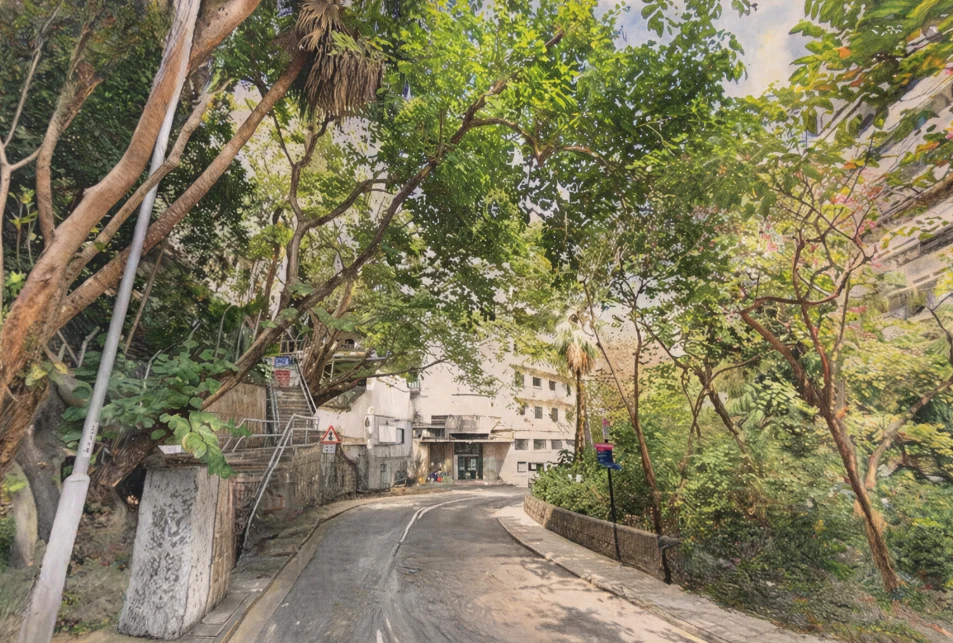
【街道筆錄】亞厘畢里:中環隱世石階小徑與殖民歷史的靜默痕跡 | Albert Path: A Quiet Colonial Stairway Hidden in Central Hong Kong
在中環高樓與人流之間,亞厘畢里像一條被時間遺忘的小徑,石階延伸於山坡之上,靜靜連接過去與現在,留下屬於舊香港的低聲回響。
Tucked between Central’s dense skyline, Albert Path feels like a pause in time—its stone steps climbing gently through history, offering a rare sense of stillness in a city that rarely slows down.
中文
亞厘畢里(Albert Path)位於中環,是一條連接不同高度地段的石階式街道,其名稱源自英國維多利亞時代的重要人物阿爾伯特親王,反映19世紀香港在香港開埠初期的命名習慣。亞厘畢里大約於19世紀中期形成,當時中環一帶地勢起伏明顯,城市規劃多依山勢而建,因此出現大量石階街道,用以連接上環、半山與中區行政地帶。與嘉咸街等較為熱鬧的街道不同,亞厘畢里自誕生以來便帶有一種低調與功能性的角色,它並非商業核心,而更像是居民與公務人員日常通行的路徑之一,尤其鄰近早期政府建築群,例如舊中區裁判司署與監獄設施,使這條小徑帶有某種歷史的重量與秩序感。隨着香港發展,中環逐漸成為金融與商業中心,亞厘畢里周邊環境亦經歷轉變,高樓與辦公室取代部分舊建築,但這條石階路卻奇蹟地保留了其原有形態,沒有被完全現代化所吞噬。從城市變化角度觀察,亞厘畢里是一種「被保留的過渡空間」,它不像主要幹道那樣被重建,而是以一種邊緣但持續存在的方式,見證城市如何層層堆疊。街道特色方面,亞厘畢里最具代表性的元素是連綿的石階、兩旁略顯陳舊的牆身,以及沿途不時出現的樹影與轉角,形成一種安靜甚至略帶孤獨的氛圍,與中環其他繁忙街道形成強烈對比。對於攝影者與城市探索者而言,這種「時間停滯感」正是亞厘畢里的魅力所在。今日的亞厘畢里,已不只是通道,而是一種城市記憶的象徵,它提醒人們,在急速發展的都市之中,仍然存在一些不被打擾的角落,默默承載着歷史與日常的痕跡。
English Version
Albert Path, situated in Central Hong Kong, is a narrow stepped lane that connects different elevations within the district, embodying the practical yet atmospheric qualities of early urban planning in Hong Kong. Named after Prince Albert, the path reflects the colonial naming traditions established during the formative years following the British colonization of Hong Kong. Emerging in the mid-19th century, Albert Path was shaped by the natural topography of Central, where steep hillsides required a network of stairways rather than conventional roads, linking administrative areas, residential quarters, and government institutions. Unlike more prominent streets that evolved into commercial hubs, Albert Path maintained a quieter, more utilitarian role, serving as a passage for civil servants, residents, and those navigating between the lower and upper parts of the district. Its proximity to historic government complexes, including former judicial and correctional facilities, lends the path an understated sense of authority and historical gravity. As Hong Kong transformed into a global financial center, the surrounding landscape of Central changed dramatically, with modern high-rises replacing older structures and redefining the skyline; yet Albert Path has remained largely intact, preserving its original stepped form and intimate scale. From an urban perspective, it represents a transitional space that has resisted complete redevelopment, existing on the margins of modernization while continuing to function within the city’s daily rhythm. The physical characteristics of the path—stone steps, aging walls, narrow turns, and intermittent greenery—create a distinct atmosphere that contrasts sharply with the intensity of nearby commercial streets, offering moments of quiet reflection within a densely built environment. For photographers and urban explorers, this sense of suspended time is precisely what makes Albert Path compelling. Today, it stands not merely as a route but as a subtle symbol of continuity, illustrating how fragments of the past can persist within a rapidly evolving metropolis, quietly preserving layers of everyday history.