一死一生意思解析|經歷生死後的人生感悟 | The Meaning of “One Death, One Life” Explained | 成語
「一死一生」是一個帶有深刻人生哲理的成語,用來形容人在經歷生死轉折後,對人生有了全新的體悟。它不只是描述生與死的對比,更象徵人在重大變故之後,心境與價值觀產生巨大改變,因此常帶有警醒與感悟意味。
The Chinese idiom “一死一生” reflects the profound transformation that can occur after facing life-and-death experiences. More than simply describing survival, the phrase symbolizes emotional awakening, personal growth, and a deeper understanding of life after hardship or crisis.
意思
「一死一生」字面上的意思是「經歷一次死亡與一次新生」,原本多用來形容人在危急之中死裡逃生,後來逐漸引申為人在重大變故後,產生截然不同的人生觀。這個成語之所以富有力量,在於它不只是談論肉體上的生死,更著重於精神與心境上的轉變。許多人在平穩生活中,往往不會真正思考人生價值,但當經歷疾病、災難、戰爭或巨大失敗後,才會重新理解生命的重要。這種從絕望到重生的感受,正是「一死一生」所要表達的核心。古代文人常以這個成語形容人在大難不死後性情改變,也有人用來描述國家在危亡之後重新振作。現代社會中,「一死一生」同樣常被用於人生低谷與重大轉折。例如一位病人經歷重病後,更懂得珍惜家人與健康;一位企業家在破產後重新開始,也可能比過去更加成熟穩重。這個成語提醒人們,真正改變人的,往往不是順境,而是困境。因為只有在面對失去與脆弱時,人們才更容易看見自己真正重視的東西。從心理角度來看,「一死一生」也象徵一種成長。舊有的自己因挫折而崩潰,但新的價值觀與心態卻因此誕生。這種轉變雖然痛苦,卻可能讓人變得更加堅強與清醒。因此,這個成語不只是悲傷的象徵,更包含希望與重生的力量。它讓人明白,即使人生曾跌入黑暗,也仍有重新站起來的可能。
English Version
The idiom “一死一生” literally means “one death, one life.” While it originally referred to surviving a deadly crisis, its deeper meaning evolved into describing the emotional and spiritual transformation that occurs after experiencing extreme hardship. The phrase suggests that a person who has stood close to death or disaster often emerges with a completely different perspective on life. This transformation is not limited to physical survival. More importantly, it represents the rebirth of awareness, values, and priorities. In peaceful times, many people move through life without deeply questioning what truly matters. However, illness, war, personal failure, or tragedy can suddenly force individuals to confront the fragility of existence. Such experiences often change the way people think about relationships, ambition, time, and happiness. In traditional Chinese culture, the idiom was commonly used to describe someone who survived a major catastrophe and became wiser afterward. It could also describe a nation or community recovering from destruction and rebuilding with renewed strength. Even today, the phrase remains meaningful in modern life. A patient recovering from a life-threatening illness may begin valuing family and health more deeply. Someone who loses everything financially might discover inner resilience and start a more meaningful life afterward. The idiom therefore highlights an important truth: true growth often comes not from comfort, but from suffering. Psychologically, “一死一生” symbolizes the collapse of an old self and the birth of a new one. Hardship may destroy old beliefs, but it can also create maturity, compassion, and clarity. While such transformation is painful, it often leads to deeper understanding and emotional strength. This is why the idiom carries both sorrow and hope at the same time. It reminds people that even after moments of darkness and despair, renewal remains possible. Through adversity, individuals may rediscover purpose, rebuild themselves, and emerge stronger than before.
小故事:
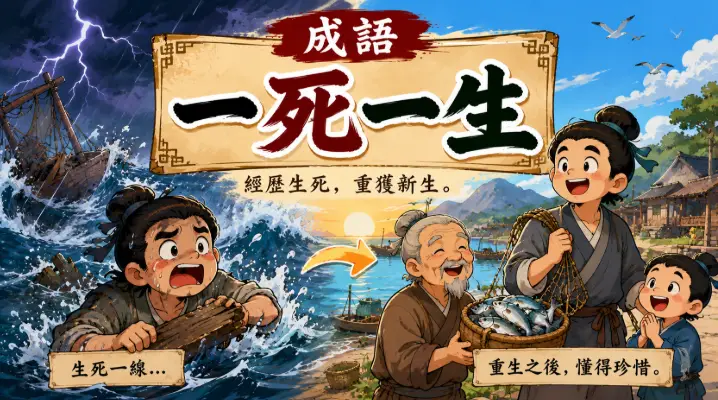
古代有一位年輕漁夫,從小在海邊長大,靠捕魚維生。他性格衝動,總認為人生只要及時行樂便足夠,因此經常把辛苦賺來的錢拿去賭博與飲酒。父親多次勸他珍惜生活,但他始終不以為意。有一年秋天,海上突然出現暴風雨。年輕漁夫為了多捕一些魚,仍執意出海。沒想到狂風巨浪瞬間吞沒小船,他被捲入冰冷海中,幾乎失去意識。就在他以為自己必死無疑時,一塊漂浮木板救了他一命。幾天後,他被附近村民發現並救回。經歷這場災難後,他沉默了很長時間。當他再次回到海邊,看著平靜海面時,忽然感受到生命竟如此脆弱。從那之後,他不再沉迷賭博,而是努力工作,細心照顧家人,也開始幫助村中的老人與窮人。村民們都驚訝於他的改變,有位老漁夫感嘆道:「他真是一死一生之後,像變了一個人。」多年後,年輕漁夫已成為受人尊敬的人。他常對晚輩說:「只有真正接近失去生命時,才會知道什麼最重要。」這句話也讓許多人深受觸動。這個故事後來流傳下來,成為「一死一生」最真實的寫照。它讓人明白,有些痛苦雖然可怕,卻也可能成為人生重新開始的契機。
English Version
Long ago, there lived a young fisherman who grew up beside the sea. Although hardworking by necessity, he cared little about responsibility and spent most of his earnings on gambling and drinking. His father repeatedly warned him to value life more seriously, but the young man ignored every lesson. One autumn evening, despite signs of an approaching storm, he insisted on sailing out to catch more fish. Suddenly, violent waves and fierce winds overturned his small boat, throwing him into the freezing ocean. Surrounded by darkness and crashing water, he believed death was inevitable. Just as he was losing consciousness, he managed to cling to a floating wooden plank. Days later, villagers from a nearby shore discovered and rescued him. After surviving the ordeal, the young fisherman became unusually quiet. When he returned to the beach and looked across the calm sea once again, he felt deeply aware of how fragile human life truly was. From that day forward, he changed completely. He abandoned gambling, worked diligently, cared for his family, and often helped elderly villagers and struggling neighbors. Everyone in the village noticed the transformation. An old fisherman sighed and said, “After facing death and life, he has become a different person.” Years later, the once reckless young man became one of the most respected people in the village. He often told younger generations, “Only when you nearly lose your life do you truly understand what matters most.” His words deeply moved those who heard them. The story survived because it perfectly captured the meaning of “一死一生.” It reminds people that suffering, while painful, can sometimes become the beginning of wisdom, gratitude, and personal rebirth.
結語
「一死一生」不只是生死之間的經歷,更象徵人在困境後的覺醒與成長。很多時候,真正改變人生的,不是順利與安穩,而是在黑暗中重新找到希望與方向。
English Version
The idiom “一死一生” teaches that hardship can transform people in powerful ways. Though suffering may bring fear and pain, it can also awaken gratitude, wisdom, and the strength to begin life again with a deeper understanding of what truly matters.