
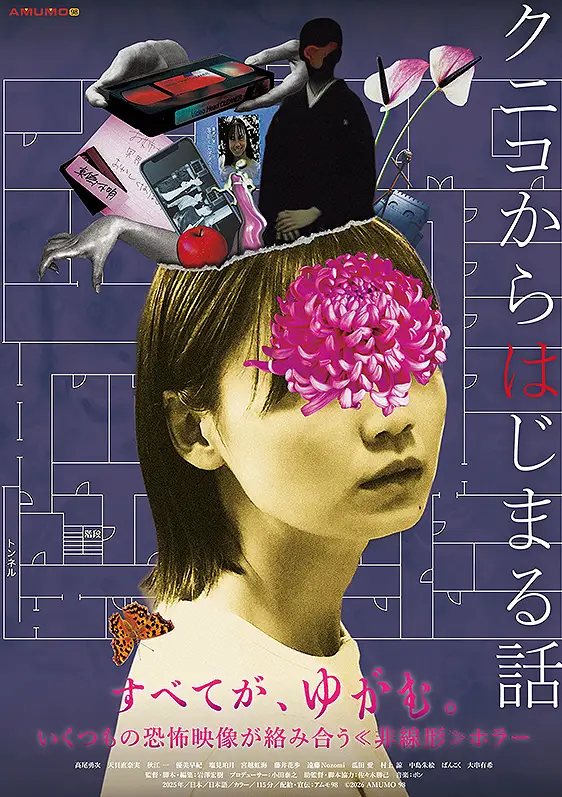
《クニコからはじまる話》是由岩澤宏樹執導、編劇與剪輯的日本長篇恐怖電影,改編自2015年網路上引發話題的恐怖短篇影像〈クニコ〉。原作收錄於心靈恐怖作品《死画像》中,以詭異新聞畫面逐漸異常化的演出方式,在恐怖影迷之間被稱為「最恐怖影像之一」。電影版則以這段傳說級影像為起點,把多個不規則且彼此交錯的恐怖片段串連成一場如惡夢般蔓延的視覺體驗。
Directed, written, and edited by 岩澤宏樹, A Story Beginning with Kuniko expands upon the infamous horror episode “Kuniko,” originally released in 2015 as part of the supernatural horror collection Dead Images. The original short gained cult attention online due to its deeply unsettling depiction of a television news report that gradually transforms into something horrifyingly unnatural. In this feature-length adaptation, the film uses that legendary footage as the starting point for a fragmented chain of terrifying images and psychological unease, creating an immersive nightmare-like horror experience rooted in internet urban legend culture.
電影內容
《クニコからはじまる話》的核心源頭,是一段看似普通的新聞影片。畫面報導一名失蹤少女「及川くに子」被發現身亡的消息,一開始只是典型新聞播報,但隨著影片持續播放,畫面與聲音開始出現微妙異變。主播表情、影像噪點、背景聲音與畫面細節逐漸變得詭異,並且帶有無法解釋的違和感。觀眾會感覺自己像看見某種「不該存在的東西」,而這種不安感正是原版〈クニコ〉最令人恐懼的地方。電影版並未把故事發展成傳統線性劇情,而是延續原作「詛咒影像」形式。影片像一場被切碎又重新拼接的惡夢,大量恐怖片段與錄像彼此不規則地連接。有些像監視器畫面,有些像都市傳說錄影,有些則彷彿是無意間拍攝到的異常現象。這些片段看似毫無關聯,卻又逐漸透過「クニコ」這個名字與影像彼此產生聯繫。電影最大的特色,在於它營造恐怖的方法並非依靠大量驚嚇,而是利用「觀看本身」帶來心理壓迫。觀眾並不知道下一個畫面會出現什麼,也無法確定自己是否真的看見了異常。這種模糊性使恐怖感不斷累積。導演岩澤宏樹本身曾參與《ほんとにあった!呪いのビデオ》系列,因此非常擅長「偽紀錄片式恐怖」與低解析度影像的不安氛圍。電影大量利用數位雜訊、畫面斷裂、突然靜止與不自然聲音,讓整體感覺像遭受某種詛咒侵蝕。作品同時帶有強烈網路時代恐怖感。過去的都市傳說往往透過口耳相傳,但《クニコからはじまる話》中的恐怖則透過影片、數位資料與網路傳播擴散。人們並不是被鬼怪直接襲擊,而是在觀看與分享影像的過程中,慢慢被恐懼吞噬。這種設定反映現代社會中「資訊本身可能帶來危險」的不安。電影中的恐怖也來自「無法理解」。觀眾始終不清楚クニコ究竟是什麼存在。她可能只是都市傳說,也可能是某種附著於影像中的怨念。電影刻意不給出完整解釋,使恐怖停留在觀眾腦中持續擴散。與一般鬼片相比,本作更接近「感覺型恐怖」,它利用觀看時的違和感與潛意識不安,使觀眾在畫面之外產生想像。這種風格與日本J-Horror傳統有強烈連結,特別是《リング》與《呪怨》那種「影像本身具有詛咒性」的恐怖概念。導演則進一步把這種恐怖帶入現代網路文化,使電影更像一則數位時代的惡夢都市傳說。《クニコからはじまる話》並不是強調劇情反轉的娛樂型恐怖片,而是一部專注於氣氛與心理侵蝕的實驗性恐怖作品。它讓觀眾逐漸分不清哪些畫面只是雜訊、哪些是真正異常,也讓「觀看」本身變成最危險的行為。
English Version
A Story Beginning with Kuniko originates from a seemingly ordinary television news report. The footage announces that a missing girl named Oikawa Kuniko has been found dead. At first, the broadcast appears completely normal — a routine piece of tragic news shown on television. However, as the footage continues, subtle abnormalities begin emerging within the image and sound. The anchor’s facial expressions feel slightly wrong, background noises become distorted, visual artifacts intensify, and tiny details inside the frame gradually create an overwhelming sense of unease. The horror does not arrive suddenly. Instead, the audience slowly realizes they may be witnessing something that should not exist. This disturbing sensation made the original “Kuniko” segment infamous among horror fans online. Rather than expanding the concept into a traditional linear narrative, the feature-length adaptation embraces the fragmented “cursed footage” format of the original work. The film unfolds like a shattered nightmare composed of disconnected recordings, surveillance clips, urban-legend videos, corrupted digital files, and unexplained visual anomalies. Some scenes resemble accidental paranormal recordings, while others feel like recovered footage from forgotten corners of the internet. Although these fragments initially appear unrelated, they gradually become linked through recurring references to “Kuniko” and the unsettling transformation of visual media itself. One of the film’s most distinctive qualities is its reliance on psychological discomfort rather than conventional jump scares. Fear emerges through the act of watching. The audience can never fully trust what they are seeing, nor can they determine whether an abnormality truly appeared on screen. This ambiguity creates a growing sense of paranoia and mental exhaustion. Director Hiroki Iwasawa, known for his involvement with the famous “Honto ni Atta! Noroi no Video” series, demonstrates exceptional skill in creating faux-documentary horror through degraded digital imagery and subtle audiovisual disturbance. Static noise, corrupted footage, frozen frames, unnatural silence, and distorted sound design gradually make the film itself feel infected by some invisible presence. The movie also strongly reflects modern internet-era anxieties. Traditional ghost stories once spread through spoken rumor, but here horror travels through digital images, recordings, and online sharing culture. People are not attacked directly by supernatural entities; instead, fear spreads through the simple act of viewing and transmitting information. The film suggests that media itself may become contaminated, turning curiosity and observation into dangerous acts. Another important aspect of the horror lies in the refusal to explain Kuniko’s true nature. The film never fully clarifies whether Kuniko is a ghost, an urban legend, a curse embedded in visual media, or something even less understandable. By withholding answers, the movie allows fear to continue growing within the viewer’s imagination long after the film ends. Compared to conventional horror movies, A Story Beginning with Kuniko functions more as experiential horror than narrative horror. It aims to infect the audience with discomfort through atmosphere, subconscious fear, and uncertainty. This approach strongly connects the film to classic Japanese J-Horror traditions seen in works like Ring and Ju-on, where cursed images and media themselves become sources of terror. At the same time, the movie modernizes those ideas through internet culture and digital aesthetics, transforming the old concept of the cursed videotape into a contemporary online nightmare. Rather than delivering straightforward entertainment, the film becomes an experimental psychological horror experience in which viewers slowly lose confidence in what they are seeing — and begin to fear the act of watching itself.
影片簡介(預告片/片段)
一段詭異新聞影像,逐漸化為無法停止的恐怖惡夢。
A cursed news broadcast evolves into a terrifying nightmare of digital horror.
電影資料
導演:岩澤宏樹
類型:恐怖、偽紀錄片、心理驚悚、日本電影
製片公司:日本獨立恐怖電影製作
上映年份:2020年代
主要特色
「クニコ」都市傳說影像
偽紀錄片式恐怖
數位詛咒與網路恐怖元素
總結
《クニコからはじまる話》以都市傳說與詛咒影像為核心,打造一場充滿不安與心理侵蝕的恐怖體驗。電影透過破碎影像與難以解釋的異常感,把現代網路時代的不安轉化為極具壓迫性的J-Horror惡夢。
A Story Beginning with Kuniko is an unsettling experimental horror film that transforms internet urban legends and cursed media into a deeply psychological nightmare. Through fragmented imagery and creeping audiovisual dread, the film captures the terrifying uncertainty of fear spreading through the digital age.