
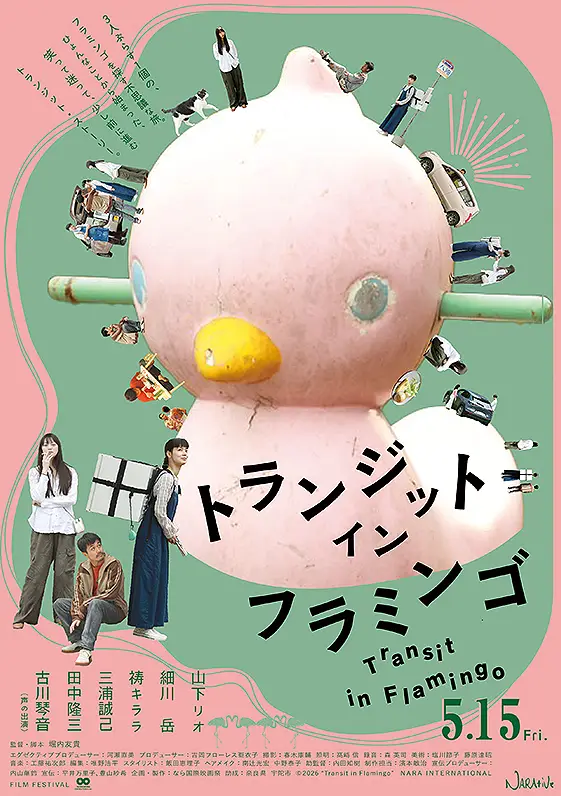
《トランジット・イン・フラミンゴ》是由堀内友貴執導與編劇的日本公路電影,以奈良為舞台,描繪三名年輕人在偶然旅程中重新面對內心創傷與人生停滯的故事。電影帶有淡淡奇幻感與濃厚生活氣息,在安靜節奏之中呈現青春的不安、孤獨與再生。作品延續日本獨立電影一貫的細膩情感風格,同時透過旅途與城市景色,讓角色逐漸尋回與世界重新連結的可能。
Directed and written by 堀内友貴, Transit in Flamingo is a gentle Japanese road movie set in the quiet landscapes of Nara. The film follows three strangers whose unexpected encounter leads them on a strange journey in search of a mysterious flamingo. Combining realism with subtle whimsy, the movie explores loneliness, emotional stagnation, memory, and healing through a calm and intimate portrait of young people searching for meaning and connection.
電影內容
《トランジット・イン・フラミンゴ》的故事從三名彼此毫無關聯的年輕人開始。Sae原本跟隨戀人搬到奈良生活,卻在陌生地方被對方留下,只能孤單面對失落與迷茫;Ryutaro則一直留在家鄉,無法真正離開熟悉卻停滯的生活,每天重複平凡而空洞的日子;Akari則背著一台舊冰箱來到奈良,希望尋找與摯友有關的回憶。三人在偶然情況下相遇,並因一個近乎荒誕的契機,踏上一段尋找「火烈鳥」的旅程。電影中的「火烈鳥」並不只是具體存在,更像一種象徵,代表角色內心無法言說的情感與人生出口。旅途中,三人沒有明確目的地,只是在奈良街道、澡堂、超市與鄉間小路之間漫無目的地移動。這種漂泊感形成電影獨特氣氛。導演並不強調劇情高潮,而是透過角色之間逐漸建立的關係,慢慢揭開他們心中的孤獨與傷痕。原本沉默而壓抑的情緒,在旅程中一點一滴流露出來。電影最大的魅力,在於它將平凡日常拍得極具情感溫度。澡堂中的短暫對話、便利店裡的停留、黃昏街道上的散步,都讓角色之間產生微妙連結。這些看似不起眼的瞬間,反而比激烈戲劇更能呈現青春中的迷惘與脆弱。奈良在電影中不只是背景,而像一座承載記憶與停滯時間的城市。古老街道與安靜空間形成柔和而憂傷的氛圍,使角色像漂浮於時間之外。影片同時探討「無處可去」的情感狀態。三位主角都處於人生過渡期,他們既無法回到過去,也找不到真正的未來方向,因此只能透過旅途暫時逃離現實。這種狀態與當代年輕人面對孤獨與不安的情緒非常接近。電影中的火烈鳥因此成為一種模糊希望,象徵人們對改變與重新開始的渴望。導演堀内友貴延續日本獨立電影常見的自然風格,大量使用長鏡頭與安靜節奏,讓觀眾沉浸於角色細微情感變化之中。演員們的表演也相當真實克制,情緒多半透過停頓與眼神表現,而非直接宣洩。電影音樂則由工藤祐次郎負責,溫柔旋律與奈良景色互相呼應,進一步強化旅途中的漂泊與療癒感。《トランジット・イン・フラミンゴ》並不是典型公路電影,它沒有激烈冒險,也沒有明確終點,而是透過三名迷失年輕人的偶然同行,描寫人與人之間短暫卻重要的情感連結。電影在安靜之中流露淡淡悲傷,同時又帶著溫暖希望,成為一部關於青春、孤獨與重新出發的溫柔人性作品。
English Version
Transit in Flamingo begins with three strangers whose lives have quietly drifted into emotional uncertainty. Sae moved to Nara with her boyfriend, only to find herself abandoned in an unfamiliar place, emotionally stranded and disconnected from the future she imagined. Ryutaro remains trapped in his hometown, unable to leave behind a repetitive life that feels increasingly stagnant and directionless. Akari arrives carrying an old refrigerator on her back, searching for traces of memories connected to a close friend from her past. By chance, the three encounter one another and become drawn into an unusual journey to search for a mysterious “flamingo.” The flamingo itself functions less as a literal object and more as an emotional symbol, representing longing, memory, hope, and the possibility of escape from emotional paralysis. As the trio wander through Nara’s streets, bathhouses, supermarkets, and quiet rural paths, the film gradually reveals their hidden emotional wounds. There is no urgent destination or dramatic mission. Instead, the movie focuses on movement itself — the emotional experience of drifting through unfamiliar spaces while slowly learning to share loneliness with others. This wandering structure creates the film’s uniquely gentle atmosphere. Director Yuki Horiuchi avoids conventional dramatic climaxes, choosing instead to build emotional depth through small everyday moments. Casual conversations inside public baths, silent walks at dusk, and brief pauses in convenience stores become emotionally meaningful encounters that slowly connect the characters to one another. The film’s emotional power comes from its ability to transform ordinary moments into reflections of youthful uncertainty and emotional vulnerability. Nara plays a crucial role within the story. The city’s quiet streets, historical atmosphere, and sense of suspended time create an environment where the characters appear emotionally detached from the outside world. The setting enhances the feeling that these young people exist in a transitional state, unable to fully move forward yet unable to return to the past. This emotional limbo reflects a broader sense of contemporary youth anxiety and disconnection. The search for the flamingo therefore becomes symbolic of a deeper search for meaning, belonging, and emotional renewal. Visually, the film embraces the restrained style associated with Japanese independent cinema. Long takes, natural lighting, and quiet pacing allow subtle emotional changes to emerge gradually. The performances remain understated and realistic, with emotions often expressed through silence, hesitation, and body language rather than dramatic confrontation. Music by 工藤祐次郎 adds warmth and emotional intimacy to the drifting road-movie atmosphere, blending beautifully with the landscapes of Nara. Executive producer 河瀨直美’s influence can also be felt in the film’s attention to place, memory, and emotional stillness. Transit in Flamingo is not a conventional road movie filled with action or dramatic transformation. Instead, it quietly portrays the fragile connections formed between lonely individuals who briefly travel together while searching for something they cannot fully explain. Through its melancholic warmth and emotional sincerity, the film becomes a gentle reflection on youth, loneliness, memory, and the possibility of healing through shared human experience.
影片簡介(預告片/片段)
三名迷失年輕人在奈良展開一場尋找火烈鳥的溫柔旅程。
A gentle Japanese road movie about three lonely strangers searching for a mysterious flamingo.
電影資料
導演:堀内友貴
類型:劇情、公路電影、青春、日本電影
製片公司:日本獨立電影製作
上映年份:2026年製作/89分
主要演員
山下リオ
細川岳
祷キララ
古川琴音(聲音演出)
總結
《トランジット・イン・フラミンゴ》以安靜細膩的方式描繪當代年輕人的孤獨與人生停滯。電影透過奈良旅途與角色之間微妙情感,呈現人們在迷失之中尋找希望與重新連結的過程,是一部帶有淡淡憂傷與溫暖力量的日本青春公路電影。
Transit in Flamingo is a quiet yet emotionally resonant road movie that captures the loneliness and uncertainty of contemporary youth. Through drifting journeys, subtle human connections, and the melancholic beauty of Nara, the film offers a gentle reflection on healing, memory, and the search for emotional belonging.