
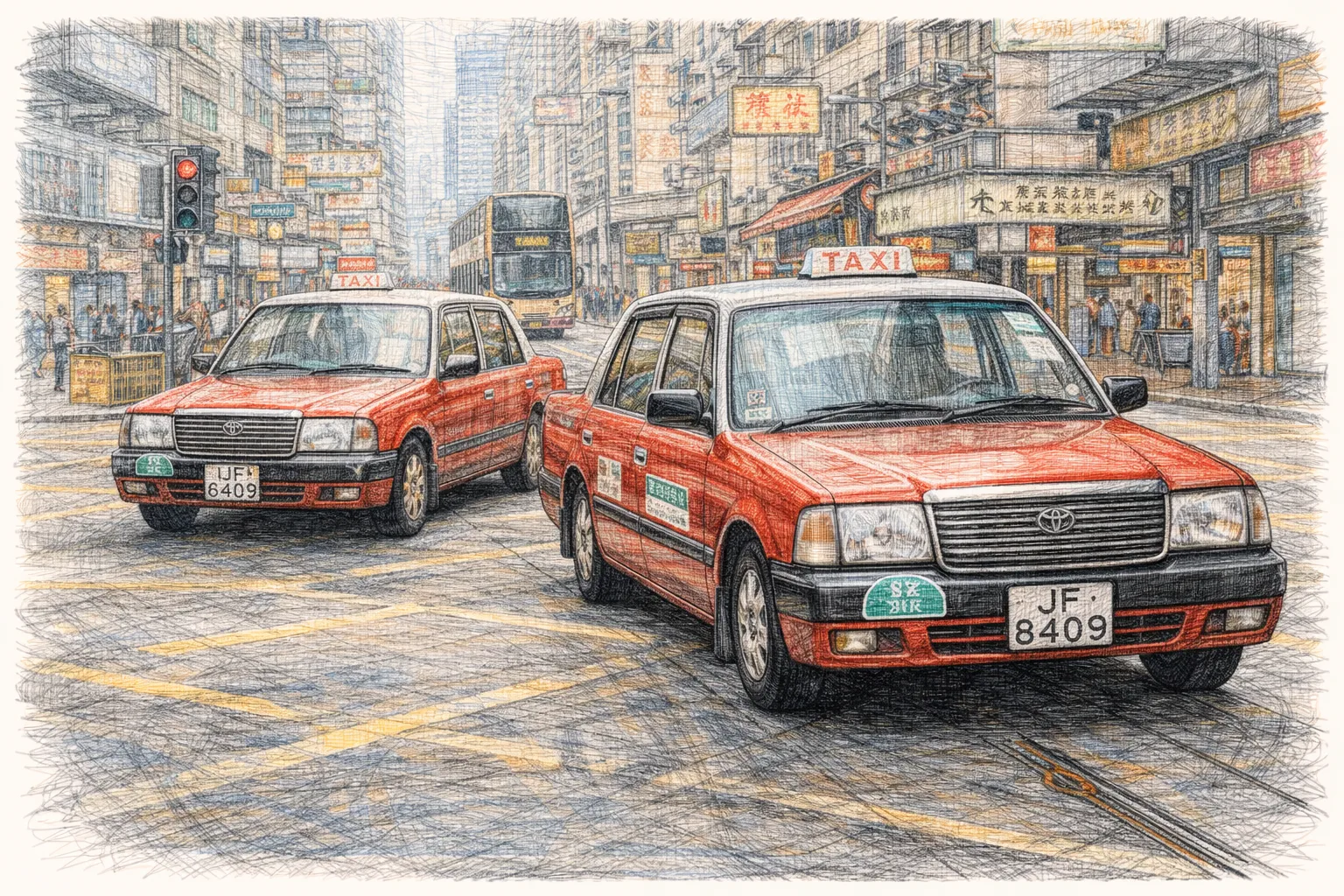
香港的士|一座城市如何在短程之中留下對話 |Hong Kong Taxis|How a City Moves Through Immediate and Personal Space| 包羅萬有 第 14 章
的士作為現代城市交通的重要組成部分,其靈活性與即時性使其在繁忙的都市生活中扮演著不可或缺的角色。相比於公共交通工具的規範性與系統性,的士提供了一種更加人性化的交通選擇,滿足不同情境下的出行需求。這種交通方式不僅體現了城市對多元化需求的包容,也反映了城市文化中的溫度與人性。
的士的運作方式以個人化服務為基礎,司機根據乘客提供的目的地地址及自身對城市道路的熟悉程度,靈活選擇最佳路線。這一過程不依賴既定路線圖,而是基於司機的判斷能力,展現了人類智慧在交通運輸中的價值。司機的經驗與直覺是其核心資源,透過長期駕駛累積的知識,他們能迅速判斷道路狀況並作出最佳決策。這種高度依賴人的特性使得的士成為一種溫暖且獨特的選擇。
此外,的士提供了一個相對私密的移動空間,乘客可以選擇沉默或與司機交流。這樣的氛圍使得的士不僅僅是交通工具,更是一個具備情感價值的場所。夜晚時分,當公共交通停止運營,的士仍然穿梭於城市街頭,為加班後回家的人、聚會散場的朋友以及需要緊急交通工具的人提供可靠服務。這些深夜旅程中,司機見證了無數平凡卻動人的故事,這些片段構成了城市文化的一部分,增添了城市生活的豐富性。
然而,的士的服務具有即時性與簡潔性,一旦旅程結束,乘客與司機之間的聯繫也隨之中斷。這種特性讓的士成為純粹的交通工具,減少了額外負擔,但同時也可能在某些瞬間留下難以忘懷的記憶。儘管現代城市規劃越來越強調效率與系統化,對人性化交通方式的需求仍然存在。的士作為即時需求的重要補充,其價值在未來交通系統中依然不可忽視。
在交通逐漸智能化與自動化的背景下,如何平衡效率與人性化需求成為城市規劃者的重要課題。的士以其獨特的人性化服務模式提供了值得借鑑的啟示。它不僅滿足了多樣化的出行需求,也承載了城市文化與情感價值,使得城市交通更具溫度與包容性。
English Version
Within the layered transportation system of Hong Kong, where large-scale networks such as railways and buses structure the movement of the population, taxis occupy a distinct position that emphasizes immediacy, flexibility, and personal space, offering a mode of transport that responds directly to individual needs rather than collective flow. Unlike fixed-route systems that require passengers to adapt to predefined paths and schedules, taxis operate on demand, allowing journeys to begin and end at points chosen by the passenger, creating a form of movement that is both highly efficient and deeply personalized. This immediacy transforms the experience of travel, where waiting is minimized and routes are adjusted in real time, reflecting a responsiveness that aligns closely with the pace and unpredictability of urban life. The interior of a taxi creates a temporary private environment within the public city, a small enclosed space where passengers are momentarily separated from the surrounding density, yet still moving through it, creating a unique balance between isolation and connection. Through the window, the city unfolds continuously, offering a shifting visual narrative that differs from both the abstraction of underground systems and the collective atmosphere of larger vehicles. Streets, buildings, and intersections pass by in a fluid sequence, allowing passengers to remain aware of their surroundings while experiencing a level of comfort and control not found in other forms of transport. The relationship between driver and passenger adds another layer to this experience, introducing a human element that can range from silent coexistence to brief conversation, reflecting the diversity of interactions that characterize urban life. This interaction, while often minimal, reinforces the idea that the taxi is not only a vehicle but a social space, where individual journeys intersect with the experiences of others in subtle and often transient ways. The flexibility of taxis allows them to navigate complex urban environments, adapting routes based on traffic, time of day, and passenger preference, demonstrating a form of real-time decision-making that complements the structured efficiency of larger systems. This adaptability makes taxis particularly valuable in situations where speed, convenience, or direct access is prioritized, serving as a bridge between different modes of transport and filling gaps that cannot be addressed by fixed networks alone. Historically, taxis have evolved alongside the city, responding to changes in infrastructure, technology, and demand, while maintaining their role as a key component of urban mobility. Their continued relevance highlights the importance of diversity within transportation systems, where different modes serve different functions, collectively enabling a city to operate with both structure and flexibility. In contrast to slower modes of transport that encourage observation and reflection, taxis often emphasize directness and efficiency, focusing on the destination while still allowing glimpses of the journey, creating a hybrid experience that combines speed with visibility. This duality reflects a broader aspect of modern urban life, where individuals seek both efficiency and connection, navigating between collective systems and personal needs. The presence of taxis within the city also illustrates how mobility can be scaled to different levels, from mass transit to individual movement, each contributing to a comprehensive network that supports a wide range of experiences and requirements. In a broader sense, taxis represent the immediacy of the city, capturing its responsiveness, adaptability, and constant motion, while also providing moments of pause within movement, where passengers can experience the city from a slightly removed yet still engaged perspective. Ultimately, the Hong Kong taxi system demonstrates how a city accommodates both collective and individual forms of mobility, offering a space where speed, flexibility, and personal experience converge, and where the act of moving becomes not only a function of infrastructure, but a reflection of how people choose to navigate the complexity of urban life.