《山海經 047(神獸篇)》嘲風 | The Wind-Watching Chaofeng of the Classic of Mountains and Seas
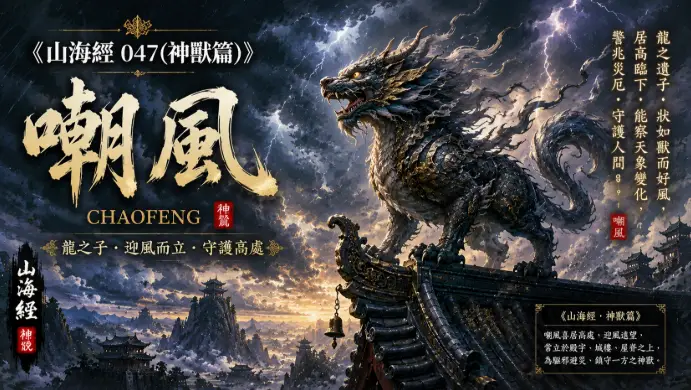
嘲風是中國古代傳說中的神獸之一,常被視為龍之子,象徵警戒、遠望與守護。在《山海經》的奇幻世界裡,嘲風棲息高處、喜迎風雨,因此也成為古代建築與神話文化中的重要守望神獸。
Chaofeng is a legendary creature deeply rooted in ancient Chinese mythology, often described as one of the dragon’s sons. Known for its love of heights and storms, the beast symbolizes vigilance, protection, and fearless observation. Within the mystical landscapes of the Classic of Mountains and Seas, Chaofeng became a guardian figure watching silently over the world from the highest peaks.
中文版本
在遠古群山的最高處,總能看見一道孤獨身影靜靜立於峭壁邊緣。牠迎著狂風,俯視翻騰雲海,即使雷霆撕裂天際也從不退卻。古人相信,那便是神獸嘲風。牠擁有近似龍獸的外貌,身軀修長而矯健,利爪緊扣岩石,雙眼如寒光般銳利。每當暴風雨降臨時,嘲風便會張開身軀,任由狂風吹過鱗甲,彷彿正在傾聽天地之間的低語。
《山海經》的奇異傳說中,嘲風是一種極具靈性的守護神獸。牠熱愛高處,因此總棲息於山巔、古塔與天際邊緣。人們認為嘲風能最先察覺災厄來臨,也能提前感知天地氣息的變化。每當山洪、雷暴或戰亂將至,牠總會發出低沉長鳴,提醒世人危險正在逼近。因此在古代信仰裡,嘲風被視為能驅邪避災的重要神靈。
相傳在極東之地,有一座永遠被狂風包圍的天柱山。山峰高聳入雲,終年雷電交織,而嘲風便居住於那片接近天空的禁地。沒有凡人能夠輕易攀上山頂,因為越接近巔峰,風暴便越猛烈。傳說只有真正無畏之人,才有機會遠遠看見嘲風立於懸崖之上的身影。牠背後長鬃在暴風中飛舞,目光始終凝視著無盡遠方,彷彿正在監視天地萬物的運行。
古老故事記載,曾有一座古城長年遭受妖霧侵襲。每當黑夜降臨,迷霧便會吞噬街道,百姓失蹤無數。城中祭司向山神祈禱,希望得到神獸庇護。就在暴風來臨之夜,一道巨影忽然從雷雲間掠過。嘲風自高塔之巔現身,牠的怒吼震散黑霧,利爪撕裂翻騰妖氣。隨著狂風席捲整座城市,籠罩多年的邪霧終於被徹底驅散。從此之後,人們相信嘲風擁有守護城池與驅逐災厄的力量。
在中國古代建築文化中,嘲風的形象經常出現在屋脊之上。尤其宮殿、寺廟與高塔屋頂,常能見到形似龍獸的小型雕像迎風而立。古人認為,將嘲風安置於高處,不僅能防止邪氣入侵,也象徵對天地的敬畏。這些屋脊神獸經歷千百年風雨,依然守望著城市與山河,彷彿真正的嘲風從未離開人間。
與其他強調力量的神獸不同,嘲風更像是一位沉默的觀察者。牠不追求征服,也不輕易現身,而是長久守望世界的變化。古人因此將嘲風視為警覺與智慧的象徵,提醒人們不可忽視細微徵兆,也不可失去對天地自然的敬畏之心。
千百年後,嘲風依然存在於東方神話與藝術之中。從古代屋脊神獸,到奇幻文學與遊戲世界,牠始終代表風暴、守護與遠望未來的力量。每當狂風掠過高塔與山崖,人們似乎仍能感受到那頭古老神獸正站在雲端之上,靜靜凝視著人間。
English Version
At the highest edges of ancient mountains stood a solitary creature watching the world beneath endless skies. Winds howled across cliffs while thunder rolled through the clouds, yet the beast never moved from its place. Ancient legends called this guardian Chaofeng, a mystical creature associated with storms, vigilance, and eternal observation. Its body resembled a dragon-like beast with sharp claws gripping stone peaks and glowing eyes capable of seeing far beyond mortal sight.
Within the mythical world of the Classic of Mountains and Seas, Chaofeng became known as a sacred watcher of heaven and earth. Unlike creatures tied to oceans or forests, it preferred towering heights—mountain summits, temple roofs, and isolated cliffs above the clouds. People believed the creature could sense disaster before it arrived. Storms, floods, invasions, and supernatural disturbances were all said to stir Chaofeng long before humans became aware of danger. Whenever catastrophe approached, its roar would echo through valleys as a warning carried by the wind itself.
Far to the east, ancient stories spoke of a sacred mountain called the Pillar of Heaven, a peak permanently surrounded by violent storms and endless lightning. At its summit lived Chaofeng, hidden among clouds no ordinary traveler could cross. The closer one climbed toward the peak, the stronger the winds became. Only the bravest wanderers claimed to have glimpsed the creature standing against the storm, mane flowing wildly while its gaze remained fixed upon the distant horizon as though guarding the balance of the world.
One legend tells of a city cursed by unnatural black mist. Each night the fog swallowed streets and homes, and many people vanished without a trace. Priests prayed desperately for divine protection. Then, during a night of fierce thunder, a massive shadow appeared above the city towers. Chaofeng descended from the storm clouds with a roar powerful enough to shake the heavens. The beast tore through the cursed fog as violent winds swept across the city. By dawn, the darkness had vanished completely, and sunlight touched the streets once more. From then onward, the people believed Chaofeng possessed the power to repel evil and guard civilization from unseen threats.
The image of Chaofeng eventually became deeply connected to Chinese architectural traditions. Statues resembling dragon-like guardians were often placed along palace rooftops, temple ridges, and towering gates. These roof guardians stood facing the wind, symbolizing vigilance against evil spirits, natural disasters, and misfortune. Ancient builders believed that placing Chaofeng upon sacred structures invited heavenly protection while honoring the forces of nature. Even after centuries of rain and storms, these stone guardians continue watching silently over ancient cities and mountain temples.
Unlike mythical beasts celebrated purely for strength or destruction, Chaofeng represented awareness and foresight. It did not seek conquest or glory. Instead, it observed quietly from above, always alert to the changing rhythms of the world. Ancient people admired this quality deeply, believing true wisdom came from patience, observation, and respect for forces greater than humanity itself.
Today, Chaofeng remains an enduring figure in East Asian mythology, fantasy art, games, and historical architecture. Whether carved upon ancient rooftops or imagined soaring through thunderclouds in modern stories, the creature continues to symbolize guardianship, resilience, and the power to see beyond the horizon. In every storm sweeping across mountains and towers, one can still imagine the silent watcher standing high above the clouds, listening to the voice of the wind.