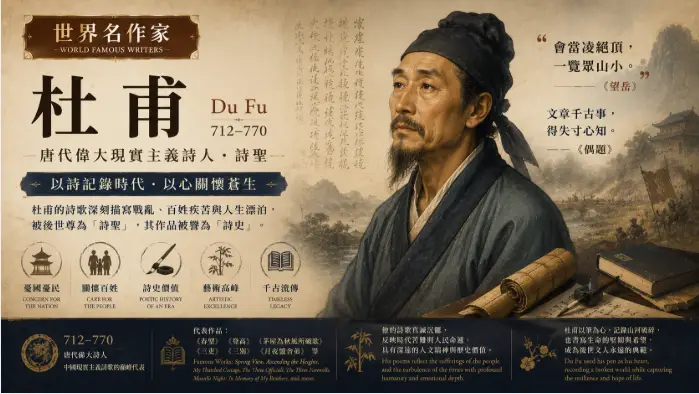
杜甫被譽為中國文學史上的「詩聖」,他的詩歌深刻描寫戰亂、百姓疾苦與人生漂泊,以沉厚情感與現實關懷成為唐代最具影響力的詩人之一。杜甫不只書寫個人命運,更記錄了一整個時代的動盪與人心。
Du Fu stands as one of the greatest poets in Chinese literary history. Revered as the “Poet Sage,” he transformed poetry into a powerful reflection of war, suffering, humanity, and social responsibility. His emotionally rich and historically grounded verses captured the struggles of ordinary people while preserving the spirit of an era marked by turmoil and change.
中文
杜甫於712年出生於唐代河南鞏縣,自幼受到良好教育,家族具有濃厚儒家文化背景。他年輕時胸懷理想,希望透過仕途實現抱負,像許多唐代文人一樣渴望以才學報效國家。然而杜甫的人生並不順遂,多次參加科舉卻未能成功,長期過著漂泊與貧困生活。雖然仕途失意,但這段經歷讓他更加接近民間百姓,也讓他的詩歌充滿真實情感與對社會現實的深刻觀察。杜甫生活於唐朝由盛轉衰的重要時期,尤其安史之亂對他的人生與創作產生巨大影響。戰亂使國家崩潰、百姓流離失所,杜甫親眼目睹飢荒、死亡與家庭離散,這些殘酷景象成為他詩歌的重要主題。他不像部分詩人只描寫山水與個人情懷,而是把人民疾苦與時代動盪寫進作品之中,因此後世認為他的詩具有「詩史」價值,像以文字記錄歷史。他在《三吏》《三別》等作品中描寫百姓被迫從軍、家庭破碎與社會悲劇,充滿對人民命運的同情與憂慮。杜甫的詩歌風格沉厚深遠,既具有高度文學技巧,也充滿真誠情感。他擅長運用嚴謹格律與細膩語言,把個人遭遇與國家命運結合在一起。他的作品不只是文學,更像對社會與人生的深刻反思。除了憂國憂民的作品外,杜甫也留下大量描寫自然與友情的名篇,例如《春望》《登高》《月夜憶舍弟》等,都展現他深厚情感與高超藝術表現。他在漂泊歲月中經歷飢寒與疾病,晚年生活尤其艱困,甚至曾長期依靠朋友接濟。然而即使身處困境,他仍持續寫作,把生命感受轉化成流傳千古的詩句。杜甫與李白常被並稱為唐詩雙峰,但兩人風格截然不同。李白充滿浪漫與豪放,而杜甫則更貼近現實與人間苦難,因此杜甫的作品帶有強烈人文精神與歷史厚度。他不只是一位詩人,更像關心國家與百姓命運的思想者。後世無數文人都深受杜甫影響,宋代蘇軾、明清詩家甚至現代文學研究都高度推崇他的成就。杜甫最終於770年病逝於漂泊途中,結束顛沛流離的一生,但他的詩歌卻成為中國文化中最重要的精神象徵之一。直到今天,人們仍能從杜甫作品中感受到對人民的悲憫、對國家的憂思,以及在困境中仍堅持理想與良知的力量。
English Version
Du Fu was born in 712 during the height of the Tang Dynasty, an era often celebrated as one of the golden ages of Chinese civilization. Raised in a scholarly family deeply influenced by Confucian ideals, he received a classical education from an early age and grew up believing that talent and moral responsibility should serve the nation. Like many intellectuals of his time, he dreamed of entering government service and contributing to society through wisdom and integrity. Yet his path proved far more difficult than expected. Repeated failures in the imperial examination system left him without the stable career he desired, forcing him into years of uncertainty, travel, and financial hardship. These struggles, however, brought him closer to the realities faced by ordinary people and ultimately shaped the compassionate voice that defined his poetry. Du Fu lived through one of the most devastating periods in Tang history: the An Lushan Rebellion. The rebellion shattered the empire’s prosperity and plunged the country into chaos, famine, violence, and mass displacement. Witnessing these tragedies firsthand deeply transformed Du Fu’s writing. Rather than retreating into purely personal or romantic themes, he turned his attention toward the suffering of soldiers, refugees, families, and the poor. His poetry became a living record of the emotional and social devastation caused by war. Because of this historical depth, later generations referred to his work as “poetic history,” recognizing that his verses preserved the human experience of an entire era. Poems such as The Three Officials and The Three Farewells portrayed forced conscription, separation, grief, and despair with extraordinary empathy. Du Fu possessed remarkable technical mastery, yet his poetry never felt distant or artificial. He balanced refined literary craftsmanship with profound emotional sincerity, creating works that spoke both to scholars and common readers. His writing carried moral seriousness without losing human warmth. Beyond themes of war and suffering, Du Fu also wrote unforgettable poems about friendship, nature, aging, family, and solitude. In works like Spring View and Ascending the Heights, he reflected on time, memory, and personal endurance with haunting beauty. Throughout much of his life, Du Fu endured poverty, illness, and displacement, often depending on the generosity of friends for survival. Even during periods of hunger and exhaustion, he continued writing tirelessly, transforming personal hardship into timeless art. Du Fu is frequently compared with the great Tang poet Li Bai, though the two represented very different poetic spirits. Li Bai embodied imagination, freedom, and romantic transcendence, while Du Fu confronted reality with compassion and moral reflection. This contrast made Du Fu a uniquely powerful literary figure whose work carried not only artistic brilliance but also ethical depth. Later dynasties regarded him as the highest model of poetic responsibility and human concern. Scholars, poets, and thinkers across centuries praised his ability to unite personal emotion with historical consciousness. When Du Fu died in 770 during another journey of hardship, he left behind a body of work that would become central to Chinese culture and literary tradition. Today, his poetry continues to resonate because it speaks to enduring human experiences: suffering, resilience, empathy, and the hope that compassion can survive even in the darkest moments of history.