
《山海經 041(神獸篇)》精衛:填海神鳥與永不放棄的古老意志 | Shan Hai Jing 041 (Mythical Beasts) Jingwei: The Sea-Filling Bird and the Spirit of Endless Resolve
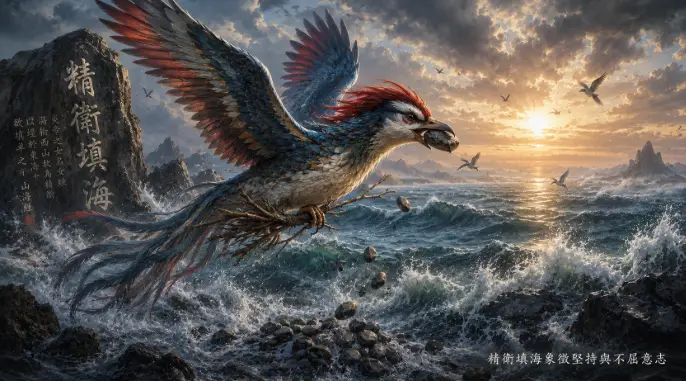
在《山海經》的神話傳說中,精衛是一隻不斷銜石填海的神鳥,象徵執念、堅持與對命運的不屈抗爭。牠的故事成為中國神話中最深刻的精神象徵之一。
Within the myths of the Shan Hai Jing, Jingwei is remembered as the bird that endlessly carries stones to fill the sea. Its legend represents perseverance, defiance against fate, and the enduring strength of unwavering will.
中文
東海之外,浪濤終年翻湧,灰藍色海面與天空連成一片,彷彿永遠沒有盡頭。海風吹過礁岩,帶著潮濕與寒意,而在那無數浪聲之中,總能隱約聽見細小卻執著的鳴叫。那是精衛。傳說很久以前,炎帝之女溺於東海,魂魄不散,化作一隻小鳥。牠羽色斑斕,頭頂帶著赤紅,雙翼雖不巨大,卻始終不停飛翔。自那一日起,精衛便從西山銜來樹枝與石子,投入東海之中。牠要將那吞噬生命的海洋填平,即使無人相信牠能成功。歲月流轉,無數潮汐漲退,海浪一次又一次吞沒牠投入的石子,但精衛從未停止。某年,一名年輕漁夫在暴風雨之後漂流至荒島。他疲憊不堪,幾乎失去求生意志。就在黎明前,他聽見頭頂傳來清脆鳥鳴。抬頭望去,一隻小鳥正掠過天空,口中叼著細小石塊。牠飛向海面,將石子投入浪濤,隨後再度振翅遠去。漁夫起初只覺奇怪,但很快便注意到,這隻鳥一次又一次重複相同動作,不知疲倦,也不曾停歇。海浪依舊洶湧,彷彿根本不在意牠的努力。可精衛從未猶豫。漁夫跟隨牠飛行的方向,來到島嶼高處,只見山坡上堆滿無數細小石塊與枯枝,那是牠日復一日搬運而來。海風吹亂羽毛,牠卻依舊再次起飛。漁夫忽然感到震撼。眼前這隻渺小的鳥,竟在以自身力量對抗無邊大海。那並非愚昧,而是一種超越結果的意志。夜幕降臨時,暴風雨再次逼近,海浪猛烈撞擊岩岸。漁夫看見精衛仍在風中飛行,瘦小身影幾乎被狂風吞沒。就在那一瞬間,他彷彿明白了什麼。人或許無法真正戰勝命運與天地,但只要仍願意振翅,便不算屈服。翌日清晨,風暴散去,漁夫找到回家的方向,而精衛依舊在海面上空飛翔。牠沒有因歲月而停下,也不曾因失敗而退卻。後來,人們將精衛的故事代代流傳,不只是因為牠填海的行為,更因為牠象徵著一種永不放棄的精神。即使面對無法撼動的存在,也依舊選擇前行。直到今日,東海之上偶爾仍能聽見那細小鳥鳴,隨著浪聲在遠方迴盪。有人說,那是精衛仍在銜石填海;也有人認為,那其實是人心深處不願向命運低頭的回音。
English Version
Beyond the eastern shores, where the sea stretches endlessly beneath shifting skies, there exists a story carried by wind and waves for countless generations. It speaks of a small bird named Jingwei, whose determination became greater than the ocean itself. Long ago, according to ancient legend, a young princess was lost beneath the waters of the Eastern Sea. Her spirit refused to fade, transforming instead into a bird with bright feathers and an unyielding heart. From that moment forward, Jingwei began an impossible task. Each day it flew from distant mountains carrying twigs, pebbles, and fragments of earth, dropping them one by one into the endless sea. The ocean swallowed every offering without resistance, yet the bird never stopped. Seasons changed, storms rose and vanished, and still Jingwei continued. A fisherman once encountered the bird after surviving a violent storm that had left him stranded near a desolate island. Exhausted and hopeless, he awoke before dawn to the sound of wings cutting through the cold air. Above him, a small bird crossed the sky carrying a stone in its beak. It flew toward the waves, released the stone into the water, then turned back toward the cliffs. Again and again, it repeated the journey. At first the fisherman believed the act meaningless. The sea remained vast and untouched, indifferent to the tiny burden it received. Yet the bird showed no sign of doubt. Curious, he climbed the rocky hills and discovered piles of pebbles and broken branches gathered across the island, evidence of endless labor. The bird returned repeatedly, despite the wind tearing at its wings. Watching it, the fisherman began to understand something deeper. Jingwei did not continue because success was guaranteed. It continued because surrender was impossible. That night another storm approached. Waves crashed violently against the cliffs, and the sky darkened with thunderclouds. Through the chaos, the fisherman saw the bird once again flying over the raging sea. Its silhouette was small against the immense storm, nearly consumed by wind and rain, yet it never turned away. In that moment, he realized the legend was not truly about defeating the ocean. It was about refusing to be broken by it. When dawn returned, the fisherman found his way home, forever changed by what he had witnessed. The story of Jingwei spread far beyond the eastern shores, becoming a symbol of perseverance and defiance. To many, the bird represents the strength to continue even when the world seems immovable. Its endless flight reminds people that true determination is measured not by victory, but by the refusal to abandon hope. Even now, sailors crossing distant waters sometimes claim to hear a faint cry carried across the waves. Some believe it is Jingwei still filling the sea stone by stone. Others believe it is the echo of humanity’s own enduring will, refusing to disappear beneath the tides of fate.