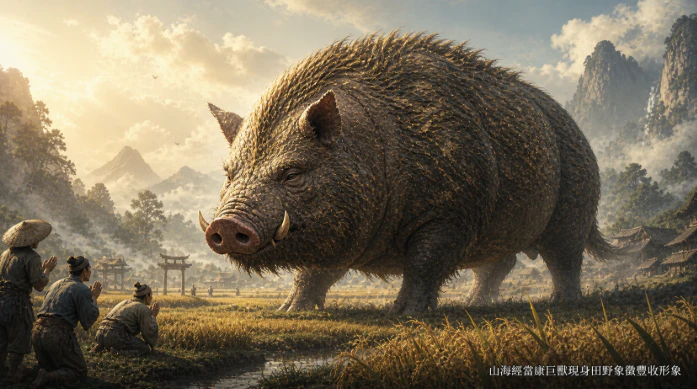
在《山海經》的記載中,當康是一種象徵豐收與安定的神獸,形似豬而鳴聲如鼓。牠的出現往往預示大地富饒,反映古人對農耕與自然和諧的深層期望。
In the Shan Hai Jing, Dang Kang is described as an auspicious creature resembling a boar, whose call echoes like a drum. Its appearance foretells abundance and reflects humanity’s ancient hope for harmony with the land.
中文
大地尚未完全甦醒之時,晨霧籠罩田野,遠方山巒若隱若現。農人踏入濕潤的土地,腳步沉穩而緩慢,耳邊只有風聲與泥土的氣息。這一年,風調雨順,禾苗生長旺盛,卻也伴隨著一種難以言說的異樣。某日黎明之前,一聲低沉而厚重的鳴響從山林深處傳來,如遠鼓震動大地。那聲音不急不躁,卻帶著規律與力量,彷彿在喚醒沉睡的土地。村中長者聽聞此聲,神色一變,低聲道出一個古老的名字——當康。傳說當康形似野豬,體型龐大,皮毛厚重如山石,行走之間大地微震。牠的叫聲如鼓聲回盪,能喚動地氣,使萬物生長。當康並不常現身,唯有在大地將迎來豐收之時,才會從山林中走出,巡行田野。那一日,數名農人循聲而行,穿過霧氣與林木,終於在一片開闊的山谷中見到牠的身影。當康立於田野邊緣,雙目平靜,並無兇意。牠低頭嗅聞泥土,隨後發出一聲沉鳴。那聲音震動空氣,也震動人心。奇異的是,隨著聲音擴散,周圍的作物似乎更加挺拔,葉片顫動如回應。農人們不敢靠近,只遠遠跪地,心中既驚又喜。他們明白,這並非威脅,而是一種來自大地的回應。當康緩緩前行,踏過田埂,所經之處泥土更加鬆軟,彷彿被重新賦予生命。牠並未停留太久,巡行片刻後,轉身走入山林深處。霧氣再度籠罩,牠的身影漸漸消失,只留下回音仍在耳邊迴盪。當年秋收時節,果然五穀豐登,田野金黃,村中人人喜悅。自此之後,人們將那一聲如鼓的鳴響視為祥兆,並在節慶之時模仿其聲,以祈求來年豐收。當康的故事被一代代傳述,逐漸成為信仰的一部分。有人說牠是真實存在的神獸,也有人認為牠只是人們對土地恩賜的象徵。然而無論真假,那聲回響仍留在人們心中。當風穿過田野,當泥土散發氣息,人們便會想起那沉穩而有力的鳴聲,提醒自己與大地之間的連結。或許當康從未真正離去,只是隱於山林之中,靜靜等待下一個豐收之年,再次踏出霧氣,讓大地回應生命的節奏。
English Version
Before the first light of dawn spreads across the fields, the land exists in a quiet, suspended state. Mist drapes over the soil, softening the outlines of distant hills, while the scent of earth lingers in the air. Farmers walk slowly through their fields, feeling the ground beneath their feet, aware that something unseen stirs within it. That year, the crops grew strong, nourished by steady rains and gentle sunlight. Yet alongside this prosperity came a sense of anticipation, as though the land itself was waiting. Then one morning, before the sun had risen, a deep and resonant sound echoed from the mountains. It was not thunder, nor was it the voice of any known animal. It carried a rhythm, steady and powerful, like a drum beating beneath the earth. The elders recognized it immediately and spoke the name that had been passed down through generations—Dang Kang. Described as a massive boar-like creature, its presence is said to influence the vitality of the land. Wherever it walks, the soil becomes richer, and life flourishes. Unlike creatures of fear, Dang Kang brings reassurance, a signal that nature is in harmony. Curious yet cautious, a few farmers followed the sound into the hills. Through drifting mist and quiet woods, they reached a clearing where the creature stood. It was immense, its form solid and grounded, as if shaped by the very earth it protected. Its eyes were calm, devoid of aggression. When it lowered its head toward the soil and released another deep call, the air itself seemed to respond. The crops nearby swayed gently, though no wind moved them, as if acknowledging the presence of something greater. The farmers did not approach. Instead, they knelt at a distance, understanding instinctively that they were witnessing something sacred. Dang Kang moved slowly across the land, its steps deliberate, leaving behind a subtle transformation. The soil softened, the air felt warmer, and an unseen balance settled over the fields. After a time, it turned back toward the mountains, disappearing into the mist as quietly as it had come. When harvest season arrived, the yield exceeded all expectations. Fields shimmered with abundance, and the village celebrated with gratitude. From that day forward, the sound of a drum became associated with prosperity, echoing the call of Dang Kang. Some believe the creature truly exists, hidden within the mountains, emerging only when the land is ready to flourish. Others see it as a symbol—a manifestation of humanity’s connection to the earth. Yet regardless of belief, the story endures. And whenever the wind passes over ripened fields, carrying a faint, rhythmic echo, people remember the unseen guardian who walks the boundary between myth and soil, ensuring that life continues to grow.