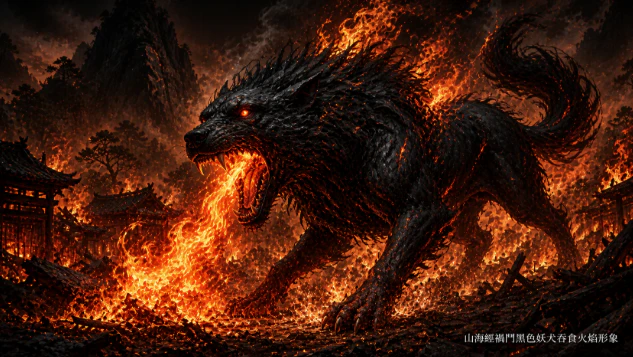
在《山海經》的神秘記載中,禍鬥是一種與火焰緊密相連的妖獸,形似黑犬,能吞食烈火。牠既象徵災厄與毀滅,也代表人類對火與失控力量的深層恐懼。
Within the mythic records of the Shan Hai Jing, Huo Dou appears as a dark canine creature bound to fire itself, capable of devouring flames. It represents both destruction and humanity’s deep-rooted fear of uncontrollable forces.
中文
烈風橫掃荒野,天空被濃煙染成暗紅之色,遠處山林火光沖天,彷彿整個世界都在燃燒。人們奔走呼喊,試圖撲滅火勢,卻無法阻止那吞噬一切的烈焰。就在這混亂之中,一道黑影悄然穿梭於火海之間,牠的身形矯健而詭異,毛色如炭,雙目閃爍著幽紅光芒。牠便是禍鬥。禍鬥並非普通野獸,傳說牠以火為食,越是猛烈的火焰,越能令牠強大。當牠出現之地,火勢往往更加難以控制,彷彿受到某種力量的引導。有人說,禍鬥是災厄的化身,是天地間火之失衡所誕生的怪物;也有人認為牠只是遵循本能,吞食火焰以求生存。那一夜,村落被山火逼近,火舌如巨蛇般蔓延,將房屋與樹木逐一吞噬。村民們絕望之際,看見禍鬥穿越火海,毫不畏懼烈焰,反而張口吞噬那炙熱的火焰。牠的動作迅速而貪婪,每一次吞食,都讓周圍的火勢稍微減弱,卻又在另一處重新燃起。有人試圖驅趕牠,認為正是這妖獸引來災難;也有人開始懷疑,或許牠正是唯一能與火抗衡的存在。禍鬥在火中奔行,身影忽隱忽現,宛如火焰的一部分。牠的低吼聲混雜在烈火爆裂的聲響之中,難以分辨。忽然,一棵巨木倒塌,火勢猛烈爆發,將整片山坡吞沒。禍鬥停下腳步,抬頭望向那片最猛烈的火海,隨後發出一聲低沉的咆哮,衝入其中。片刻之後,火光竟開始收縮,彷彿被某種力量吸走。村民們驚愕地看著這一幕,無法理解眼前的景象。當火勢逐漸平息,煙霧散去,只剩焦黑的土地與殘破的樹幹,而禍鬥也消失無蹤。沒有人知道牠去了哪裡,只留下無數傳說與爭論。有人說牠帶走了火焰,也帶走了災厄;也有人堅信,牠只是暫時離開,等待下一場大火再度現身。從那以後,每當遠方出現異常火光,人們便會低聲談論禍鬥的名字。牠既是災難的象徵,也是火焰的吞噬者,存在於恐懼與希望之間。或許,真正令人畏懼的並非禍鬥本身,而是那無法控制的火,以及人心對失去掌控的恐懼。
English Version
The wind carried heat across the land, and the sky glowed with a deep crimson haze as flames consumed forests and crept toward human settlements. Panic spread quickly, as people struggled to contain the relentless fire that devoured everything in its path. Amid the chaos, something moved within the blaze—a dark shape, swift and deliberate. It was not fleeing the fire. It was part of it. This was Huo Dou, a creature spoken of in fearful tones, a beast that thrived within flames rather than feared them. Resembling a shadowy hound, its body seemed forged from ash and embers, its eyes glowing like coals. Unlike ordinary animals, it did not escape destruction—it fed upon it. Legends claimed that the stronger the fire, the more powerful the creature became. Some believed it was the embodiment of disaster, born from imbalance in the natural order. Others argued it was simply a creature following its nature, consuming fire as sustenance. As the inferno approached a village, desperation took hold. Then, through the flames, the creature appeared. It moved with uncanny grace, stepping through burning debris as if immune to pain. With each movement, it lowered its head and consumed the fire itself. Wherever it fed, the flames weakened—yet elsewhere, they surged unpredictably. The villagers watched, torn between fear and fragile hope. Was this beast the cause of their suffering, or their only chance of survival? The creature continued its relentless motion, its presence blurring with the fire. Its growls merged with the crackling of burning wood, creating an eerie symphony of destruction. Suddenly, a massive tree collapsed, sending a surge of flames cascading down the hillside. The fire roared louder than ever, threatening to erase everything. The creature paused. For a moment, it stood still, as if measuring the force before it. Then, with a low, resonant growl, it charged into the heart of the blaze. What followed seemed impossible. The flames began to recede, as though being drawn inward, devoured by an unseen force. The villagers stood frozen, unable to comprehend what they were witnessing. Slowly, the fire diminished, leaving behind scorched earth and silence. When the smoke cleared, the creature was gone. No tracks, no trace—only questions remained. Did it take the fire away, or merely move on in search of more? Over time, the story spread, growing into legend. Some said Huo Dou was both curse and cure, a symbol of destruction and balance intertwined. Others believed it was a reminder—that fire, like fear, could not always be controlled. And perhaps the greatest danger was not the beast itself, but the human struggle to face forces beyond their command.