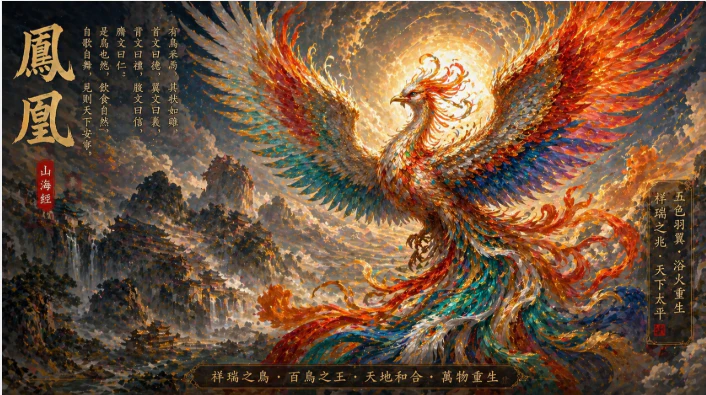
鳳凰是《山海經》中最具吉祥意義的神鳥,象徵和平、德行與重生,其出現被視為天下太平與秩序恢復的象徵。
The Fenghuang, a sacred bird in the Shan Hai Jing, represents harmony, virtue, and renewal, appearing as a sign of peace and the restoration of cosmic balance.
中文
在遙遠而清明的天地之間,有一片人跡罕至的高山,那裡雲霧如紗,四季如一,萬物生長卻不爭不奪,仿佛時間在此緩慢流動。傳說中,鳳凰便棲息於此。牠的身影並不常被看見,因為牠只在世界達到某種平衡與純淨之時才會出現。當牠展翅飛起,五色羽毛在光中閃耀,如同將天地的色彩重新編織,每一次振翅都帶來柔和的氣息,使風變得溫潤,使萬物安寧。鳳凰的鳴聲清越而悠長,不似凡鳥之聲,而更像是一種從遠古傳來的回響,能讓聽見的人心境平靜,忘卻紛爭與煩憂。牠不掠食,也不爭地,只棲於梧桐之上,只飲清泉,只食潔淨之物,彷彿象徵著一種超越凡俗的存在。古人相信,只有當君王賢明、天下太平之時,鳳凰才會降臨人間,成為德行與秩序的象徵。有人說,牠的出現並非偶然,而是對世界狀態的一種回應,當人心純正,天地自然回應以祥瑞。也有傳說指出,鳳凰具有重生的力量,當生命走到盡頭,牠會化為火焰,在烈焰之中消逝,隨後於灰燼中重生,羽翼更為華麗,光芒更為純粹。這樣的循環不只是生命的延續,更是一種淨化與升華。當夜色降臨,高山沉入寂靜,若有幸者遠遠望見鳳凰的身影,那將是一種難以言喻的震撼,因為牠並非單純的存在,而是一種象徵,一種將美與秩序凝聚於一體的力量。牠的飛行不帶狂風,而是帶來安定;牠的光芒不刺眼,而是溫暖;牠的存在不張揚,卻深深影響著世界。即使在傳說逐漸遠去的時代,人們仍然願意相信,在某個看不見的地方,鳳凰依然棲息,等待著一個足以讓牠再次降臨的世界。
English Version
In a distant realm where the air remains clear and undisturbed, there stands a mountain untouched by the chaos of the world. Mist drifts gently across its peaks, and time seems to move more slowly, as if the land itself exists in quiet harmony. It is here, according to ancient legend, that the Fenghuang resides. Rarely seen, the bird appears only when the balance of the world reaches a state of purity and peace. When it takes flight, its feathers shimmer in five radiant hues, weaving together the colors of heaven and earth. Each beat of its wings carries a gentle presence, softening the wind and calming all living things. Its call is not like that of ordinary birds; it resonates like an echo from a distant age, bringing stillness to the hearts of those who hear it. The Fenghuang does not prey, nor does it compete. It rests only upon the paulownia tree, drinks from the purest waters, and consumes only what is untainted, embodying a state of existence beyond worldly desire. Ancient beliefs held that its appearance signaled the presence of a wise ruler and an era of peace, making it a living symbol of virtue and order. Some say the Fenghuang does not simply arrive—it responds to the condition of the world, appearing only when humanity aligns with harmony. Other stories speak of its power of renewal: at the end of its life, it is consumed by flames, only to rise again from the ashes, more radiant than before. This cycle is not merely survival, but transformation—a continual refinement of spirit and form. As night falls and silence envelops the mountain, those fortunate enough to glimpse its silhouette experience something beyond awe. The Fenghuang is not just a creature, but a presence that unites beauty and balance into a single, enduring force. Its flight does not stir storms, but brings calm; its light does not blind, but warms. Though its legend belongs to ancient times, many still believe that somewhere beyond sight, it remains, waiting for a world worthy of its return.