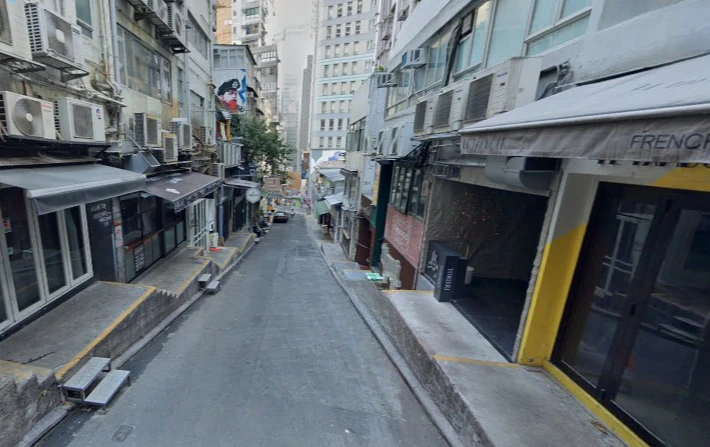
卑利街在白天與夜晚之間切換身份,白日是舊街生活的延續,入夜則變成熱鬧的酒吧地帶,在同一條斜坡上,交織出香港城市節奏的兩種面貌。
Peel Street transforms with the hours—quiet traces of old neighbourhood life by day, and a lively social strip by night—capturing two distinct sides of Hong Kong within a single slope.
中文
卑利街(Peel Street)位於中環與蘇豪區交界,是一條極具層次感的歷史街道,其名稱源自英國19世紀首相羅伯特·皮爾,延續香港早期殖民地以英國政治人物命名街道的傳統。卑利街大約於19世紀中葉隨香港開埠後逐步發展,最初與周邊街道一樣,主要服務華人社區的日常生活,街道兩旁遍布小商店、街市攤檔與住宅,形成一種密集而貼近生活的街區結構。與嘉咸街相近的位置,使卑利街在早期已經與街市文化產生緊密聯繫,白天的卑利街曾充滿買賣聲與人情味,是中環少數仍保留庶民氣息的地方之一。隨着香港經濟起飛及中環商業化加速,卑利街逐漸轉型,尤其在20世紀末至21世紀初,蘇豪區(SoHo)的興起徹底改變了這一帶的面貌,酒吧、餐廳與異國料理店進駐,使卑利街成為夜生活的重要延伸區域之一。從城市變化角度來看,卑利街是一條典型的「雙重性街道」,它在白天與夜晚呈現截然不同的功能與氛圍:日間仍可見傳統店舖與舊樓痕跡,而夜晚則被燈光、音樂與人群重新定義,形成一種強烈的時間分層感。這種轉變不僅是經濟活動的改變,更反映香港社會結構與文化消費模式的演變。街道特色方面,卑利街的斜坡地形與密集建築形成獨特視覺節奏,狹窄街道配合兩旁店舖與露天座位,使人與空間的距離變得親密,這種空間壓縮感正是中環舊區的典型特徵之一。今日的卑利街,既是旅客尋找夜生活的目的地之一,也是本地人仍能感受到舊香港輪廓的地方,它象徵着一種城市的「重疊狀態」——歷史沒有完全消失,而是被包裹在現代生活之中,成為一種可以被體驗的過去。
English Version
Peel Street, located at the intersection of Central Hong Kong and the vibrant SoHo area, is a historically layered street that reflects the evolving character of Hong Kong over time. Named after Sir Robert Peel, the street follows the colonial-era practice of commemorating British political figures, linking it directly to the early administrative identity of the city following the British colonization of Hong Kong. Developed during the mid-19th century, Peel Street originally functioned as part of a dense network of local streets serving the everyday needs of Chinese residents, with small shops, market stalls, and residential buildings forming a tightly woven urban fabric. Its proximity to Graham Street meant that it naturally shared in the energy of traditional market culture, where daily transactions and social interactions created a strong sense of community. However, as Hong Kong entered a period of rapid economic growth and Central transformed into a global business district, Peel Street began to undergo a significant shift. The rise of SoHo in the late 20th century redefined the area, bringing in restaurants, bars, and international cuisine, and gradually turning Peel Street into an extension of the city’s nightlife scene. From an urban perspective, Peel Street exemplifies a dual identity, where the function and atmosphere of the street change dramatically between day and night: during daylight hours, traces of its historical roots remain visible in the form of older buildings and traditional shops, while after dark, it becomes animated by lights, music, and social gatherings. This temporal layering highlights broader changes in Hong Kong’s social and economic landscape, illustrating how traditional community-based environments can evolve into experience-driven urban spaces. Architecturally, the street’s steep incline, narrow width, and closely packed structures create a distinctive spatial rhythm that encourages interaction and immersion, making it a compelling environment for both locals and visitors. Today, Peel Street stands as a vivid example of urban coexistence, where past and present are not separated but intertwined, allowing history to persist within the flow of contemporary city life.