
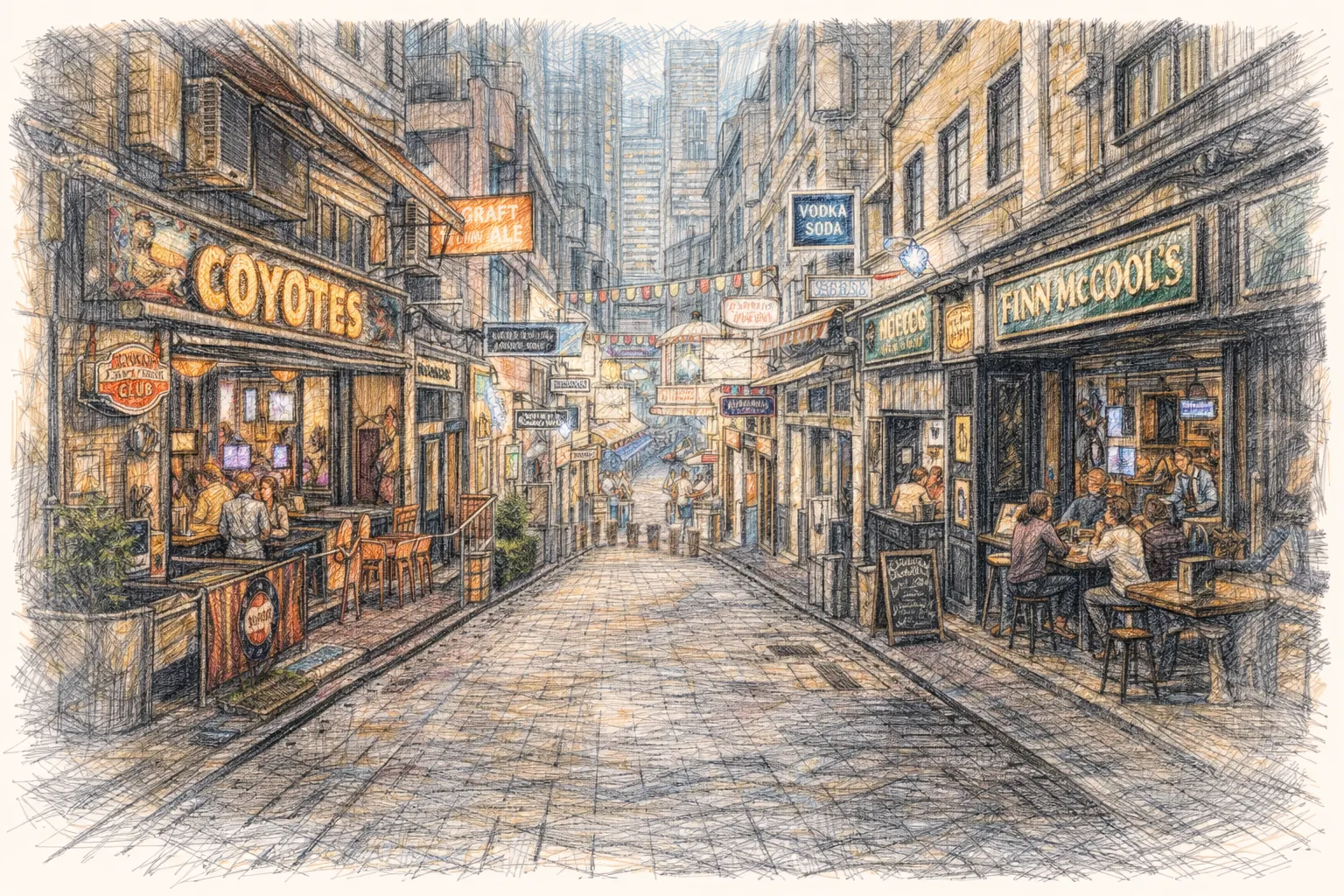
蘭桂坊|一個城市如何學會夜晚的樣子 | Lan Kwai Fong Nights|How a City Learned to Live After Dark【包羅萬有】第 6 章
蘭桂坊,位於香港中環的這片狹窄街道,早已成為城市夜生活的象徵,承載著無數人對於放鬆、娛樂與社交的期待。然而,它的形成並非一蹴而就,而是隨著城市的發展與社會需求的變遷逐漸演變而成。這個地區的故事,不僅是香港都市文化的一部分,更是現代人對於夜晚生活方式探索的縮影。
白天的蘭桂坊顯得平靜而普通,斜坡上的小街道、緊閉的店門,與其他中環街區並無太大差異。然而,當夜幕降臨,蘭桂坊彷彿換上一副全新的面貌。街道上的燈光逐漸亮起,音樂聲響徹四周,笑聲與談話聲交織在一起,形成了一幅充滿活力的都市夜晚景象。在這裡,人們不分身份、不拘背景,只為了享受片刻的自由與放鬆。
蘭桂坊作為香港夜生活的代名詞,其形成過程並非刻意規劃,而是由城市生活需求自然催化而成。在這座以快節奏著稱的國際都市中,人們需要一個能夠暫時擺脫日常壓力、釋放情緒的空間。蘭桂坊以其獨特的氛圍與地理位置,滿足了這一需求,成為人們在繁忙生活中尋求片刻喘息的重要場所。
夜晚的蘭桂坊展現了一種獨特的包容性。無論是本地居民、外籍人士還是遊客,都能在這裡找到自己的位置。上班族在一天忙碌後於此放鬆心情,年輕人則將這裡當作社交與娛樂的首選場所。身份界線在這裡變得模糊,白天的角色與職責被暫時拋諸腦後,每個人都可以自由地表達自我,享受夜晚所帶來的輕鬆氛圍。這種現象不僅反映了都市生活的多元性,也體現了現代人對於自由與自我表達的渴望。
然而,隨著時代的推移,蘭桂坊的面貌也在悄然改變。從音樂風格到店舖經營模式,再到人群組成,這片街區始終在不斷適應新時代的需求。曾經吸引無數人的熱鬧場景,可能在某些老一輩眼中漸漸變得熟悉甚至平淡;但對於新一代來說,蘭桂坊依然是充滿魅力和新鮮感的地方。這種持續演變的特性,使得蘭桂坊能夠不斷吸引新的訪客,同時也為每一個世代的人留下屬於他們自己的回憶。
對不同世代的人來說,蘭桂坊有著不同的意義。有些人記得的是年輕時與朋友在此狂歡的時光,有些人珍視的是與愛人在此共度的浪漫夜晚,而另一些人則將它視為一次次短暫逃離現實壓力的避風港。不論是哪一種情感記憶,它都承載了城市居民與訪客們對於美好生活的向往,以及對於自由與快樂的不懈追求。
儘管如此,蘭桂坊並非一成不變。它隨著城市發展而不斷更新,但也正因為如此,它才能持續吸引著無數人的目光。當夜晚結束、人群散去之後,清晨的蘭桂坊回歸平靜,清潔車穿梭其中,將前一晚的喧囂徹底清理乾淨。一切彷彿回到原點,但城市並未忘記這片街區曾經承載過的種種情緒與回憶。它記得那些笑聲、歡愉,也記得那些不願早早結束的夜晚。
蘭桂坊不僅是一個地理空間,更是一種生活方式、一種情感寄託。它教會人們,即使在最繁忙的日子裡,也要學會停下腳步,感受夜晚所帶來的美好與可能性。在這座永不停歇的城市中,蘭桂坊以其特有的方式存在著,成為香港都市文化中不可或缺的一部分。
它提醒我們,在追求成功與效率之餘,也要關注生活中的小確幸;在應對壓力與挑戰之際,也要學會給自己片刻喘息的時間。正是這樣一個既平凡又獨特的地方,使得香港這座城市更具魅力,也讓每一個踏足此地的人都能找到屬於自己的片刻自由與快樂。蘭桂坊不僅見證了城市的變遷,也見證了無數人的青春與夢想。無論未來如何變化,它都將繼續以其獨特姿態,陪伴著每一位尋求放鬆與歡樂的人們,在夜色中書寫屬於自己的故事。
English Version
In the rhythm of Hong Kong, where daytime is often defined by efficiency, movement, and structure, night introduces a different dimension of urban life, one that is shaped less by obligation and more by expression, interaction, and release, and few places illustrate this transformation more vividly than Lan Kwai Fong. Located within the dense core of Central, this compact network of streets has evolved over time into a symbolic center of nightlife, where the city redefines itself after sunset, shifting from a landscape of work into one of social energy and collective presence. Unlike traditional spaces that serve fixed purposes, Lan Kwai Fong operates as a fluid environment, adapting to the rhythms of those who enter it, where restaurants, bars, and open streets merge into a continuous experience that blurs the boundary between private and public space. As evening progresses, the atmosphere gradually intensifies, shaped by light, sound, and movement, where conversations overlap, music extends into the street, and the density of people transforms the physical environment into something more dynamic and unpredictable. This transition from day to night is not abrupt but accumulative, reflecting how the city learns to inhabit time differently, allowing for a coexistence of multiple identities within the same space. The visual landscape of Lan Kwai Fong is defined by contrast, with artificial lighting replacing natural light, neon and signage creating layers of illumination that reshape perception, turning narrow streets into vibrant corridors where every surface contributes to the overall experience. Sound plays an equally important role, forming an auditory environment that is both chaotic and rhythmic, where individual voices, music, and ambient noise combine into a shared urban soundtrack that defines the character of the night. Beyond its sensory impact, Lan Kwai Fong represents a broader cultural shift, marking the emergence of nightlife as an integral part of urban identity, where social interaction extends beyond daytime structures and into spaces of leisure and spontaneity. This shift reflects changing lifestyles, economic patterns, and cultural influences, positioning the night as a time not only for rest but for engagement and exploration. The presence of both locals and visitors contributes to a layered social environment, where different backgrounds and intentions intersect, creating a sense of diversity and openness that distinguishes the area from more regulated or homogeneous spaces. At the same time, the intensity of Lan Kwai Fong also reveals the complexities of nightlife, where freedom and constraint coexist, and where the management of space, behavior, and safety becomes an essential part of maintaining balance within a high-density environment. The streets themselves become stages for interaction, where individuals perform, observe, and participate in a continuous flow of activity that evolves throughout the night, gradually shifting as energy rises and eventually subsides. Over time, Lan Kwai Fong has become more than a physical location; it functions as a cultural symbol that represents how Hong Kong negotiates the relationship between work and leisure, control and freedom, structure and spontaneity. Its existence highlights the adaptability of urban space, demonstrating how a city can learn to extend its identity beyond daylight hours, creating parallel experiences that coexist within the same geographical framework. In a broader sense, the concept of a city learning to live after dark reflects an ongoing process of transformation, where social norms, economic activities, and cultural expressions evolve together, shaping new forms of interaction and meaning. Ultimately, Lan Kwai Fong is not only a place where nightlife happens, but a space where the city experiments with itself, testing the boundaries of how it can be experienced, and revealing that the identity of a city is not fixed, but continuously redefined through time, movement, and collective presence.