
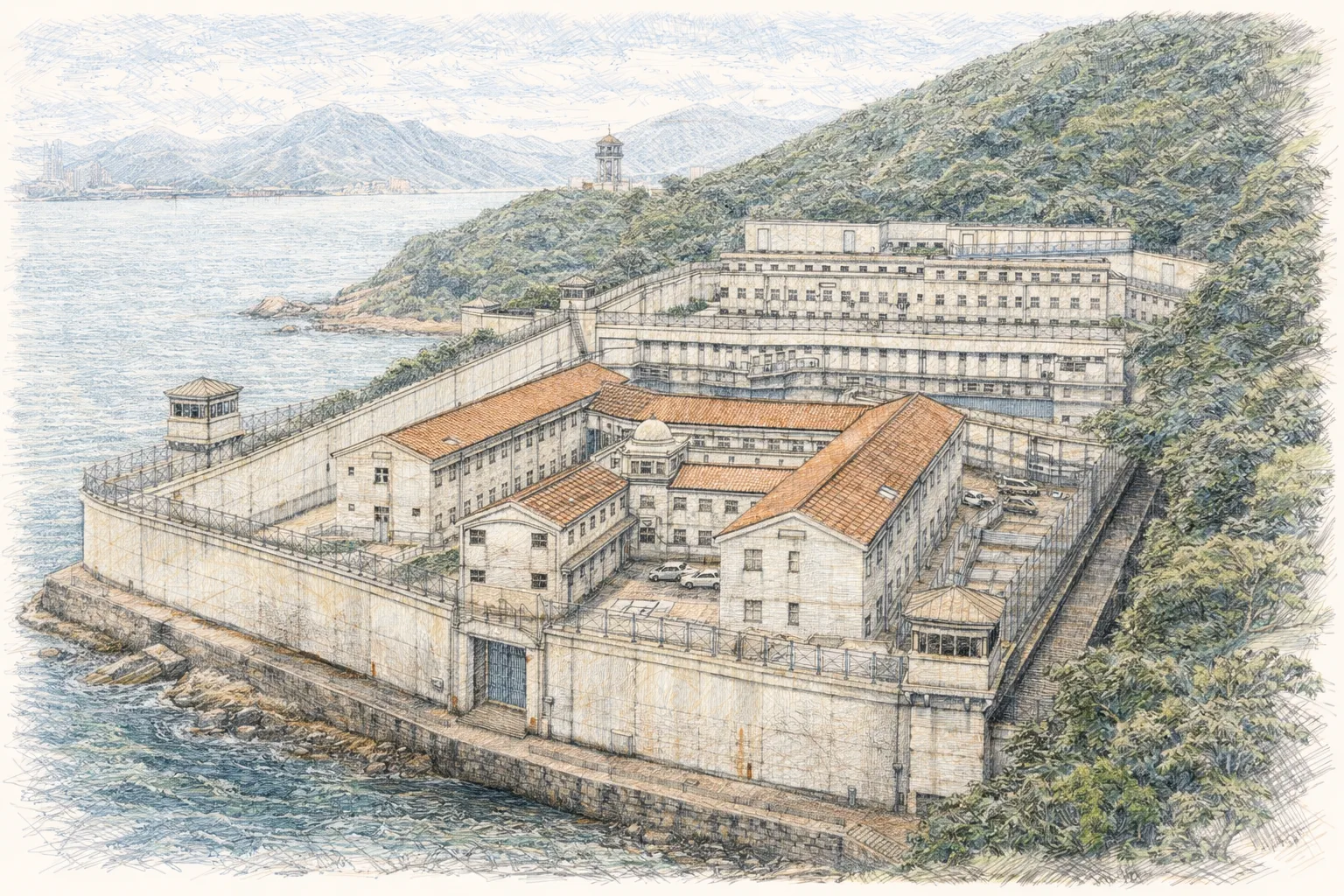
赤柱監獄|一個城市選擇不去看的地方 | Stanley Prison Hong Kong|The Place a City Chooses Not to See |【包羅萬有】第 5 章
赤柱監獄位於香港的南端,靠近海岸線,是一個充滿矛盾與象徵意義的空間。它既不隱秘,也不顯眼,彷彿刻意被塑造成一個與城市主流生活隔絕的地帶。這座監獄的地理位置特點鮮明,四周環繞著藍天碧海,風景如畫。然而,這樣的自然美景與監獄內部的封閉與孤寂形成了強烈的反差。對於外界的人而言,這片遼闊的海洋象徵著自由與希望,但對於囚犯來說,它卻是遙不可及的背景,進一步強化了他們與自由之間的鴻溝。
城市作為一個現代化的運作系統,其核心特徵在於流動性。人們在這裡不斷穿梭,追求效率與進步。然而,監獄則是城市中少數靜止的空間之一。赤柱監獄內,時間彷彿被凍結,每一天都在重複著相同的模式:固定的作息、單調的日常、缺乏變化的環境。囚犯們的生活被壓縮成一個永恆不變的週期,時間不再是一條向前推進的直線,而是被切割為無數重複的片段。這種時間的異化,不僅是懲罰的一部分,更是一種對現代社會價值觀進行反思的機制。它提醒我們,在追求效率與進步的同時,也可能忽略了個體生命中對變化與自由的需求。
赤柱監獄並非一個秘密,但它也從未成為社會公共討論的焦點。這種「被看不見」的狀態,很大程度上是社會有意識或無意識選擇的結果。監獄的存在本應提醒我們,自由並非理所當然,而是由制度規範所賦予並維護的一種權利。然而,在日常生活中,我們往往選擇忽視這一事實,將監獄視為一個與我們無關的異質空間。這種心理上的隔離,使得身陷囹圄的人們被排除在社會視野之外,似乎他們的存在並不影響城市的正常運行。
將監獄設置於城市邊緣地帶,也許並非單純出於實際管理上的考量,更可能是一種心理上的隔離策略。當監獄遠離我們日常生活的視野時,我們便能更輕易地忽略其中發生的一切,也可以暫時忘記那些被剝奪自由的人仍然是社會的一部分。這種空間上的邊緣化,不僅是一種地理上的佈局,更是一種心理層面的分隔,它反映了我們對某些群體的無聲排斥。
然而,赤柱監獄作為一個特殊空間,其實是社會結構的一面鏡子。它折射出我們對自由、秩序與效率等價值觀的集體認知,也揭示了我們對某些群體的不平等對待。自由在現代社會中被視為一種基本權利,但赤柱監獄的存在提醒我們,自由並非所有人都能同等享有。某些人因犯下錯誤而失去自由,他們的人生被按下了「暫停鍵」。然而,他們並未因此完全脫離社會,他們仍然是這個共同體的一部分。
值得注意的是,赤柱監獄內部的生活狀態,也反映了社會對懲罰與改造觀念的矛盾。一方面,監禁作為法律懲罰的一種形式,旨在剝奪犯錯者的自由,以警示他人並維護社會秩序;但另一方面,現代刑罰制度也應該包含對囚犯的教育與改造功能,使其能夠重新融入社會。然而,在實際操作中,這兩者之間往往存在張力。在赤柱監獄中,囚犯是否能夠真正得到改造?或者,他們是否只是被機械式地關押,度過漫長而重複的日子?這些問題值得我們深思。
此外,赤柱監獄也引發了關於空間使用與城市規劃的討論。作為一個位於海岸線旁、風景優美之地的大型設施,它是否應該承擔更多功能?或者說,是否應該重新評估這樣的位置是否適合作為監禁場所?從某種意義上說,將監獄設置於如此美麗的自然環境中,本身就帶有某種象徵意義:它既彰顯了自然界的無限遼闊,也突出了人類社會中自由與限制之間的強烈對比。
赤柱監獄雖然偏居一隅,但它卻深深嵌入城市運行與社會結構之中。它不僅是一個物理空間,更是一個承載著特殊角色與功能的社會機構。在當今這個強調效率、快速發展與競爭力的時代,我們或許更需要停下腳步,重新審視那些被邊緣化或忽略的存在。赤柱監獄以其沉默而穩定的姿態,提醒著我們:並非所有人都能在同一條時間線上前行,也並非所有人都能享有同樣程度的自由。
English Version
In every city, there are places that exist not at the center of attention but at its edges, spaces that are physically present yet socially distant, and Stanley Prison in Hong Kong represents one of these locations, defined as much by its function as by the silence that surrounds it. Situated away from the dense urban core, the prison occupies a geographical and psychological boundary, where the rhythms of daily life continue uninterrupted beyond its walls, while inside, time follows a different structure, measured not by the movement of the city but by routines, restrictions, and containment. Unlike public landmarks that invite visibility and engagement, this is a place that is deliberately concealed from everyday awareness, not through invisibility but through a collective decision to look away, to acknowledge its existence only when necessary, and to keep it at the margins of public consciousness. The architecture of the prison reinforces this separation, with walls, fences, and controlled entry points forming physical barriers that define its role as a space of exclusion, yet these structures also serve as symbolic markers of the boundary between freedom and confinement, between participation in society and removal from it. For those who pass nearby, the presence of the prison may register only briefly, a reminder that behind these boundaries lies a reality that contrasts sharply with the openness of the surrounding environment, where beaches, residential areas, and daily routines continue as if in parallel worlds. This coexistence of contrasting spaces highlights a broader aspect of urban life, where different layers of experience occupy the same geography without fully intersecting, allowing individuals to navigate the city without confronting all of its realities at once. The idea of a place that a city chooses not to see speaks to the role of perception in shaping urban identity, where attention is directed toward spaces that represent aspiration, culture, and progress, while others remain in the background, associated with control, discipline, and the consequences of social order. In this sense, Stanley Prison becomes more than a physical location; it becomes a conceptual space that reflects how societies manage visibility, deciding which aspects of life are brought into public discourse and which are kept at a distance. The existence of such a place also raises questions about memory and narrative, as it is not typically remembered through personal experience or shared stories in the same way as other landmarks, yet it remains embedded within the structure of the city, influencing its organization and functioning in ways that are not immediately apparent. Time within the prison operates differently, creating a contrast with the rapid pace of change outside, where development, movement, and transformation define the urban environment, while inside, repetition and routine create a sense of suspension. This difference in temporal experience further reinforces the separation between inside and outside, highlighting how space and time interact to shape human experience. Despite its distance from everyday life, the prison is an essential part of the city’s infrastructure, reflecting systems of law, order, and governance that underpin social stability, even if they are not constantly visible. The tension between necessity and avoidance defines its role, as it must exist, yet remains largely unspoken in public narratives. In a broader context, places like Stanley Prison remind us that cities are not composed solely of visible landmarks and celebrated spaces, but also of hidden or overlooked environments that contribute to their complexity and reality. The decision not to see is not simply an act of ignorance, but a way of maintaining a certain balance, allowing daily life to proceed without constant confrontation with its more difficult aspects. Ultimately, Stanley Prison stands as a quiet but powerful example of how absence of attention can shape the meaning of a place, where what is not seen or discussed becomes as significant as what is openly recognized, forming an essential yet understated part of the urban experience.