
Skip to content
madefrom.hk madefrom.hk madefrom.hk

Rewriting culture, history and memories beyond language and borders.

madefrom.hk madefrom.hk madefrom.hk

Rewriting culture, history and memories beyond language and borders.

  • English
    • Comics
      • Strange Tales
      • Myths of the Constellations
    • Games
      • Famicom Disk System
    • Column
      • Life & Technology
      • Toy Club
      • DAY
    • History
      • Old Newspaper Digests
      • History in 80 Seconds
    • Adapted Stories
      • romance of the three kingdoms
      • hong kong places
      • dream of the red chamber
      • strange tales
      • The house on the borderland
      • usherhouse
      • Theblackcat
  • 繁體中文
    • 漫畫
      • 碧廬冤孽
    • 學習筆記
    • 專欄
      • 生活與科技
      • 當年報章摘要
    • ACG
      • Winter 2026 Anime
      • Summer 2026 Anime
      • ACGHK
        • 2016
        • 2018
        • 2019
        • 2023
        • 2024
      • 創天綜合同人祭
        • 同人表演
      • 音樂
      • 電玩
        • 玩具資訊
        • 遊戲資訊
    • 原創小說
      • 不可思議故事
      • 十三號的約定
      • 星座宮神話
      • 香港山怪談
      • 香港都市靈異傳說
    • 旅行
      • Macau Travel
      • International Travel
      • 日本旅遊
      • Taiwan Travel
      • Thailand Travel
      • Hong Kong Travel
        • 土瓜灣
        • 舊建築
        • 街道
        • 單車
        • 文化
        • 交通
        • 香港書展
        • 表演
        • 廟宇
        • 教堂
        • 香港書展
        • 分享會
        • 紀念活動
        • 文化活動
        • 活動
        • 寵物
        • 巴士
        • 電車
        • 機場
        • 飲食
          • 上環
          • 中環
          • 筲箕灣
          • 西環
          • 天后
          • 旺角
          • 荔枝角
          • 佐敦道
          • 太子
          • 大角咀
          • 深水埗
          • 油麻地
          • 長沙灣
          • 黃大仙
          • 尖沙咀
          • 油塘
          • 葵芳
          • 屯門
          • 元朗
          • 上水
          • 粉嶺
          • 荃灣
          • 渡輪
    • 心理測驗
    • 節目重溫
      • 文化生活
      • 莎拉有約
  • 遊戲
    • SNK Neo Geo
    • PlayStation 2
    • Arcade
    • NEWS
  • Column
    • Knowledge Hub
      • 生活篇
      • 食品篇
      • 科技篇
      • 超市篇
    • Hong Kong Guide
    • Today in History
    • City Stories
    • Anime & Manga
    • Game Magazine
    • 遊戲誌
    • Language of Flowers
    • Street Notes
    • All Things
    • Music Memories
    • Chinese Idioms
    • Cantonese Sayings
    • Movie Magazine
  • History
    • 香港歷史
    • 世界名作家
    • World Biographies
  • Movies
    • USA
    • japan
    • Korea
    • Taiwan
    • HONGKONG
    • India
    • china
    • france
    • Tunisia
    • Germany
    • Jordan
    • Switzerland
    • sweden
    • Spain
    • Palestine
    • Norway
    • Argentina
    • Brazil
  • English
    • Comics
      • Strange Tales
      • Myths of the Constellations
    • Games
      • Famicom Disk System
    • Column
      • Life & Technology
      • Toy Club
      • DAY
    • History
      • Old Newspaper Digests
      • History in 80 Seconds
    • Adapted Stories
      • romance of the three kingdoms
      • hong kong places
      • dream of the red chamber
      • strange tales
      • The house on the borderland
      • usherhouse
      • Theblackcat
  • 繁體中文
    • 漫畫
      • 碧廬冤孽
    • 學習筆記
    • 專欄
      • 生活與科技
      • 當年報章摘要
    • ACG
      • Winter 2026 Anime
      • Summer 2026 Anime
      • ACGHK
        • 2016
        • 2018
        • 2019
        • 2023
        • 2024
      • 創天綜合同人祭
        • 同人表演
      • 音樂
      • 電玩
        • 玩具資訊
        • 遊戲資訊
    • 原創小說
      • 不可思議故事
      • 十三號的約定
      • 星座宮神話
      • 香港山怪談
      • 香港都市靈異傳說
    • 旅行
      • Macau Travel
      • International Travel
      • 日本旅遊
      • Taiwan Travel
      • Thailand Travel
      • Hong Kong Travel
        • 土瓜灣
        • 舊建築
        • 街道
        • 單車
        • 文化
        • 交通
        • 香港書展
        • 表演
        • 廟宇
        • 教堂
        • 香港書展
        • 分享會
        • 紀念活動
        • 文化活動
        • 活動
        • 寵物
        • 巴士
        • 電車
        • 機場
        • 飲食
          • 上環
          • 中環
          • 筲箕灣
          • 西環
          • 天后
          • 旺角
          • 荔枝角
          • 佐敦道
          • 太子
          • 大角咀
          • 深水埗
          • 油麻地
          • 長沙灣
          • 黃大仙
          • 尖沙咀
          • 油塘
          • 葵芳
          • 屯門
          • 元朗
          • 上水
          • 粉嶺
          • 荃灣
          • 渡輪
    • 心理測驗
    • 節目重溫
      • 文化生活
      • 莎拉有約
  • 遊戲
    • SNK Neo Geo
    • PlayStation 2
    • Arcade
    • NEWS
  • Column
    • Knowledge Hub
      • 生活篇
      • 食品篇
      • 科技篇
      • 超市篇
    • Hong Kong Guide
    • Today in History
    • City Stories
    • Anime & Manga
    • Game Magazine
    • 遊戲誌
    • Language of Flowers
    • Street Notes
    • All Things
    • Music Memories
    • Chinese Idioms
    • Cantonese Sayings
    • Movie Magazine
  • History
    • 香港歷史
    • 世界名作家
    • World Biographies
  • Movies
    • USA
    • japan
    • Korea
    • Taiwan
    • HONGKONG
    • India
    • china
    • france
    • Tunisia
    • Germany
    • Jordan
    • Switzerland
    • sweden
    • Spain
    • Palestine
    • Norway
    • Argentina
    • Brazil
Close

Search

Games | Famicom Disk System | Super Mario Bros. 2: The Lost Levels
EnglishFamicom Disk SystemGames

Famicom Disk System | Super Mario Bros. 2: The Lost Levels

2026-10-13

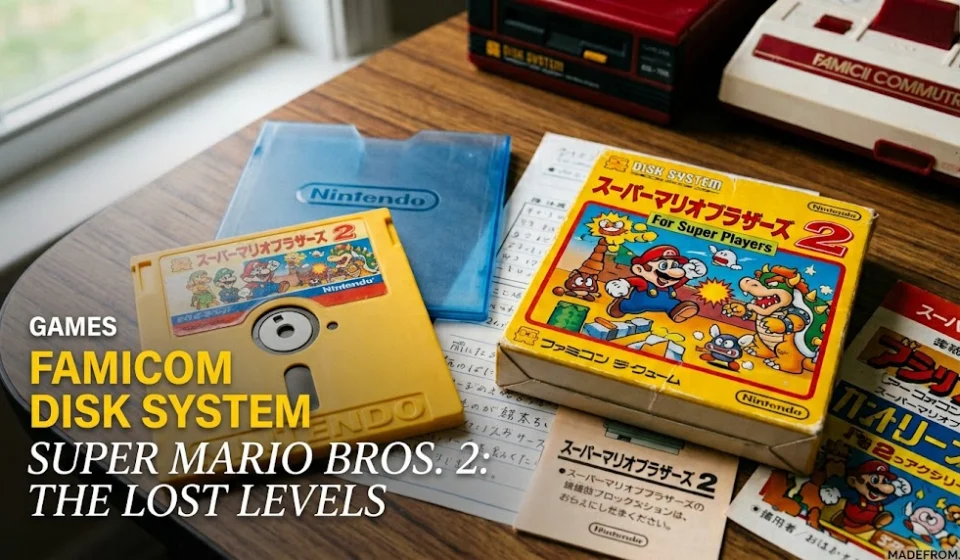
In 1986, Nintendo released a very different sequel to Super Mario Bros. Designed for experienced players, it pushed the original formula to a much harder level and was later known in the West as The Lost Levels.


The story of Super Mario Bros. 2 is more complicated than its title suggests. Released in Japan on June 3, 1986 for the Famicom Disk System, the game was designed as a direct continuation of the original Super Mario Bros. Rather than radically changing the formula, Nintendo took the familiar platforming system and pushed its demands much further. Mario and Luigi once again travel through the Mushroom Kingdom, facing enemies and obstacles on the way to rescuing Princess Peach from Bowser. The visual presentation remained close to the original, and the basic gameplay engine was also retained. What changed was the philosophy behind the level design. The first Super Mario Bros. had introduced a huge audience to side-scrolling platform games, teaching players how to run, jump, avoid enemies and understand the rhythm of a Mario level. The sequel was aimed at people who had already mastered those fundamentals. Shigeru Miyamoto wanted to create a game that could challenge experienced players rather than simply offer another beginner-friendly adventure. The development situation was also different from the first game. Miyamoto was heavily involved in the development of The Legend of Zelda for the Famicom Disk System, so Takashi Tezuka took the leading role in directing the sequel. Miyamoto nevertheless continued to contribute to level design and adjustments when time allowed. The result was a game that looked familiar but behaved very differently. Players were expected to understand movement with much greater precision, learn the behavior of enemies and carefully judge jumps and hazards. The sequel therefore became closely associated with extreme difficulty. Nintendo initially planned to release the Japanese game in North America, but Nintendo of America reportedly considered the game too difficult for the recovering American video game market. Instead of simply localizing the Japanese sequel, Nintendo chose a completely different solution. A Japanese Famicom Disk System title called Yume Kōjō: Doki Doki Panic, developed through a collaboration involving Nintendo and Fuji Television, was adapted into a new Mario game. Its four original characters were replaced by Mario, Luigi, Princess Peach and Toad, while objects and visual elements were redesigned around the Mario universe. The result became the North American Super Mario Bros. 2 and was later released in Japan as Super Mario USA. This created one of the most unusual naming situations in Nintendo history. The Japanese Super Mario Bros. 2 and the Western Super Mario Bros. 2 were not actually the same game. For years, Western players therefore had a completely different experience of what they believed was the second Mario platform game. The original Japanese sequel eventually reached international audiences in 1993 through Super Mario All-Stars on the Super Nintendo, where it was given the subtitle The Lost Levels. The new name helped distinguish it from the Western Super Mario Bros. 2 and also captured the game’s unusual history. It was effectively a missing branch of the Mario series that had remained outside the Western market for several years. After its appearance in Super Mario All-Stars, The Lost Levels continued to return on later Nintendo platforms. It was released for the Game Boy Advance in 2004 as part of the Famicom Mini series, followed by appearances through Virtual Console on Wii, Nintendo 3DS and Wii U. In 2019, it became available through Nintendo Switch Online, and the game was also included in the 2020 limited-edition Game & Watch: Super Mario Bros. These later releases gradually transformed the game from an obscure Japanese sequel into a recognized part of Mario history. Its importance is not simply that it was the second Mario platform game. It demonstrates how Nintendo experimented with difficulty and player expectations immediately after the enormous success of the original. Instead of making every aspect more accessible, the developers asked what would happen if the same basic mechanics were presented to players who already understood them extremely well. That approach produced a game remembered for demanding precision and persistence. The history of Super Mario Bros. 2 also demonstrates how regional game markets could shape the identity of a major franchise. Japanese players received one sequel, while North American players received another game carrying the same title. Decades later, both versions became part of the broader Mario story. The Japanese game eventually found its place as The Lost Levels, while the Western game developed its own identity and became an important Mario title in its own right. Looking back, the original Super Mario Bros. 2 is therefore more than a difficult sequel. It is a snapshot of Nintendo during an important period of experimentation, when the company was exploring new hardware through the Famicom Disk System and testing how far a successful game formula could be pushed. What began as a demanding sequel for experienced players eventually became one of the most unusual chapters in the history of the Mario franchise.

Super Mario Bros. 2 remains unusual because its history split into two different versions. The Japanese sequel became The Lost Levels, turning an initially local experiment into a distinctive part of Mario’s international legacy.
Views: 21
延伸閱讀
Famicom Disk System: Nintendo’s Floppy Disk Era
In 1986, Nintendo introduced the Famicom Disk System, bringing rewri…
Strange Tales | The Friend of a Ghost | English Comic Edition
Xu Sheng, a cheerful fisherman who lives by the river, forms an unli…
Comics : Strange Tales “The Examination of the City God”: Judgment Beyond Death
In this adapted tale from Strange Tales from a Chinese Studio, Schol…
October 7 in History|1959: Humanity Sees the Far Side of the Moon for the First Time
Humanity has observed the Moon for thousands of years. It has inspir…

Tags:

Famicom Disk System
Other Articles
Previous

The Toy Society | Article 000: Japanese Toy Culture and Industry

Next

當年報章摘要|十四歲學童被控誤殺父譚錦全

  • Patreon
  • Facebook
  • Instagram
  • YouTube
  • Bluesky
  • Tumblr
  • LinkedIn

Register|Lost your password?

  • Terms of Service
  • Privacy Policy
  • Contact
  • About Us
  • Register
  • Login
  • Password Reset
  • Advertising
  • Column Sponsorship
  • plus member

Content & Corrections

This website covers films, animation, games, cultural columns, and other related content and information. Our information is primarily based on publicly available sources, official announcements, and editorial research. Content may be revised or updated when new information becomes available.
If you notice any errors, believe that information needs to be corrected, or have updated official information that may be added, please contact us by email:
📧 [email protected]
We will review the information and make updates as soon as possible after verification.
Thank you for your help and understanding.

  • Myths of the Constellations | Episode 9 | When Fire Is Refused | English Comic Edition
  • Sherlock Holmes Never Lived at 221B Baker Street
  • 《十三號的約定》第一章|無聊錯誤的相遇 | 漫畫版本
  • 當年報章摘要|十四歲學童被控誤殺父譚錦全
  • Famicom Disk System | Super Mario Bros. 2: The Lost Levels

ACG HK anime Chinese Mythology Dream of the Red Chamber Hong Kong History On This Day Romance of the Three Kingdoms Silent film world history 三國演義 世界歷史 中國古典小說 中國神話 今日歷史 劉備 動畫 動畫電影 古典文學 台灣旅遊 專欄 小說連載 山海經 廣東話歇後語 影評 恐怖電影 推薦 日本動畫 日本電影 曹操 林黛玉 歷史上的今天 澳門 紅樓夢 經典電影 美國電影 聊齋志異 賈寶玉 電影 電影劇情介紹 飲食 香港文化 香港旅遊 香港歷史 香港都市傳說 香港電影

Copyright 2021 - 2026 — 0studiohk.com | madefrom.hk. All rights reserved.