
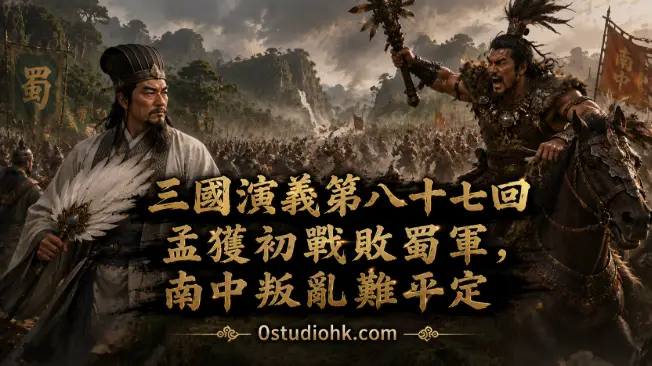
三國演義 第八十七回:孟獲初戰敗蜀軍,南中叛亂難平定 | Romance of the Three Kingdoms Chapter 87: Meng Huo Leads the Southern Rebellion as Shu Faces Its First Defeat
南中豪族相繼起兵反叛,諸葛亮親率大軍南征,希望徹底平定蜀漢後方。然而,南中山川險峻、瘴氣瀰漫,加上孟獲熟悉地勢,多次率兵迎戰,使蜀軍初入南中便遭遇重重考驗,一場智慧與謀略的較量正式展開。
As rebellion spread throughout the southern frontier, Zhuge Liang personally led Shu Han’s expedition to restore order. Facing difficult terrain, unfamiliar climates, and the determined resistance of Meng Huo, the campaign quickly proved far more challenging than expected. The southern campaign would become a contest of intelligence, patience, and leadership rather than brute military strength alone.
中文
成都城外,大軍整裝待發。
諸葛亮手持羽扇,站在高臺之上,目送一支支兵馬離開城門。
南中叛亂已經持續多月。
雍闓、高定、朱褒等地方首領先後起兵,許多部族紛紛響應,整片南方山區烽火四起。
朝廷雖然多次派兵鎮壓,始終未能徹底平息。
諸葛亮知道,若後方不能安定,北伐中原便永遠只是空談。
因此,他決定親自率軍南征。
出發之前,他反覆叮囑諸將。
「此次用兵,以安民為先。」
「不可濫殺百姓。」
「不可焚毀村寨。」
眾將齊聲領命。
大軍一路向南。
越過高山,渡過急流,眼前景色與蜀地截然不同。
南中森林密布,河谷交錯,終年炎熱潮濕。
不少士兵初到此地,不久便因瘴氣染病。
糧草運輸亦困難重重。
每前進一步,都比北方戰場更加艱辛。
另一方面,南中各部族早已集結。
其中最受眾人敬重的首領,正是孟獲。
孟獲身材高大,勇猛豪爽,在南中百姓之間威望極高。
他熟悉山林地勢,也深知各條隱密小道。
當他得知諸葛亮親自率軍南下時,豪氣萬丈。
「蜀軍遠道而來,必不熟山川。」
「只要據守險要,自可擊退他們。」
於是,孟獲率領部族勇士,不斷利用地形襲擊蜀軍。
密林之中,箭矢忽然飛出。
山谷之內,伏兵四起。
蜀軍雖然紀律嚴明,仍因道路狹窄而屢遭騷擾。
部分前鋒部隊甚至一度陷入苦戰。
探馬連日送來軍報。
不少將領開始擔憂。
「南中比想像中更加難以征服。」
有人建議集中兵力強攻。
有人主張放火焚山。
諸葛亮卻始終沒有同意。
他展開南中地圖,靜靜思索。
「真正的敵人,不是孟獲。」
眾將疑惑不解。
諸葛亮輕輕說道:
「若不能收服民心,即使今日平亂,明日仍會再起。」
他決定改變策略。
沿途軍隊嚴守軍紀,不取百姓一針一線。
遇見病患便施藥醫治。
缺糧村寨則分發軍糧。
許多南中百姓起初十分害怕蜀軍。
然而,看見官兵紀律嚴整,又願意幫助百姓,不少人逐漸放下戒心。
與此同時,孟獲仍然不斷集結兵力。
他相信,只要擊敗蜀軍主力,南中便可永遠獨立。
雙方終於在山谷前展開第一次大規模交戰。
喊殺聲震動群山。
南中勇士藉著熟悉地勢,一度壓制蜀軍前鋒。
蜀軍陣形受到衝擊,戰況陷入膠著。
不少將士開始焦急。
然而,中軍之中的諸葛亮卻始終神情平靜。
他沒有急著投入全部兵力。
只是靜靜觀察孟獲的作戰方式。
因為他知道。
真正決定南征勝負的,不是今天這一場戰役。
而是如何讓孟獲心服口服。
羽扇輕輕搖動。
一場流傳千古的「七擒七縱」,即將揭開序幕。
English Version
The gates of Chengdu opened as Shu Han’s expedition marched toward the southern frontier.
Standing before his assembled army, Zhuge Liang reminded every commander that this campaign would be unlike any they had fought before.
“The purpose of this expedition is not simply victory,” he declared.
“It is lasting peace.”
For months, rebellion had spread across Nanzhong.
Local leaders such as Yong Kai, Gao Ding, and Zhu Bao had united numerous tribal communities against Shu Han’s authority.
Repeated military expeditions had failed to restore order.
Recognizing the importance of securing the kingdom’s rear before any northern campaign, Zhuge Liang decided to lead the expedition himself.
The march south proved extremely difficult.
Towering mountains, dense forests, narrow valleys, and unfamiliar tropical climates challenged every step.
Many soldiers fell ill because of the humid environment.
Supplying thousands of troops through rugged terrain became an enormous logistical task.
Meanwhile, the southern tribes gathered under the leadership of Meng Huo.
Strong, fearless, and respected by the local people, Meng Huo possessed one decisive advantage.
He knew every mountain path, every hidden valley, and every river crossing.
Confident in his homeland, he welcomed the approaching Shu army.
“Our land itself will defeat them,” he declared.
Soon, tribal warriors launched repeated ambushes.
Arrows flew unexpectedly from thick forests.
Hidden fighters appeared among rocky cliffs before disappearing once more into the wilderness.
Although Shu’s soldiers maintained strict discipline, unfamiliar terrain slowed their advance and placed constant pressure upon the expedition.
Several forward units suffered heavy losses.
Within the Shu camp, opinions differed sharply.
Some generals recommended overwhelming force.
Others proposed burning forests to eliminate hiding places.
Zhuge Liang rejected every suggestion.
“The true battle is not against Meng Huo alone,” he explained.
“If we conquer the land but lose the hearts of its people, rebellion will return forever.”
His strategy therefore extended far beyond military victory.
Strict discipline prohibited soldiers from harming civilians or taking their property.
Food was distributed to hungry villages.
Doctors treated local residents alongside wounded soldiers.
Gradually, distrust gave way to cautious respect.
At the same time, Meng Huo continued gathering warriors from across the southern tribes.
He remained convinced that defeating Zhuge Liang’s main army would guarantee permanent independence.
Eventually, both forces met in their first major confrontation.
The mountains echoed with battle cries.
Using their intimate knowledge of the landscape, Meng Huo’s warriors initially gained the advantage, pushing back Shu’s advance forces.
Many officers became increasingly anxious.
Only Zhuge Liang remained perfectly calm.
Watching every movement across the battlefield, he studied not only the enemy’s tactics but also the character of the man leading them.
Victory, he believed, would not come through destruction.
It would come by earning Meng Huo’s complete respect.
The legendary story of capturing and releasing Meng Huo had only just begun.