
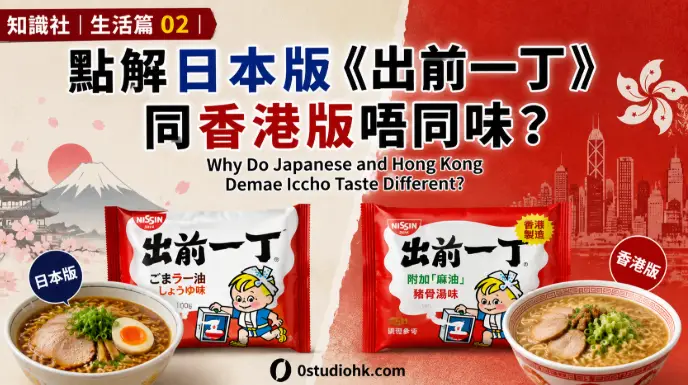
知識社|生活篇 02|點解日本版《出前一丁》同香港版唔同味? Why Do Japanese and Hong Kong Demae Iccho Taste Different?
不少人去日本旅行時,都會買幾包日本版《出前一丁》回港,期待品嚐「原汁原味」。但真正吃過後,不少人都會發現:「點解同香港食開嗰個唔同味?」原來,兩者確實有不少差異。
Many travelers bring Japanese Demae Iccho home expecting it to taste exactly like the version sold in Hong Kong. However, after the first bowl, many notice the flavor is surprisingly different. That’s because the two versions are made for different markets.
中文版本
《出前一丁》自1968年在日本推出以來,一直是日清食品旗下最具代表性的即食麵品牌之一,而香港更是《出前一丁》最受歡迎的海外市場之一。雖然兩者都使用相同品牌名稱,甚至包裝設計亦十分相似,但日本版與香港版其實並不是同一配方,而是根據不同地區消費者的飲食習慣重新調整。最明顯的分別,就是湯底味道。香港版麻油味普遍較濃郁,鹹香更加突出,麻油香氣亦更加濃烈,配搭午餐肉、雞蛋、火腿或腸仔等配料後,味道依然十分鮮明。相反,日本版則偏向清淡,較著重醬油、雞湯及芝麻香氣之間的平衡,不會讓麻油完全蓋過整個湯底,因此不少香港人第一次品嚐日版時,都會覺得味道較淡。除了湯底,麵條亦有所不同。香港版麵條一般較粗,口感較有彈性,即使煮久一點仍能保持一定嚼勁;日本版則相對較幼,更容易吸收湯汁,口感亦較柔軟,更接近日式拉麵的風格。至於最受歡迎的麻油包,同樣存在差異。港版麻油包香味濃烈,不少人甚至認為它才是整包麵的靈魂;而日版麻油則較為柔和,希望保留湯底原有層次,而不是只突出麻油味。很多人以為香港出售的《出前一丁》只是由日本直接入口,其實大部分香港市場產品均由日清食品(香港)生產,再按照本地人口味調整配方,包括調味粉比例、麻油配方、麵條粗幼、鈉含量及包裝標示等,都可能與日本版有所不同。這種「因地制宜」的做法,在國際食品品牌中十分普遍。可樂、薯片、朱古力,甚至餅乾,都會因應不同市場調整甜度、鹹度及香料比例,迎合當地消費者的口味。《出前一丁》正是一個典型例子。所謂「日本版比較正宗」並不代表一定較好吃,香港版經過數十年的本地化發展,早已成為不少香港人成長回憶的一部分。對香港人而言,那股濃濃的麻油香,反而就是最熟悉、最有代表性的《出前一丁》味道。
English Version
Since its debut in Japan in 1968, Demae Iccho has become one of Nissin’s most iconic instant noodle brands. While the packaging of the Japanese and Hong Kong versions appears almost identical, the recipes are not. Each version has been developed to suit the tastes and eating habits of its local market. One of the biggest differences lies in the soup. The Hong Kong version delivers a richer and more intense sesame oil aroma, along with a stronger savory flavor that pairs well with popular additions such as luncheon meat, eggs, sausages, and vegetables. In contrast, the Japanese version is generally lighter, aiming for a more balanced combination of soy sauce, chicken stock, and sesame oil. Rather than allowing the sesame oil to dominate, it plays a supporting role within the overall flavor profile. The noodles themselves are also different. Hong Kong noodles tend to be slightly thicker and firmer, maintaining their texture even after a longer cooking time. Japanese noodles are often thinner, absorb broth more quickly, and produce a softer texture that resembles traditional Japanese ramen. Another noticeable difference is the famous sesame oil packet. In Hong Kong, many fans consider the fragrant oil to be the signature element of the product. The Japanese version uses a milder formulation designed to complement rather than overpower the soup. Many consumers assume that the Hong Kong product is simply imported from Japan, but most versions sold locally are manufactured by Nissin Foods Hong Kong using recipes adapted specifically for local preferences. Differences may include seasoning ratios, sesame oil formulation, noodle texture, sodium levels, and even labeling. This type of localization is common among international food brands. Soft drinks, potato chips, chocolate, and snacks are often reformulated to match regional tastes. Demae Iccho is no exception. The Japanese version is not necessarily more authentic in terms of flavor preference—it is simply authentic to Japan. Likewise, the Hong Kong version has evolved over decades into a taste that generations of local consumers have grown up with. For many people in Hong Kong, the stronger sesame oil aroma has become the true taste of Demae Iccho.
總評
日本版與香港版《出前一丁》並沒有誰比較好,只是針對不同市場調整配方。相同品牌,不同味道,也正反映了全球食品品牌「因地制宜」的設計理念。
Summary
Japanese and Hong Kong Demae Iccho share the same heritage but are crafted for different tastes. Their differences demonstrate how global food brands successfully adapt products to local cultures and consumer preferences.