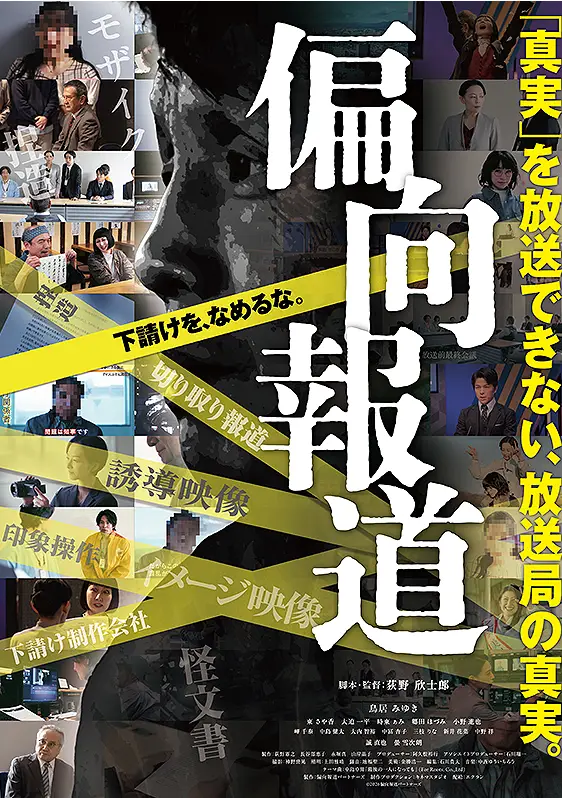
《偏向報道》由荻野欣士郎自編自導,以新聞媒體的「偏向報道」現象為核心,透過一名製作公司導演的視角,探討媒體倫理、權力結構與新聞真實性之間的衝突,是一部聚焦現代新聞生態的社會議題電影。
Written and directed by Kinshiro Ogino, Biased Reporting examines the complex relationship between journalism, political influence, and media ethics. Drawing inspiration from the director’s own experience in television production, the film presents a thought-provoking drama about truth, responsibility, and institutional pressure.
電影內容
《偏向報道》是一部以新聞媒體運作、新聞倫理與組織權力為主題的社會劇情電影,故事圍繞地方電視台與其外判製作公司的工作現場,深入描繪媒體如何在權力、利益與輿論之間作出抉擇。主角油神鈴子是一名性格直率、不願妥協的節目導演,任職於地方電視台合作的製作公司。她長期負責新聞與節目拍攝,深信媒體應忠於事實,讓觀眾獲得客觀資訊。然而,在一次採訪工作中,她意外得知電視台旗下子公司正根據一份未經證實的消息,製作一段涉及地方知事涉嫌職場霸凌的新聞影像。更令她震驚的是,部分畫面經過刻意剪接、重新安排,甚至加入具有誤導性的內容,只為配合預設立場,營造特定輿論效果。面對這項可能影響公眾判斷的報道,鈴子被要求協助阻止影片播出,同時也遭受來自電視台高層、主管與各方勢力的巨大壓力。隨著事件持續發展,她逐漸發現問題並非個別新聞失實,而是整個媒體組織長期存在的權力文化、層級制度以及對收視率與政治利益的妥協。電影透過新聞會議、剪接室、採訪現場與公司內部討論,真實呈現新聞製作流程如何影響最終播出的內容,也讓觀眾理解資訊在傳遞過程中可能因立場、利益與決策而產生偏差。《偏向報道》並沒有簡單地將角色劃分為善惡兩方,而是透過不同人物的立場,呈現新聞工作者在理想與現實之間的掙扎。有些人選擇服從體制,有些人試圖守護專業,而更多人則不得不在生存與信念之間尋找平衡。影片藉由緊湊的職場對話與現實氛圍,引導觀眾思考媒體是否真正中立、資訊應如何被驗證,以及身處資訊爆炸時代的公眾,應如何培養獨立思考能力,避免被片面的內容左右判斷。
English Version
Biased Reporting is a social drama that explores the ethical challenges of modern journalism through the daily operations of a regional television station and its subcontracted production company. At the center of the story is Suzuko Aburagami, an outspoken television director who believes that journalism should remain faithful to facts regardless of political pressure or commercial interests. Her professional convictions are tested when she discovers that a television subsidiary has produced a news report accusing a local governor of workplace harassment using information that has never been properly verified. As the investigation continues, Suzuko realizes that the report contains carefully edited footage and manipulated sequences designed to influence public opinion rather than present objective reality. When she is asked to help prevent the broadcast, she finds herself confronting powerful executives, corporate hierarchy, and a deeply rooted workplace culture that discourages questioning authority. What initially appears to be a single ethical dilemma gradually exposes broader structural problems within the television industry, where ratings, political influence, organizational loyalty, and financial interests often compete with journalistic integrity. Through newsroom meetings, editing sessions, production discussions, and field reporting, the film illustrates how editorial choices can shape public perception long before viewers ever see the finished broadcast. Instead of portraying the conflict as a simple battle between heroes and villains, the narrative presents a range of perspectives, showing how journalists, producers, managers, and executives each struggle with competing responsibilities and personal beliefs. Some characters defend institutional decisions as necessary compromises, while others continue fighting for transparency despite the personal risks involved. Inspired by director Kinshiro Ogino’s own experience in television production, the film offers an authentic look at the pressures inside broadcast media while raising broader questions about misinformation, editorial bias, media accountability, and the responsibility audiences have to evaluate information critically. By focusing on the human choices behind every news story, Biased Reporting encourages viewers to reflect on how truth is constructed, communicated, and sometimes distorted in contemporary society.
影片簡介(預告片/片段)
中文: 當新聞不再只是報道事實,一位導演選擇對抗整個媒體體制。
English: One television director risks everything to defend the truth against institutional media pressure.
電影資料
導演: 荻野欣士郎
類型: 劇情、社會、職場、媒體題材
製片公司: 暫未公布
上映年份: 2025
主要演員
- 鳥居美雪
- 誠直也
- 東沙也香
- 大迫一平
- 時東亞美
- 鄉田穗積
- 小野進也
- 螢雪次朗
總結
《偏向報道》透過新聞製作現場的真實描寫,探討媒體偏見、資訊操控與新聞倫理等當代重要議題。影片沒有提供簡單答案,而是讓觀眾思考新聞如何被製造、立場如何影響報道,以及在資訊快速流通的年代,真相究竟應由誰來守護,是一部兼具現實感與反思性的社會電影。
Conclusion
Biased Reporting offers a compelling examination of journalism, institutional power, and the fragile balance between truth and influence. By revealing the pressures hidden behind newsroom decisions, the film challenges audiences to think critically about the information they consume and the responsibilities shared by both media professionals and the public.