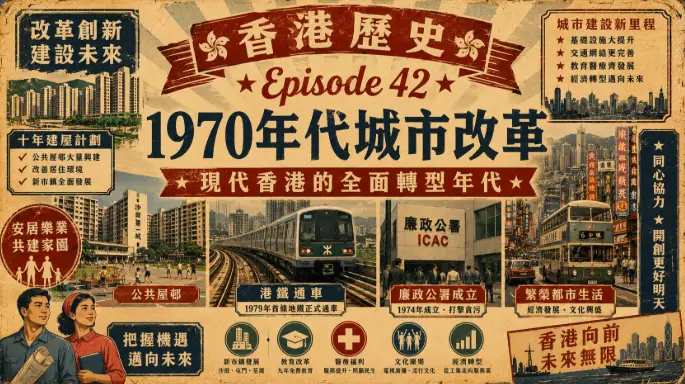
1970年代的香港進入快速改革時代。政府開始推動交通、房屋、教育與反貪污改革,城市逐漸由工業社會邁向現代國際都會。
The 1970s marked a major turning point for Hong Kong. Sweeping reforms in housing, transportation, education, and anti-corruption transformed the colony into a more modern and organized city with growing international influence.
中文
1970年代的香港,是城市發展歷史中極具轉折性的年代。經過1950與1960年代的人口膨脹、工業化與社會動盪後,香港政府開始意識到,若要維持經濟發展與社會穩定,必須全面改善市民生活與城市管理。於是,一系列大型改革與基建工程在1970年代陸續展開,深刻改變了香港人的日常生活,也奠定現代香港的基礎。當時香港人口持續增加,公共房屋需求極為龐大。政府開始推動「十年建屋計劃」,大量興建公共屋邨,希望改善木屋區與擠迫居住環境。沙田、屯門與荃灣等新市鎮開始快速發展,香港逐漸由集中於九龍與港島的城市,擴展至新界地區。公共屋邨內開始設有學校、街市、商場與遊樂設施,形成完整社區規劃。對許多基層家庭而言,能夠搬進新型公共屋邨,代表生活質素大幅提升。交通改革亦是1970年代最重要變化之一。隨著人口增加,道路與渡輪系統已難以應付需求。政府於是興建香港地下鐵路系統,也就是後來的港鐵。1979年,首條地鐵正式通車,連接九龍與港島,大幅改變市民出行方式。雙層巴士、小巴與海底隧道亦成為城市交通重要部分。香港開始建立現代化交通網絡,城市流動速度大大提高。除了基建發展,1970年代香港最深遠的改革之一,是反貪污制度建立。當時警隊與部分政府部門長期存在貪污問題,不少市民辦事需要支付「茶錢」。1974年,廉政公署正式成立,開始大力打擊貪污。雖然初期曾引起部分警務人員不滿,但隨著大量貪污案件被揭發,市民開始逐漸支持廉政改革。廉政公署後來成為香港最具代表性的公共機構之一,也改變了香港政府形象。教育與社會福利在1970年代同樣得到改善。政府推行九年免費教育,讓更多基層家庭子女有機會接受完整教育。大學與專上教育亦逐漸擴展,希望培養更多專業人才。公共醫療系統與社會福利服務開始增加,政府希望改善基層市民生活,減少社會不滿情緒。1970年代的香港,亦是流行文化高速發展時期。電視廣播開始普及,無綫電視與麗的電視成為家庭娛樂核心。粵語流行曲、電視劇與電影開始風靡全港。許冠傑、李小龍與後來的許多本地明星,逐漸建立香港流行文化影響力。茶餐廳、霓虹燈與夜生活文化亦成為香港城市特色。另一方面,1970年代國際局勢亦影響香港發展。中國改革開放前夕,香港作為亞洲金融與貿易中心的重要性逐漸上升。大量外資企業進駐香港,銀行與金融業開始快速成長。工業仍然重要,但服務業與金融業已開始取代部分傳統製造業。香港經濟進一步國際化,也逐漸形成「亞洲國際都會」形象。雖然1970年代香港仍然存在貧富差距與房屋問題,但整體社會氣氛已比1960年代穩定許多。市民開始對未來抱有更大信心,也逐漸形成對香港本地的認同感。這個年代的城市改革,不只是興建道路與屋邨,更代表香港由戰後工業城市邁向現代都市的重要轉型。從地鐵通車到廉政制度建立,從新市鎮發展到流行文化興起,1970年代成為香港歷史中最關鍵的改革年代之一。
English Version
The 1970s became one of the most transformative decades in Hong Kong’s modern history. After years of rapid industrial growth, overcrowding, social unrest, and economic expansion, the colonial government recognized the urgent need to modernize the city’s infrastructure and improve living conditions for ordinary residents. Major reforms introduced during this era reshaped Hong Kong socially, economically, and culturally, laying the foundation for the modern metropolis that would later emerge on the global stage. Housing reform stood at the center of these changes. Rapid population growth had created severe overcrowding across urban districts, while squatter settlements and aging tenement buildings remained widespread. In response, the government launched ambitious public housing programs aimed at relocating families into planned residential communities. Large-scale housing estates appeared in areas such as Sha Tin, Tsuen Wan, and Tuen Mun, helping expand the city into the New Territories. These new towns included schools, shopping centers, playgrounds, clinics, and transportation links designed to create self-contained communities. For many working-class families, moving into a public housing flat symbolized stability and social progress after decades of hardship. Transportation modernization also dramatically changed daily life. By the early 1970s, Hong Kong’s roads and ferry systems struggled to keep pace with rising demand. To solve growing congestion, the government invested heavily in mass transit infrastructure. Construction of the Mass Transit Railway began, and in 1979 the first MTR line officially opened. The railway system transformed mobility across the territory, connecting Kowloon and Hong Kong Island more efficiently than ever before. Double-decker buses, minibuses, and the Cross-Harbour Tunnel also became essential parts of an increasingly modern urban transport network. Another defining reform of the decade focused on fighting corruption. During earlier decades, bribery and unofficial payments had become deeply rooted in sections of the police force and public administration. Public frustration toward corruption grew steadily until the government established the Independent Commission Against Corruption, known as the ICAC, in 1974. The agency launched aggressive investigations into corruption cases involving officials, police officers, and organized criminal networks. Although resistance initially emerged from some sectors, public support for anti-corruption reform quickly strengthened. Over time, the ICAC became one of Hong Kong’s most respected institutions and helped improve confidence in government administration. Education and social welfare expanded significantly during the decade as well. Policies promoting compulsory education increased opportunities for children from working-class backgrounds, while universities and technical institutions grew to support the city’s changing economy. Public healthcare services and welfare programs gradually improved as authorities sought to reduce social inequality and strengthen public trust after the unrest of the 1960s. Meanwhile, Hong Kong’s cultural identity flourished. Television became central to family life, with broadcasters such as TVB shaping popular entertainment across the city. Cantonese pop music, martial arts films, and television dramas reached massive audiences. Cultural icons including Bruce Lee and Sam Hui helped bring Hong Kong entertainment to international attention. Neon-lit streets, cha chaan teng cafés, and vibrant nightlife became recognizable symbols of urban Hong Kong culture. International economic trends also influenced the colony’s transformation. As Hong Kong strengthened its role as a regional trade and financial center, foreign investment increased rapidly. Manufacturing remained important, but finance, banking, shipping, and service industries gained greater influence. The city’s economy became increasingly globalized, positioning Hong Kong as a gateway between Asia and international markets. Although social inequality and housing shortages still existed, the atmosphere of the 1970s was more optimistic than the instability of the previous decade. Residents increasingly believed Hong Kong offered long-term opportunity and stability. The reforms of this period did more than modernize infrastructure — they reshaped public expectations, strengthened local identity, and helped transform Hong Kong from a crowded industrial colony into a modern international city.