
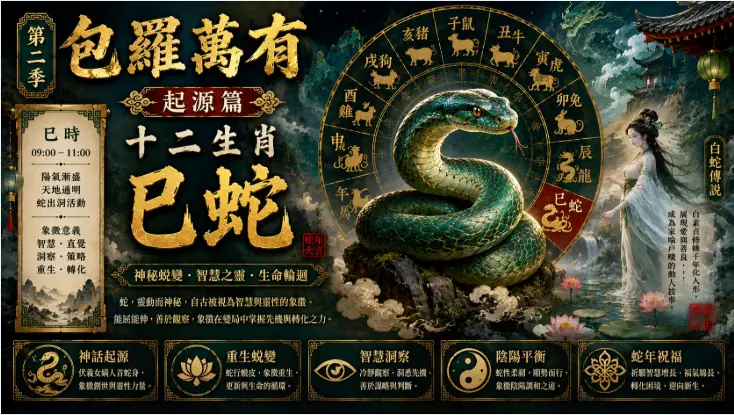
包羅萬有 第二季 起源篇|十二生肖 巳蛇的神秘傳說與智慧象徵 | Origins Series Season 2 | The Snake in the Chinese Zodiac and Its Symbol of Wisdom
巳蛇在十二生肖中象徵智慧、神秘與重生力量。從古代圖騰到民間信仰,蛇一直帶有神聖與危險並存的雙重形象,也反映人類對自然未知力量的敬畏。
The Snake represents wisdom, mystery, and transformation in the Chinese Zodiac. Throughout ancient mythology and traditional belief systems, the Snake has carried both sacred and dangerous meanings, symbolizing humanity’s fascination with hidden power and renewal.
巳蛇是十二生肖中的第六位,也是中國文化中最具神秘色彩的生肖之一。蛇在古代社會既令人畏懼,又受到崇拜,因為牠擁有劇毒、敏捷與脫皮重生等特性,因此逐漸被視為智慧、生命循環與神秘力量的象徵。在中國古代神話裡,蛇與龍之間更有密切關係,不少傳說認為龍其實由蛇演變而來,因此蛇亦被視為龍的原型之一。關於生肖蛇的起源,民間流傳玉皇大帝舉辦生肖競賽的故事。傳說中,蛇雖然沒有龍虎般強大,但憑藉冷靜與智慧,在競賽中成功取得前列位置。部分版本更描述蛇藏身於馬蹄之間,在最後一刻突然現身,因而成為第六位生肖。這種善於等待時機與出奇制勝的形象,也讓巳蛇逐漸成為智慧與策略的代表。在中國古代文化裡,蛇常被視為靈性生物。由於蛇會定期脫皮,古人認為牠象徵重生與長壽,因此不少道教與民間傳說都將蛇視為修煉成仙的重要象徵。最著名的蛇神話之一,便是《白蛇傳》。故事中的白素貞修煉成人,展現愛情、善良與犧牲精神,令蛇的形象不再只是危險生物,也增添了人性與情感色彩。十二地支中的「巳」,對應上午九時至十一時。古人觀察到這段時間氣溫開始升高,而蛇喜歡在陽光下活動,因此將蛇與巳時結合。這種安排不只是時間記錄方式,也反映古代中國人對自然生態與動物習性的深入觀察。巳時同時象徵陽氣漸盛與生命活力,因此蛇亦帶有智慧甦醒與能量轉化的象徵意義。隨着生肖文化流傳,巳蛇逐漸形成鮮明性格象徵。民間普遍認為屬蛇的人冷靜沉著、觀察力敏銳,而且擁有強烈直覺與思考能力。他們通常善於分析局勢,不輕易表露情感,因此容易給人神秘感。雖然有時顯得過於謹慎,但也因此更懂得保護自己與掌握機會。這些生肖性格觀念雖然源自民俗文化,但多年來已深深影響華人社會。蛇在中國藝術與宗教中的地位亦十分重要。古代青銅器、壁畫與石雕中經常出現蛇形圖騰,而伏羲與女媧的人首蛇身形象,更被視為中華文明創世神話的重要象徵之一。在部分少數民族文化裡,蛇甚至被奉為祖先與守護神。除了中國以外,蛇在印度、日本與東南亞文化中亦擁有神聖地位,象徵智慧與自然力量。每逢蛇年,各地都會推出與蛇相關的藝術作品與節慶裝飾,使生肖蛇成為充滿神秘魅力的重要文化主題。今天的巳蛇,早已超越普通動物形象。牠代表人類對智慧、生命循環與未知力量的想像,也象徵東方文化中對重生與變化的哲學理解。從古代圖騰到現代奇幻文化,蛇依然是華人世界最神秘且最耐人尋味的傳統象徵之一。
English Version
The Snake is the sixth animal in the Chinese Zodiac and remains one of the most mysterious and symbolic creatures in Chinese culture. Throughout history, snakes inspired both fear and admiration because of their venom, agility, silence, and ability to shed their skin. These unique characteristics transformed the Snake into a powerful symbol of wisdom, rebirth, transformation, and hidden knowledge. In ancient Chinese mythology, snakes were also closely connected to dragons, with some legends suggesting that dragons evolved from serpent-like creatures. As a result, the Snake became associated with spiritual power and cosmic energy. According to the famous zodiac legend, the Jade Emperor organized a race to determine the order of the zodiac animals. Although the Snake lacked the strength of larger animals like the Tiger or Dragon, it relied on patience, intelligence, and strategy to secure its place. Some versions of the story describe the Snake secretly hiding near the Horse before suddenly appearing at the final moment to claim sixth position. This clever and calculated behavior reinforced the Snake’s reputation as a symbol of wisdom, tactical thinking, and quiet determination. In traditional Chinese belief systems, snakes were often regarded as sacred creatures linked to immortality and spiritual cultivation. Because snakes regularly shed their skin, ancient people associated them with renewal, rebirth, and eternal life. Taoist legends frequently portrayed snakes as beings capable of spiritual transformation. One of the most famous Chinese legends involving a snake is “The Legend of the White Snake,” in which the snake spirit Bai Suzhen transforms into a human woman and experiences love, sacrifice, and compassion. This beloved story added emotional depth and humanity to the image of the Snake within Chinese culture. Within the traditional Earthly Branch system, the Snake corresponds to the branch “Si,” representing the hours between 9 a.m. and 11 a.m. Ancient observers noticed that snakes became active as the morning sun warmed the earth, making this period naturally connected to the creature. This symbolic pairing reflects the Chinese practice of linking animals with natural cycles, environmental patterns, and philosophical meanings. The Snake therefore became associated with awakening intelligence, hidden energy, and transformation. Over time, the Snake also developed strong personality symbolism within zodiac traditions. People born in the Year of the Snake are often described as calm, intelligent, intuitive, observant, and thoughtful. They are believed to possess strong analytical skills and emotional control, often appearing mysterious or difficult to fully understand. Although they may sometimes seem overly cautious, Snake personalities are generally admired for their wisdom and strategic thinking. While these ideas belong to folklore rather than science, they continue to influence cultural identity and social traditions in many Chinese communities. Snakes also occupy an important place in Chinese art, religion, and mythology. Ancient bronze artifacts, temple carvings, and murals frequently included serpent imagery. In Chinese creation myths, the legendary figures Fuxi and Nüwa are often depicted with human heads and snake bodies, symbolizing the origins of civilization itself. In several ethnic minority traditions, snakes are even worshipped as ancestral or protective spirits. Beyond China, snakes hold sacred significance in India, Japan, and Southeast Asian cultures, where they are commonly associated with wisdom and supernatural power. During the Year of the Snake, snake-inspired decorations, artwork, and festival themes appear across Chinese communities worldwide. Today, the Snake represents far more than a zodiac creature. It symbolizes humanity’s fascination with intelligence, transformation, hidden strength, and the mysteries of life itself. From ancient mythology to modern fantasy culture, the Snake remains one of the most intriguing and enduring symbols in Chinese civilization.