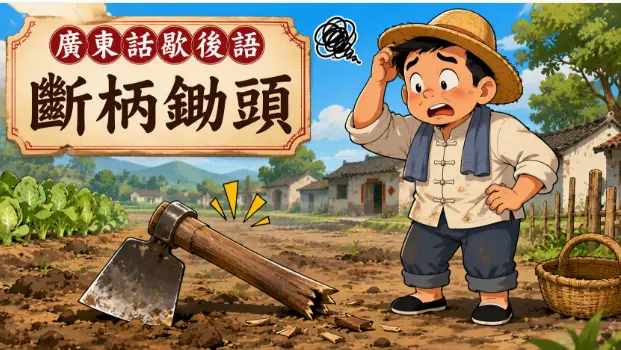
斷柄鋤頭 – 冇揸拿 Broken Hoe Handle – Nothing to Hold Onto
「斷柄鋤頭 – 冇揸拿」是一句充滿鄉土氣息的廣東話歇後語,用來形容一個人做事沒有把握、沒有依靠,或者處於一種進退失據的狀態。鋤頭本來是農耕的重要工具,但如果鋤柄斷裂,就會令人無法握穩,也失去實際用途。因此,廣東人便借這個生活畫面,形容那些缺乏信心、沒有實力,甚至連基本依據都欠奉的人。這句歇後語既生動又貼地,在日常對話中十分常見,也反映了傳統農村社會的生活智慧。
“Broken Hoe Handle – Nothing to Hold Onto” is a classic Cantonese saying that describes situations lacking confidence, support, or certainty. The imagery comes directly from traditional farming life. A hoe is a practical tool, but once its handle breaks, it becomes difficult or even impossible to use properly. Cantonese speakers transformed this everyday rural image into a metaphor for people who have no solid backing, no confidence in themselves, or no reliable way forward. The phrase remains popular because it vividly captures feelings of insecurity and helplessness using simple but memorable imagery rooted in daily life.
「斷柄鋤頭 – 冇揸拿」的意思,是指一個人做事沒有把握、沒有信心,或者根本沒有實力與條件支持自己,因此陷入一種不穩定的狀態。鋤頭是農民耕田的重要工具,而鋤柄則是用來施力與控制方向的部分。如果鋤柄突然斷裂,使用者自然會失去控制,既難以工作,也容易弄傷自己。因此,「冇揸拿」便逐漸演變成廣東話中形容沒有依靠、沒有憑據、沒有把握的說法。這句歇後語常用來形容人在面對事情時底氣不足。例如有人明明未準備好,卻硬著頭皮去面試;又或者某些人講話很大聲,但實際上根本沒有證據支持,都可以用這句話來形容。有時它也帶有一點調侃意味,用來笑人「虛張聲勢」。從更深層角度來看,這句歇後語其實反映出廣東人非常重視實際能力與穩定基礎。做人做事若沒有真本事,就像斷了柄的鋤頭,即使外表看似完整,也發揮不到真正作用。這種來自農耕社會的智慧,到今日依然適用。無論工作、人際關係還是生活選擇,人們都需要有清晰準備與實際能力,否則便容易變成「冇揸拿」,遇到問題時無法掌控局面。
English Version
The phrase “Broken Hoe Handle – Nothing to Hold Onto” refers to situations where a person lacks confidence, preparation, evidence, or reliable support. In traditional farming communities, a hoe without a proper handle becomes nearly useless because the user can no longer control it effectively. The broken handle symbolizes instability and the inability to manage tasks properly. Over time, Cantonese speakers began using this image to describe people who appear uncertain, unprepared, or unsupported in difficult situations. It can refer to someone entering a negotiation without evidence, making promises without real ability, or pretending to be confident despite lacking experience. The phrase is often used humorously, especially when someone tries to act powerful or knowledgeable while obviously lacking substance. At a deeper level, the saying reflects a strong Cantonese cultural value: practicality matters more than appearance. Real ability, preparation, and stability are considered essential foundations in life. Without them, people can quickly lose control when pressure arrives. Even today, the metaphor feels highly relevant in workplaces, relationships, and personal decisions. Many modern problems arise when individuals rush forward without preparation or attempt to impress others without genuine capability. The image of a broken farming tool continues to remind people that confidence must be supported by real substance.
用法
這句歇後語多數用來形容人做事沒有把握,或者明明沒有實力卻勉強撐場。例如有人未做準備就去演講、沒有資金卻想做大生意,旁人便可能笑說他「斷柄鋤頭,冇揸拿」。有時候,它也可以用來形容人在關鍵時刻缺乏支持,心裡沒有底。由於畫面感強烈,所以在廣東話對話之中特別生動,既能帶出幽默感,也有提醒意味。
English Version
This saying is commonly used when someone lacks confidence, preparation, or reliable support. For example, a person trying to start a major business without money or experience may be described as “a broken hoe handle — nothing to hold onto.” It can also describe people who speak boldly despite lacking evidence or skill. The expression usually carries a teasing but cautionary tone, reminding others that confidence without preparation rarely leads to success.
小故事:
阿輝一直夢想開咖啡店,但他既不懂沖咖啡,也沒有經營經驗。有一天,他突然向朋友宣布自己已經決定辭職,還說半年內一定能賺大錢。朋友們聽完後都十分驚訝。阿明忍不住問:「你有冇學過做咖啡?」阿輝笑著回答:「上網睇過幾條片啦,應該冇問題。」另一位朋友再問:「咁資金呢?」阿輝沉默幾秒,只說:「到時再算。」大家對望一眼,最後老友阿強忍不住笑道:「你而家真係斷柄鋤頭,冇揸拿喎。」雖然大家語氣帶笑,但其實都是真心擔心阿輝。後來,阿輝果然因為準備不足,店舖開了幾個月便出現財務問題。他這才明白,單靠熱情並不足夠,做任何事情都需要實際計劃與能力支持。於是他沒有放棄,而是重新去學沖咖啡、研究營運方法,再慢慢累積資金。兩年後,他終於真正開成一家小咖啡店。某天朋友再聚會時,阿強笑著拍拍他肩膀:「今次唔係斷柄鋤頭啦,有揸拿喇!」全場立刻大笑起來。
English Version
Fai had always dreamed of opening his own coffee shop, even though he knew almost nothing about coffee or business management. One evening, he excitedly announced to his friends that he planned to quit his job immediately and become a café owner within months. Everyone stared at him in surprise. Ming asked carefully, “Have you ever worked in a café before?” Fai grinned and replied, “I watched some videos online. That should be enough.” Another friend asked, “What about funding?” After a long pause, Fai shrugged and said, “I’ll figure it out later.” The group exchanged awkward glances before Keung laughed and said, “You’re like a broken hoe handle — nothing to hold onto.” Everyone laughed, but beneath the humor was genuine concern. A few months later, Fai’s rushed business attempt quickly ran into financial trouble. He realized enthusiasm alone could not replace preparation and experience. Instead of giving up completely, he decided to learn properly. He took barista classes, studied café management, and slowly saved money while gaining experience. Two years later, he finally opened a small café that became popular in the neighborhood. During a gathering with old friends, Keung jokingly patted him on the shoulder and said, “Now you finally have something to hold onto.” The whole table burst into laughter, and even Fai smiled proudly because he knew the difference between empty confidence and real preparation.
結語
「斷柄鋤頭 – 冇揸拿」以農村生活中的工具作比喻,道出做人做事若缺乏準備與實力,就難以掌控局面。這句廣東話歇後語不單幽默生動,也提醒人們凡事要有基礎、有計劃,才能真正站得穩。
English Version
“Broken Hoe Handle – Nothing to Hold Onto” uses simple farming imagery to express an important life lesson about preparation, confidence, and stability. Beneath its humor lies timeless wisdom: without real support or ability, it becomes difficult to stay in control when challenges appear.