
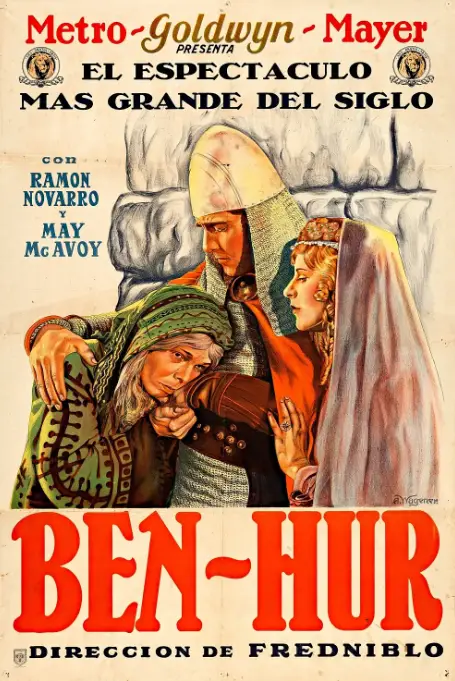
《賓虛》是1920年代荷里活最具代表性的史詩默片之一,以龐大的製作規模、震撼的戰車競賽與濃厚宗教寓意成為電影史上的里程碑。這部作品不只是古羅馬背景下的復仇故事,更是一場關於命運、信仰與寬恕的人性旅程。即使歷經百年,它依然保留著令人驚嘆的視覺氣勢與戲劇張力,展現出早期電影工業對宏大敘事的極致追求。
Ben-Hur: A Tale of the Christ remains one of the defining achievements of silent-era Hollywood, combining massive production scale, emotional storytelling, and unforgettable spectacle into a landmark cinematic experience. Set against the grandeur of ancient Rome, the film transforms a tale of betrayal and revenge into a meditation on faith, destiny, and spiritual redemption. Nearly a century later, its imagery, ambition, and emotional force continue to influence epic filmmaking around the world.
電影內容
《賓虛》故事發生在羅馬帝國統治下的耶路撒冷,講述猶太貴族猶大・賓虛與昔日好友梅瑟拉因政治立場不同而走向決裂。原本親密無間的友情,隨著權力與帝國壓迫逐漸變成仇恨與報復。一次意外事件令賓虛被誣陷成叛徒,他失去家園與自由,被送往殘酷的戰船成為奴隸,而母親與妹妹亦遭受悲慘命運。電影以默片形式呈現大量情感張力,透過演員誇張卻細膩的肢體表演,把角色的憤怒、絕望與掙扎深深傳遞給觀眾。在流放與磨難之中,賓虛逐漸從一個只渴望復仇的人,轉變成重新理解信仰與寬恕的人。電影最著名的戰車競賽場面,即使放在今日依然震撼。數以千計臨時演員、真實馬匹與巨大場景構成了一場充滿危險感與速度感的經典追逐。鏡頭不斷切換車輪、馬匹與人物表情,使整場比賽充滿壓迫感與緊張節奏,也象徵主角內心長久積壓的怒火。除了視覺奇觀,《賓虛》真正核心其實是宗教與精神層面的救贖。電影以耶穌基督的存在作為背景線索,雖然並未直接大量描繪,但角色生命中的重要轉折都與基督形象隱約連結。當世界充滿暴力與報復時,電影提出另一種可能:寬恕是否比仇恨更強大。這種帶有宗教寓意的敘事方式,令作品超越普通歷史冒險片,成為帶有哲學與精神象徵的史詩。作為1925年的作品,它展現了默片時代最高等級的工業技術與藝術野心。巨大宮殿、海戰場面與沙漠風景都營造出前所未有的壯觀感,而當時少量彩色片段的運用,也令電影增添神聖與夢幻氛圍。整體而言,《賓虛》不只是古典史詩電影,更像是一場關於人性、信仰與文明衝突的寓言,它在娛樂性與精神層面之間取得罕見平衡,令這部默片即使跨越年代依然擁有強烈生命力。
English Version
Ben-Hur: A Tale of the Christ unfolds in Roman-occupied Jerusalem, where Judah Ben-Hur, a wealthy Jewish nobleman, becomes trapped in a devastating conflict with his former childhood friend Messala. What begins as a reunion between old companions slowly transforms into a struggle shaped by political loyalty, imperial ambition, and personal betrayal. Messala rises within the Roman military system while Ben-Hur refuses to abandon his identity and beliefs, creating a fracture that ultimately destroys both friendship and trust. After an accident leads to false accusations, Ben-Hur is condemned as a criminal and sent into slavery aboard Roman warships, while his family disappears into suffering and exile. The emotional power of the film comes not only from its large-scale spectacle but from the expressive intensity of silent cinema performance. Every gesture, glance, and movement carries emotional weight, allowing audiences to feel Ben-Hur’s rage, humiliation, despair, and gradual transformation without spoken dialogue. The famous chariot race remains one of the most influential action sequences ever filmed. Real horses, massive practical sets, and dangerous physical stunts create an astonishing sense of speed and chaos. Even modern viewers can feel the impact of the pounding wheels and violent collisions as the race becomes more than a contest of victory—it becomes the embodiment of vengeance itself. Yet beneath the spectacle lies a deeply spiritual narrative. The film uses the presence of Jesus Christ as a quiet but powerful force surrounding the story. Rather than focusing directly on religious preaching, the film presents moments where compassion and mercy emerge in contrast to brutality and revenge. Ben-Hur’s emotional journey gradually shifts from hatred toward spiritual awakening, suggesting that forgiveness may hold greater power than conquest. This philosophical layer elevates the film beyond a conventional historical adventure. It becomes a meditation on faith, destiny, and the moral consequences of violence. The production itself was extraordinary for its time, representing one of the largest and most expensive silent films ever created. Massive palace interiors, naval battles, desert landscapes, and carefully orchestrated crowds demonstrated Hollywood’s growing ambition during the 1920s. Certain sequences even employed early color tinting techniques that added an ethereal atmosphere to sacred moments. More than a historical epic, Ben-Hur stands as a cinematic monument to the silent era’s artistic confidence and technical imagination. Its themes remain timeless because the film ultimately asks questions that still resonate today: Can suffering transform a person? Can forgiveness overcome betrayal? And can spiritual grace survive within a world built on power and violence? These enduring ideas continue to give the film emotional relevance long after its original release.
影片簡介(預告片/片段)
一場橫跨信仰、復仇與救贖的古羅馬史詩。
A silent-era epic of revenge, faith, and redemption set in ancient Rome.
電影資料
導演:Fred Niblo
類型:史詩、歷史、冒險、宗教、默片
製片公司:Metro-Goldwyn-Mayer
上映年份:1925
主要演員
Ramon Novarro
Francis X. Bushman
May McAvoy
Betty Bronson
總結
《賓虛》不只是默片時代的代表作,更是電影史上少數能同時結合娛樂、宗教寓意與視覺奇觀的經典。它以壯闊場面吸引觀眾,卻又在故事深處探討仇恨與寬恕之間的人性矛盾。即使今日重新觀看,依然能感受到這部作品跨越時代的震撼與力量。
Conclusion
Ben-Hur: A Tale of the Christ remains one of cinema’s greatest silent epics because it balances spectacle with emotional and spiritual depth. Its legendary action sequences may define its reputation, but the film’s lasting impact comes from its exploration of suffering, forgiveness, and redemption. Even after nearly a century, it continues to stand as a powerful reminder of how ambitious and emotionally resonant early filmmaking could be.