烏爾班二世與教皇國:第一次十字軍東征背後的歷史推動者 | Pope Urban II and the Papal States: The Visionary Behind the First Crusade | 世界名人錄
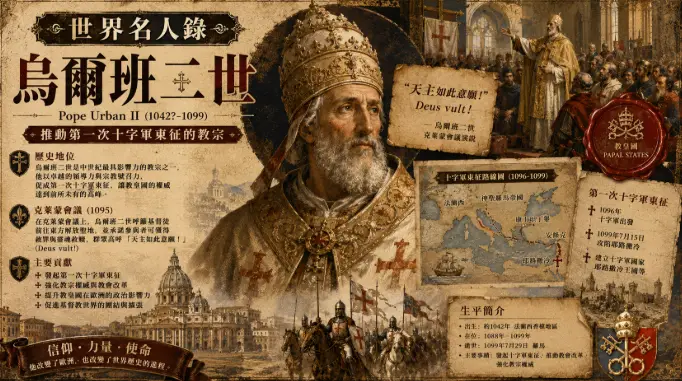
烏爾班二世是中世紀最具影響力的教宗之一,他以強大的宗教號召力推動第一次十字軍東征,不僅改變歐洲與中東局勢,也讓教皇國在基督教世界中的權威達到高峰。
Pope Urban II became one of the defining religious leaders of medieval Europe after launching the First Crusade. His leadership strengthened the authority of the Papal States and reshaped relations between Christianity, politics, and warfare across the medieval world.
中文版本
烏爾班二世出生於1042年前後的法蘭西香檳地區,原名奧多·德·拉熱里,出身貴族家庭。年輕時期的他接受修道院教育,深受當時教會改革運動影響。在十一世紀的歐洲,羅馬天主教會正面臨嚴重危機,教會內部存在買賣聖職、世俗貴族干預宗教事務以及神職腐敗等問題。當時的教宗改革派希望恢復教會權威,使宗教不再受世俗君主控制。烏爾班二世早年追隨著名改革教宗額我略七世,並參與推動教會獨立與神職制度改革。1088年,烏爾班二世正式成為教宗,開始領導教皇國面對動盪不安的歐洲局勢。當時神聖羅馬帝國與教廷之間因主教任命權問題爆發激烈衝突,歷史上稱為「敘任權鬥爭」。烏爾班二世延續改革派立場,主張教宗權力高於世俗統治者,並努力恢復教廷在歐洲的影響力。雖然羅馬城內部局勢不穩,他仍積極巡訪法國與義大利各地,透過宗教會議與公開演說鞏固支持者。烏爾班二世最著名的歷史事件,發生於1095年的克萊蒙會議。當時拜占庭帝國皇帝阿歷克塞一世向西歐請求援助,希望協助抵抗塞爾柱土耳其人的擴張。耶路撒冷與大量聖地此時已落入穆斯林勢力控制,使歐洲基督徒長期感到不安。在克萊蒙會議上,烏爾班二世發表極具煽動力的演說,呼籲基督徒停止彼此戰爭,轉而共同前往東方保衛聖地。他承諾參與遠征者可獲得宗教赦罪與靈魂救贖,這種前所未有的號召迅速震撼整個歐洲。根據後世記載,群眾高呼「天主如此意願!」成為第一次十字軍東征的象徵口號。十字軍東征不只是宗教戰爭,同時也反映當時歐洲社會、政治與經濟壓力。大量騎士、貴族與平民因土地不足、戰亂與宗教熱情而加入遠征隊伍。烏爾班二世成功將原本分裂的西歐貴族凝聚於共同目標之下,大幅提升教廷的精神領導地位。1096年,第一次十字軍正式展開。雖然遠征過程充滿飢荒、屠殺與殘酷戰爭,但十字軍最終於1099年攻下耶路撒冷,建立多個十字軍國家。這場勝利使烏爾班二世聲望達到頂峰,許多人認為他成功實現基督教世界的重大勝利。然而,烏爾班二世本人並未親眼見證耶路撒冷陷落的消息,因為他於1099年在羅馬去世,僅比捷報早數週離世。除了十字軍東征外,烏爾班二世也積極推動修道制度改革與教會組織重整。他支持克呂尼修道院改革運動,希望提高神職人員道德標準,並加強教宗對各地主教的控制。他也努力改善教廷財政與行政體系,使教皇國逐漸成為歐洲重要政治力量。在他的領導下,教宗不再只是宗教領袖,同時也成為能夠影響國王與帝國政策的重要人物。歷史學家對烏爾班二世的評價極為複雜。一方面,他被視為成功強化教廷權威的重要改革者;另一方面,十字軍東征也導致長期宗教衝突、屠殺與東西方對立。第一次十字軍對基督教與伊斯蘭世界關係造成深遠影響,甚至延續數百年。儘管如此,烏爾班二世仍是中世紀歷史中最具關鍵性的教宗之一。他以強烈信念與卓越政治能力,改變了歐洲宗教與權力結構,也讓教皇國在中世紀進入權威最強盛的時代。直到今日,他的名字依然與十字軍東征、教廷改革以及中世紀基督教世界的重要轉折緊密相連。
English Version
Pope Urban II was born around 1042 in the Champagne region of France under the name Odo of Lagery. Raised within a noble family, he received a strong religious education and entered monastic life at an early age. During the eleventh century, the Roman Catholic Church faced severe internal corruption, political interference, and declining moral authority. Wealthy nobles often controlled church appointments, while religious offices were frequently bought and sold. Reform movements within the Church sought to restore spiritual discipline and strengthen papal independence from secular rulers. Urban II became closely associated with these reform efforts and emerged as a devoted supporter of Pope Gregory VII, one of the leading figures behind the Gregorian Reforms. In 1088, Urban II was elected pope during a period of intense political conflict between the papacy and the Holy Roman Empire. The struggle centered on the issue of investiture, or who possessed the authority to appoint bishops and church officials. Urban II strongly defended papal supremacy and argued that the Church should remain independent from royal control. Despite instability in Rome and opposition from imperial supporters, he traveled extensively across France and Italy to gather allies and reinforce papal influence throughout Europe. Urban II’s most famous historical achievement came in 1095 at the Council of Clermont in France. At the time, the Byzantine Empire faced mounting pressure from the Seljuk Turks, who had expanded across parts of the eastern Mediterranean and gained control over Jerusalem and other Christian holy sites. Byzantine Emperor Alexios I requested military assistance from Western Europe. Urban II seized this moment to unite Christian nobles under a shared religious mission. During his speech at Clermont, he called upon Christians to stop fighting one another and instead march eastward to reclaim the Holy Land. He promised spiritual rewards, including remission of sins, to those who joined the expedition. His speech electrified audiences across Europe and inspired thousands to take up the cross. According to medieval accounts, the crowd responded with the cry “Deus vult,” meaning “God wills it,” which became the symbolic slogan of the Crusades. The First Crusade quickly developed into one of the most significant movements of the medieval period. Knights, peasants, nobles, and adventurers from across Europe joined the campaign for religious, political, economic, and personal reasons. Urban II successfully redirected the violence of feudal Europe toward an external cause while dramatically increasing the authority of the papacy. Beginning in 1096, crusading armies marched toward the eastern Mediterranean. The campaign involved brutal warfare, starvation, massacres, and immense hardship, but by 1099 the Crusaders captured Jerusalem and established several Crusader states in the region. This success greatly elevated the prestige of the Papal States and reinforced the pope’s role as the spiritual leader of Western Christendom. Ironically, Urban II died in Rome shortly before news of Jerusalem’s capture reached him. Beyond launching the Crusades, Urban II also focused on strengthening church administration and religious reform. He supported the Cluniac reform movement, which aimed to improve the moral discipline of clergy and reduce secular interference in church affairs. He reorganized papal administration, promoted ecclesiastical unity, and expanded the political influence of the papacy throughout Europe. Under his leadership, the pope evolved from primarily a religious figure into a major political authority capable of shaping the policies of kings and empires. Historians continue to debate Urban II’s legacy. Supporters view him as a visionary reformer who restored the strength and prestige of the medieval Church, while critics argue that the Crusades intensified religious violence and deepened divisions between Christians and Muslims for centuries. The First Crusade also contributed to tensions between Eastern and Western Christianity and reshaped Mediterranean politics in lasting ways. Nevertheless, Urban II remains one of the most influential popes in medieval history. Through political skill, religious conviction, and powerful leadership, he transformed the role of the papacy and helped define the direction of medieval Europe. His name continues to be closely associated with the Crusades, papal reform, and the rise of the Papal States as one of the dominant institutions of the Middle Ages.