
《山海經 039(神獸篇)》山海經白虎:西方神獸與戰伐威嚴的守護象徵 | Shan Hai Jing White Tiger: The Western Divine Beast and Symbol of Martial Majesty
在《山海經》的神話世界裡,白虎是鎮守西方的神獸,象徵戰伐、威嚴與守護。牠不只是猛獸,更是天地秩序與力量平衡的重要化身。
In the mythic world of the Shan Hai Jing, the White Tiger stands as the guardian of the west, embodying warfare, authority, and protection. More than a beast, it represents balance, discipline, and celestial power.
中文
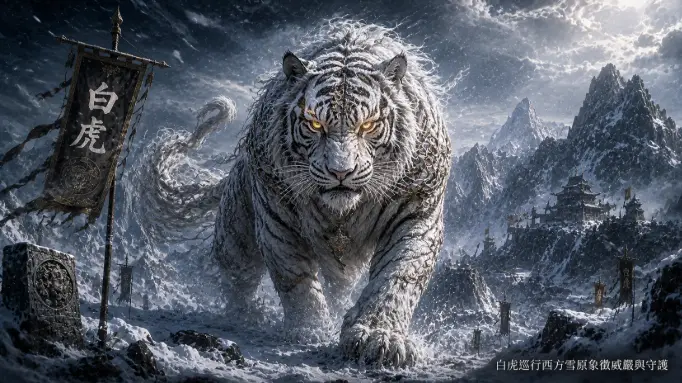
西方群山終年覆雪,寒風如刀,蒼穹總帶著淡淡的灰白色。傳說在那片無人敢久留的高原深處,棲息著鎮守西方的神獸——白虎。牠通體雪白,毛色如寒霜覆地,雙目則如燃燒的金焰,在黑夜之中依舊耀眼。每當戰亂將起,或天地失衡之際,人們便會聽見山谷之中傳來低沉虎嘯,如雷聲滾過群峰。有人說,那是白虎巡行天地的徵兆。某年邊境烽火連天,各地紛爭不斷,百姓流離失所。軍隊穿越西方山脈之時,接連遭遇暴風雪,無法辨清方向。就在士氣低迷之際,一名年輕士兵在風雪之中看見一道白影。起初,他以為只是幻覺,然而那身影卻在雪霧中愈發清晰。一頭巨虎正立於山巔,身軀龐大如山石,四周寒氣翻湧。牠靜靜俯視眾人,沒有咆哮,也沒有動作,但僅僅是存在,便讓所有人感到無法抗拒的威壓。士兵們紛紛跪地,不敢直視。白虎緩緩轉身,踏雪而行,留下深深足印。奇異的是,暴風雪竟隨之減弱,原本混亂的山路逐漸顯現。將領明白,這是神獸引路,於是命令軍隊跟隨其後。一路之上,白虎始終保持距離,既不靠近,也不離去,彷彿只是默默守望。當軍隊終於穿越山脈,抵達安全之地時,白虎停下腳步,再次回望眾人。那雙金色瞳孔之中沒有情感,卻彷彿蘊含千年歲月與無盡戰意。隨後,牠發出一聲震動天地的長嘯,聲音穿越群山,如同警示,又如宣告。下一瞬間,白虎已轉身消失於風雪深處。戰事最終平息,而那支軍隊也將白虎視為守護之靈。從此之後,西方山脈再無人輕易踏入,因為人們相信,白虎仍在那片雪原之中巡行,守護天地秩序。隨著歲月流逝,白虎不再只是傳說中的猛獸,而成為勇氣、紀律與守護的象徵。每當寒風吹過山谷,遠方若隱若現的低沉獸吼,總會讓人想起那道雪白身影。或許白虎從未真正離去,牠只是隱於風雪與群山之間,等待下一次天地失衡之時,再度現身。
English Version
Far beyond the inhabited lands, where frozen mountains stretch endlessly beneath pale skies, there exists a realm shaped by cold winds and silence. In those remote western peaks dwells the White Tiger, a divine guardian feared and revered throughout the ages. Its fur shines like fresh snow beneath moonlight, while its golden eyes burn with an intensity that seems almost eternal. Legends claim that whenever war approaches or balance within the world begins to fracture, the roar of the White Tiger echoes through the valleys long before any battle begins. During a time of unrest, when armies marched across kingdoms and conflict spread without end, a military force attempted to cross the western mountains. The journey quickly became disastrous. Violent snowstorms swallowed the paths, and the soldiers lost all sense of direction. Morale faded as cold and exhaustion took hold. Then, amid the blinding storm, one young soldier noticed a pale figure standing high upon a ridge. At first it appeared unreal, like a shape formed from drifting snow. But as the storm shifted, the figure became unmistakable. A colossal tiger stood upon the mountain, unmoving yet overwhelming in presence. The air around it carried an unnatural stillness, and every soldier who saw it felt instinctive fear. No command was needed for them to lower their heads. The creature did not attack. Instead, it turned and began to walk slowly through the storm. As it moved, the winds weakened, and hidden paths emerged from beneath the snow. Realizing they were being guided, the army followed from a distance. The White Tiger never once looked back, yet it remained aware of every movement behind it. For hours, perhaps days, it led them through terrain that would otherwise have meant certain death. At last, when the mountains opened into safer lands, the creature stopped. It turned toward the soldiers one final time. Its eyes held no cruelty, but neither did they hold mercy. They carried something greater—an ancient authority untouched by human conflict. Then the White Tiger released a roar that shook the frozen peaks. The sound rolled across the mountains like thunder, both warning and declaration. In the next moment, it vanished into the storm, disappearing as silently as it had appeared. The war eventually came to an end, but the memory of the White Tiger remained. The soldiers spoke of it not as an animal, but as a force that guarded the balance of the world itself. Over generations, the legend grew, and the White Tiger became a symbol of courage, discipline, and divine protection. Even now, travelers in the western mountains claim that during fierce snowstorms, they sometimes glimpse a pale figure moving through the blizzard. And when the distant roar of a beast echoes across the frozen valleys, many still believe the guardian of the west continues its endless watch.