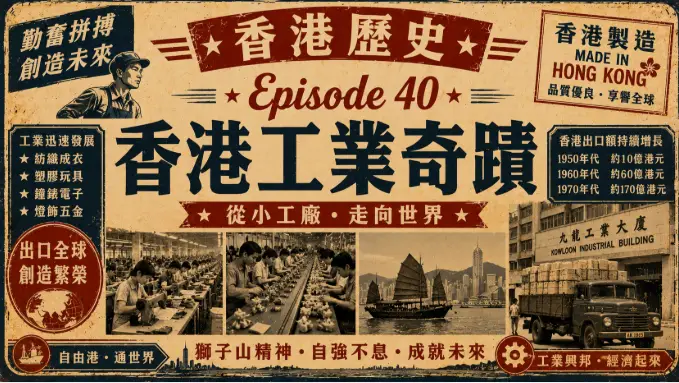
1950至1970年代,香港由戰後貧困城市迅速發展成亞洲重要工業中心。無數工廠、工人與移民家庭共同推動香港經濟起飛,創造出著名的「香港工業奇蹟」。
From the 1950s onward, Hong Kong transformed from a crowded refugee city into one of Asia’s most successful manufacturing economies. Factories, migrant workers, and small entrepreneurs together built an industrial miracle that reshaped the city forever.
中文
第二次世界大戰結束後,香港原本只是一個以轉口貿易為主的港口城市。然而到了1950年代,香港卻逐漸發展成亞洲最重要的工業基地之一。這段被稱為「香港工業奇蹟」的年代,不但改變香港經濟,也塑造出後來聞名世界的香港精神。戰後初期,大量中國內地難民南下香港,帶來龐大勞動力與技術人才。尤其上海商人與工廠老闆,把資金、設備與管理經驗一同帶到香港。由於香港土地有限,加上缺乏天然資源,許多人最初並不看好香港發展工業。但正是在這種資源不足環境下,香港人開始依靠勤奮與靈活經營,逐步建立出口工業體系。1950年代初期,香港最主要工業包括紡織、成衣、塑膠與玩具製造。大量小型工廠設於深水埗、觀塘、荃灣與九龍灣等地區。工廠空間通常十分狹窄,機器聲日夜不停,但對許多基層家庭而言,工廠工作代表穩定收入與生活希望。當時不少家庭甚至全家一起工作,父母在工廠做裝配,孩子放學後亦會幫忙包裝貨品。香港製造業能夠快速崛起,其中一個重要原因是靈活生產能力。許多工廠雖然規模不大,但能快速接單與調整產品。外國商人只要帶著樣板來港,工廠很快便能大量生產。由塑膠花、手電筒到玩具公仔,「香港製造」開始大量出口歐美市場。1960年代後,成衣與紡織業更成為香港經濟核心。大量工廠聘請女性工人,形成戰後香港重要勞工文化。工廠區每日上下班時間,人潮擠滿街道與巴士站,成為當年香港獨特城市景象。工業發展同時推動香港社會急速變化。人口大量增加,政府開始興建公共屋邨與工業大廈,希望改善住屋與生產環境。觀塘、葵涌與沙田等新市鎮亦逐漸發展。戰後出生的一代開始接受教育,希望透過工作改變命運。雖然當時工人薪金不高,工作時間長,部分工廠環境亦十分惡劣,但大部分家庭仍相信只要努力,生活便能慢慢改善。這種拼搏精神後來被稱為「獅子山精神」,成為香港文化重要象徵。另一方面,香港工業奇蹟亦受到國際局勢影響。冷戰時期,香港作為自由港與亞洲轉口中心,能夠與西方市場保持緊密聯繫。大量外國訂單湧入香港,推動出口經濟高速增長。1970年代,「Made in Hong Kong」產品遍布全球,香港逐漸成為亞洲四小龍之一。電子產品、鐘錶、玩具與成衣遠銷世界各地,維多利亞港貨船日夜繁忙。工業化不但令香港經濟起飛,也改變了市民生活方式。電視、冰箱與現代家庭用品開始進入普通家庭,香港社會逐漸走向現代化。不過工業發展亦帶來環境污染、勞工問題與貧富差距等新挑戰。隨著1980年代中國改革開放,許多工廠開始北移至珠江三角洲,香港則慢慢轉型為金融與服務中心。然而即使工廠時代逐漸結束,「香港工業奇蹟」仍然是香港歷史中最重要篇章之一。這段年代見證無數普通人在狹小工廠與擁擠屋邨之中,靠著努力與希望建立新生活,也讓香港由戰後難民城市逐步成長為世界級國際都會。
English Version
In the decades after World War II, Hong Kong achieved one of the most remarkable economic transformations in modern Asian history. Once a struggling colonial port crowded with refugees and temporary settlements, the city rapidly evolved into a manufacturing powerhouse whose products reached markets across the globe. This period became known as the “Hong Kong Industrial Miracle,” a time when determination, migration, entrepreneurship, and global trade combined to reshape the colony’s future. During the late 1940s and 1950s, waves of migrants from mainland China arrived in Hong Kong carrying skills, industrial knowledge, and business experience. Many entrepreneurs from Shanghai relocated factories, machinery, and investment capital to the colony, bringing with them expertise in textiles and manufacturing. Although Hong Kong lacked natural resources and had very limited land, these disadvantages pushed local industries toward flexibility and efficiency. Small workshops and factories emerged across districts such as Sham Shui Po, Kwun Tong, Tsuen Wan, and Kowloon Bay. Conditions inside many factories were difficult. Production floors were crowded, ventilation was poor, and machines operated continuously for long hours. Yet factory work offered stability to families rebuilding their lives after years of war and migration. Entire households often participated in industrial labor. Parents assembled products while children helped package goods after school. Despite modest wages, industrial employment created opportunities unavailable elsewhere. Hong Kong manufacturers became famous for their speed and adaptability. Small factories could quickly copy samples, fulfill overseas orders, and shift production based on changing demand. Plastic flowers, flashlights, toys, garments, watches, and household goods stamped with “Made in Hong Kong” soon flooded international markets. By the 1960s, textiles and clothing exports had become major pillars of the economy. Large numbers of women entered factory work, reshaping both family structures and urban culture. Streets around industrial districts filled daily with workers commuting between factories and crowded housing estates. Economic growth also transformed Hong Kong’s physical landscape. Public housing estates expanded to accommodate rising populations, while industrial buildings spread across newly developed urban areas. New towns such as Kwun Tong, Sha Tin, and Kwai Chung became symbols of modernization. Education opportunities improved as many working-class parents hoped their children could achieve better futures through study and employment. Although labor conditions remained demanding and income inequality persisted, optimism about upward mobility became widespread. This spirit of perseverance later became associated with the famous “Lion Rock Spirit,” representing resilience and ambition in Hong Kong society. International politics also played an important role in the colony’s industrial rise. During the Cold War, Hong Kong maintained close economic ties with Western markets while serving as a gateway between China and the global economy. Foreign companies increasingly relied on Hong Kong factories for affordable manufacturing. By the 1970s, the city had become one of Asia’s leading export economies and was recognized as one of the “Four Asian Tigers.” Ships crowded Victoria Harbour carrying electronics, clothing, watches, and consumer products to destinations worldwide. Industrialization dramatically changed daily life. Consumer goods such as televisions, refrigerators, and modern household appliances became more accessible to ordinary families. At the same time, rapid development also created challenges including pollution, overcrowding, labor disputes, and widening social inequality. During the 1980s, China’s economic reforms encouraged many factories to relocate across the border into the Pearl River Delta, gradually shifting Hong Kong toward finance and service industries. Even so, the industrial era remains one of the defining chapters in Hong Kong history. The story of factory workers, migrant families, and small entrepreneurs building prosperity from limited resources continues to symbolize the city’s remarkable ability to reinvent itself through hard work and resilience.
總結
香港工業奇蹟讓這座戰後城市迅速崛起,成為亞洲重要經濟中心。無數工人與移民家庭的努力,塑造出香港拼搏、靈活與堅持不懈的城市精神。
Hong Kong’s industrial miracle transformed the city into a global manufacturing success story. Built through the determination of workers, migrants, and entrepreneurs, the era continues to define the resilience and ambition associated with Hong Kong today.