三國演義第五十七回:柴桑口臥龍弔喪,周瑜與諸葛亮最後交鋒 | Romance of the Three Kingdoms Chapter 57 Zhuge Liang Mourns Zhou Yu
英雄將逝,恩怨未休。一場弔喪,既是禮數,也是試探;既有哀傷,也藏著最後的較量。
A hero nears his end, but rivalry remains unresolved. What appears as mourning becomes one final contest of pride, perception, and legacy.
中文
秋風過江,水色蒼茫。
江東軍營之中,氣氛異常沉重。
周瑜病重。
長年征戰與接連失算,使他的身心早已疲憊。
而最讓他難以釋懷的,始終是同一個名字——
諸葛亮。
一次又一次的交鋒,一次又一次的失策。
不是敗於兵力。
而是敗於預判。
這種感覺,比戰敗更沉重。
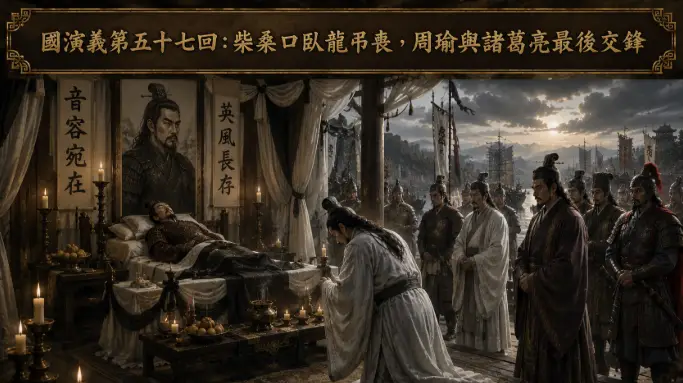
周瑜臥於帳中,面色蒼白。
江風吹動帳簾,燈火微微搖曳。
他望向遠方,神情複雜。
不甘、憤怒、遺憾,全混雜於沉默之中。
最終,他長嘆。
「既生瑜,何生亮。」
一句話,道盡所有心結。
消息很快傳出。
江東上下震動。
而在荊州,諸葛亮亦已得知。
他沒有遲疑。
決定親赴柴桑弔喪。
消息傳至東吳,引起巨大反應。
有人認為此舉無禮,有人認為暗藏挑釁。
畢竟,周瑜與諸葛亮之間,早已不是單純敵我。
那是一種難以分割的對立。
但諸葛亮仍然前往。
白衣素扇,神情平靜。
當他踏入靈堂時,所有目光皆落在他身上。
氣氛壓抑如弦。
東吳眾將心中怒意難平。
他們認為,正是諸葛亮一步步逼迫周瑜。
然而,諸葛亮並未辯解。
他走至靈前,深深一拜。
神色之中,沒有得意。
只有沉重。
因為他明白,周瑜並非庸才。
恰恰相反。
正因為對方足夠強大,這場對局才如此激烈。
靈堂之外,江風吹過。
火光微晃。
所有人都沉默。
這一刻,恩怨忽然變得模糊。
留下的,只有英雄相惜的餘韻。
然而,政治不會因哀傷停止。
周瑜之死,意味著東吳格局將變。
聯盟,亦將重新調整。
諸葛亮離開時,未曾回頭。
因為他知道,一個對手已逝。
而新的局勢,正在開始。
English Version
The rivalry between Zhou Yu and Zhuge Liang had long surpassed ordinary conflict.
It was intellectual, strategic, and deeply personal.
Each encounter between them reshaped the balance of influence between Wu and Liu Bei’s growing power.
But now, the struggle was nearing its end.
Zhou Yu had fallen ill.
Years of warfare, pressure, and repeated frustration had taken their toll.
His ambitions remained sharp, but his strength no longer matched them.
And beneath all of it lingered one constant thought—Zhuge Liang.
Not because Zhuge Liang had defeated him outright in battle, but because he continually disrupted his plans.
Again and again, Zhou Yu found himself reacting instead of controlling.
For a strategist of his caliber, that burden was unbearable.
As his condition worsened, the frustration turned inward.
His famous lament—“If Zhou Yu exists, why must Zhuge Liang exist as well?”—was not simple jealousy.
It was the exhaustion of a man confronting someone he could neither ignore nor overcome.
When news of Zhou Yu’s death spread, Wu fell into mourning.
And in Jingzhou, Zhuge Liang made a surprising decision.
He would personally attend the funeral.
The reaction in Wu was immediate and tense.
Many viewed the visit as arrogance.
Others suspected hidden motives.
After all, how could the greatest rival of the deceased arrive as a mourner?
Yet Zhuge Liang came anyway.
Calm.
Composed.
Dressed in white, carrying only the quiet weight of the moment.
Inside the mourning hall, silence dominated the air.
Wu’s officers watched him carefully, their resentment barely concealed.
To them, Zhuge Liang symbolized every frustration Zhou Yu had endured.
But Zhuge Liang offered no defense.
No argument.
No victory.
Only respect.
Because he understood something others did not fully see.
Zhou Yu had never been weak.
In fact, his brilliance was precisely what made the rivalry meaningful.
Without a worthy opponent, there could be no true contest.
As the ceremony continued, the atmosphere shifted subtly.
The hostility remained, but it was joined by recognition.
This was not merely an enemy paying respects.
It was one great strategist acknowledging another.
Outside, the river winds carried on as always.
But Wu itself had changed.
With Zhou Yu gone, a critical balance disappeared with him.
And the political landscape of the Three Kingdoms would never be quite the same again.