
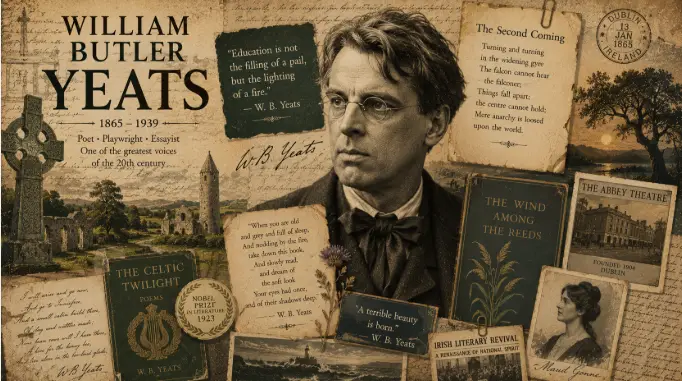
William Butler Yeats以充滿象徵與神秘色彩的詩歌聞名,他將愛爾蘭歷史、民族精神與個人情感融合成獨特文學世界。
William Butler Yeats shaped modern poetry through visionary language, Irish mythology, and profound reflections on history, love, and spiritual transformation.
中文
威廉·勃特勒·葉芝出生於十九世紀的愛爾蘭都柏林,成長於一個重視藝術與文化的家庭,他的父親是畫家,自幼便讓他接觸文學、繪畫與神話故事,這些經驗深深影響他日後的創作方向,葉芝年輕時正值愛爾蘭民族意識逐漸高漲的年代,他不僅是一位詩人,也積極參與愛爾蘭文化復興運動,希望透過文學重建民族精神與文化認同,他大量運用凱爾特神話、民間傳說與象徵意象,創造出帶有夢幻與神秘氛圍的詩歌世界,在早期作品中,他偏向浪漫而柔美的風格,描寫愛情、自然與幻想,但隨著年齡增長與時代動盪,他的詩風逐漸轉向深沉與哲思,開始關注歷史、政治與人類命運,他與革命家毛德·岡之間長年的情感糾葛,也成為其創作的重要靈感來源,許多詩篇都帶有愛而不得的哀愁與理想化情感,《當你老了》便是其中最廣為人知的作品之一,以溫柔而憂傷的語氣描寫愛情與時間流逝,《復活節1916》則記錄愛爾蘭革命帶來的震撼與矛盾情感,展現他對歷史與暴力的複雜態度,葉芝同時對神秘學與靈性思想有濃厚興趣,他研究占星、象徵學與神秘組織理論,並將這些元素融入詩歌之中,使其作品充滿象徵與多重意義,他的代表作《第二次降臨》以強烈意象描繪世界秩序崩解與新時代來臨,其開頭「一切崩解,中心再也無法維繫」成為二十世紀最著名的詩句之一,葉芝在語言運用上極具音樂感與節奏感,能將個人情感、民族歷史與宇宙觀融合於短短詩句之中,他後期作品更加簡潔銳利,展現對衰老、死亡與藝術永恆性的深刻思考,1923年,他獲得諾貝爾文學獎,成為愛爾蘭最具國際影響力的文學人物之一,他不只是詩人,更是文化思想家與戲劇推動者,曾參與創立愛爾蘭國家劇院,推動本土戲劇發展,葉芝的作品跨越浪漫主義與現代主義,既保留古老神話氣息,也反映現代世界的不安與裂痕,他以詩歌探索愛情、歷史、靈魂與民族認同,讓文學成為連結個人與時代的重要力量,至今他的詩仍持續被閱讀與引用,成為理解愛爾蘭文化與現代詩歌的重要入口
English Version
William Butler Yeats emerged as one of the most influential poets of the modern era, blending mythology, nationalism, symbolism, and spiritual inquiry into a body of work that transformed twentieth century poetry, born in Dublin into an artistic family, he grew up surrounded by painting, literature, and storytelling, influences that nurtured his fascination with imagination and cultural identity, during his youth Ireland was experiencing a powerful cultural awakening, and Yeats became deeply involved in the Irish Literary Revival, believing that poetry and drama could restore national spirit and preserve the legends and traditions of the Irish past, his early poems were dreamlike and lyrical, filled with mystical landscapes, Celtic folklore, and romantic longing, but as political unrest and personal disappointment shaped his later years, his writing evolved into something sharper, darker, and more philosophically complex, one of the central emotional forces in his life was his unfulfilled love for Maud Gonne, whose presence inspired many of his most memorable poems, works such as When You Are Old reflect both tenderness and melancholy, capturing the painful beauty of love altered by time and memory, Yeats also confronted the violent transformations of Irish history, particularly in Easter 1916 where he examined the emotional and moral complexity of revolution, balancing admiration with unease, alongside political themes he pursued a lifelong interest in mysticism, symbolism, occult philosophy, and spiritual systems, incorporating these ideas into poems that operate on multiple symbolic levels, this fascination culminated in works like The Second Coming, where he portrayed a world descending into chaos and uncertainty, creating one of the most iconic images of modern civilization in crisis, his poetic language combined musical rhythm with intellectual depth, allowing personal emotion, mythic vision, and historical anxiety to coexist within concise and memorable lines, as he aged his poetry became more direct and powerful, reflecting on mortality, aging, artistic permanence, and the search for meaning in turbulent times, Yeats received the Nobel Prize in Literature in 1923, recognition not only of his artistic brilliance but also of his role in shaping Ireland’s cultural identity, beyond poetry he helped establish the Abbey Theatre and contributed significantly to modern Irish drama and national culture, his work bridges the worlds of romanticism and modernism, preserving ancient myth while confronting the fractures of the modern age, today Yeats remains a defining literary voice because his poems continue to speak to universal questions about identity, memory, spiritual longing, and the relationship between individual lives and the movements of history