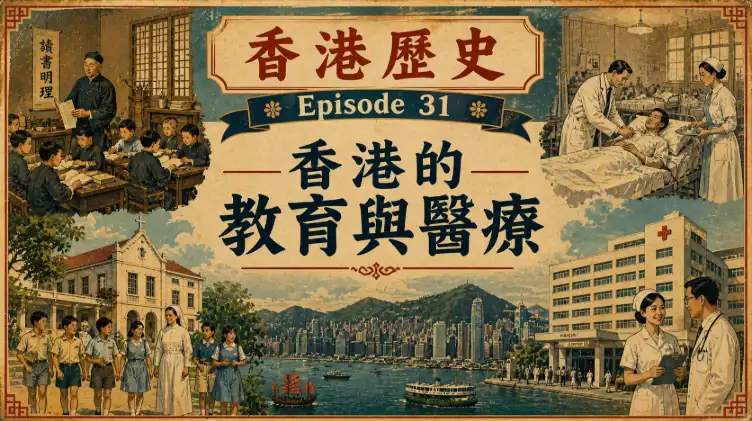
隨著香港城市發展,教育與醫療逐步建立並完善,從傳統私塾與民間醫療走向制度化體系,為社會穩定與人口健康提供重要基礎。
As Hong Kong developed, education and healthcare evolved from informal traditions into structured systems, laying essential foundations for social stability, public health, and long-term urban growth.
中文
香港的教育與醫療發展,反映出城市在殖民時期由傳統走向現代的深刻轉變,早期香港華人社會的教育主要依賴私塾與宗族資助的學習模式,學生誦讀經典、學習倫理與書寫,重視道德修養與文化傳承,這種教育形式維繫了華人社群的文化根基,使移民在陌生環境中仍能保持身份認同,然而隨著殖民政府的建立與西方影響的引入,現代學校制度逐步出現,教會學校成為重要推動力量,提供包括語言、科學與現代知識在內的教育內容,英語逐漸成為重要學習工具,為學生打開通往商業與政府工作的機會,教育因此成為社會流動的重要途徑,一批受過西式教育的華人精英逐漸崛起,在商業與公共事務中扮演關鍵角色,推動社會轉型與現代化進程,而在醫療方面,早期香港同樣以傳統中醫與民間療法為主,草藥、針灸與經驗醫術是主要治療方式,但隨著人口增加與疾病傳播問題加劇,公共衛生逐漸成為重要議題,十九世紀後期,殖民政府開始建立現代醫療體系,包括醫院、診所與衛生制度,西醫逐步引入,疫症防治與衛生管理成為重點工作,特別是在面對瘟疫與傳染病時,醫療制度的建立顯得尤為關鍵,這一時期的醫療發展不僅改善居民健康,也改變了社會對疾病與治療的認知,教會與慈善機構亦在醫療發展中扮演重要角色,設立醫院與診療服務,為基層市民提供基本醫療保障,隨著時間推移,教育與醫療逐漸形成制度化與專業化體系,學校數量增加,課程內容更加多元,而醫療設施亦不斷完善,專業醫護人員培訓逐步建立,使整體服務水平提升,二十世紀中期以後,隨著經濟發展與政府投入增加,公共教育與公共醫療進一步普及,更多市民能夠接受教育與醫療服務,促進社會整體素質提升與生活水平改善,教育與醫療的發展不僅是制度建設,更是社會價值轉變的體現,知識與健康逐漸成為現代城市的重要核心資源,回顧香港歷史,這兩個領域的演變展現出由傳統到現代、由個體到制度的轉變過程,並為香港成為國際城市奠定穩固基礎,也反映出不同文化與制度在交匯中所產生的創新與融合
English Version
The development of education and healthcare in Hong Kong reflects a broader transformation from traditional community-based practices to structured modern systems shaped by colonial influence and social change, in the early years Chinese education was rooted in private schools supported by clans and local networks, where students studied classical texts, moral philosophy, and writing, reinforcing cultural continuity and identity among migrant communities, as the colonial administration expanded and Western ideas took hold, new forms of schooling emerged, particularly through missionary institutions that introduced subjects such as science, language, and modern knowledge, English education became increasingly significant, opening doors to careers in commerce and government and creating new pathways for upward mobility, this shift allowed a new generation of Chinese elites to rise, bridging cultural divides and contributing to the modernization of society, healthcare followed a similar trajectory of transformation, traditional Chinese medicine initially dominated, relying on herbal remedies, acupuncture, and accumulated experience, but rapid population growth and recurring outbreaks of disease highlighted the need for more organized public health measures, by the late nineteenth century the colonial government began to establish hospitals, clinics, and sanitary regulations, introducing Western medical practices and focusing on disease prevention and urban hygiene, epidemics served as turning points that accelerated the development of medical infrastructure and public awareness, religious and charitable organizations played a crucial role by founding hospitals and providing accessible care for the wider population, over time both education and healthcare became increasingly institutionalized and professionalized, schools expanded in number and scope, curricula diversified, and teacher training improved, while the medical sector advanced through the training of healthcare professionals and the expansion of facilities, by the mid-twentieth century increased government investment and economic growth led to broader access to public education and healthcare services, improving living standards and strengthening social cohesion, these developments were not only administrative achievements but also reflections of shifting societal values, where knowledge and health became central pillars of modern urban life, the evolution of these systems illustrates how Hong Kong adapted to changing conditions by integrating different cultural influences, ultimately building a resilient and forward-looking society that continues to evolve today