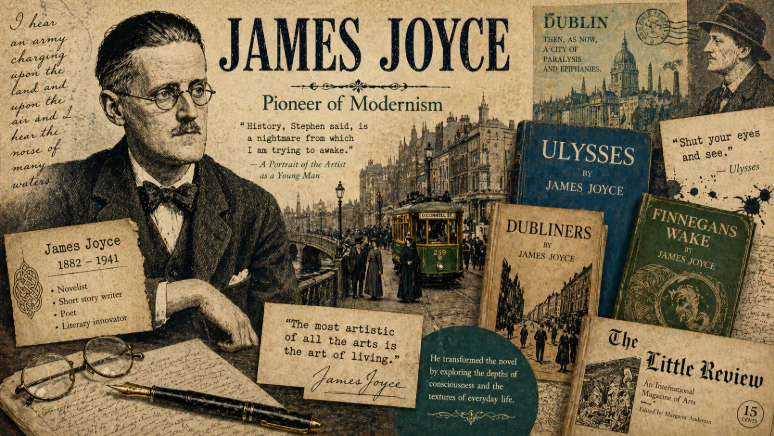
在二十世紀文學變革的浪潮中,詹姆斯·喬伊斯以創新的敘事手法打破傳統框架,將人類內心的思緒轉化為文字,開創出嶄新的文學形式與閱讀體驗。
Amid the literary revolutions of the twentieth century, James Joyce redefined storytelling by capturing the inner flow of thought, reshaping narrative structure and opening new possibilities for modern fiction.
中文
詹姆斯·喬伊斯(James Joyce)是現代主義文學中最具影響力的作家之一,他以突破傳統的敘事方式與語言實驗聞名,徹底改變了小說的表達形式。他出生於愛爾蘭都柏林,成長於一個逐漸沒落的中產家庭,早年的宗教教育與家庭困境,為他日後的創作提供了深厚的心理與文化背景。他對故鄉懷有複雜情感,既批判又依戀,這種矛盾在其作品中反覆出現,尤其在《都柏林人》中,以一系列短篇描繪城市生活的停滯與精神困境,展現出「麻痺」的主題。他的代表作《尤利西斯》更是現代文學的里程碑,作品以一天的時間為框架,描寫普通人在都柏林的生活,卻透過意識流手法深入人物內心,將思想、記憶與感知交織成複雜的敘事網絡,使讀者仿佛直接進入角色的思維世界。他在語言上大膽創新,融合多種風格與語體,甚至打破語法規則,使文本充滿挑戰性與藝術張力。晚期作品《芬尼根守靈夜》更進一步推向極致,語言幾近夢境般流動,展現出對語言本質的深層探索。喬伊斯的創作不僅關注個人內心,也反映出身份、宗教與文化的衝突,他的角色常在傳統與現代之間掙扎,呈現出強烈的存在感與孤獨感。他一生多在海外生活,但始終以都柏林為創作核心,使城市成為文學地圖中的重要象徵。他的作品對後世影響深遠,啟發了無數作家在敘事與語言上的探索,使小說不再只是講述故事,而成為對意識與存在的深刻挖掘。儘管閱讀門檻較高,但其文學價值與創新精神,使他被譽為現代文學的奠基者之一,至今仍是研究與討論的焦點。
English Version
James Joyce stands as a towering figure in modernist literature, known for reshaping narrative form and pushing language to its limits. Born in Dublin, Ireland, he grew up in a family facing gradual decline, and his early experiences with religion, identity, and social tension deeply influenced his writing. Joyce maintained a complicated relationship with his homeland, one marked by both critique and deep attachment, a duality that permeates his work. In Dubliners, he presents a series of stories that reveal the stagnation and quiet despair of urban life, introducing the recurring theme of paralysis. His most celebrated novel, Ulysses, transforms an ordinary day in Dublin into an extraordinary literary journey, using stream-of-consciousness techniques to immerse readers directly in the minds of its characters. Thoughts, memories, and sensory impressions flow seamlessly, dissolving the boundaries between inner and outer reality. Joyce’s linguistic experimentation is bold and relentless, blending styles, tones, and structures in ways that challenge conventional reading. This experimentation reaches its peak in Finnegans Wake, where language becomes fluid and dreamlike, reflecting the subconscious and the cyclical nature of human experience. Beyond stylistic innovation, Joyce explores themes of identity, exile, religion, and cultural conflict, portraying individuals caught between tradition and modernity. Although he spent much of his life abroad, Dublin remained the central landscape of his imagination, meticulously recreated in his fiction. His influence on literature is profound, inspiring generations of writers to explore new forms of expression and to view fiction as a space for psychological and philosophical exploration. Joyce’s work may demand patience and attention, but its richness and originality continue to captivate readers and scholars around the world.