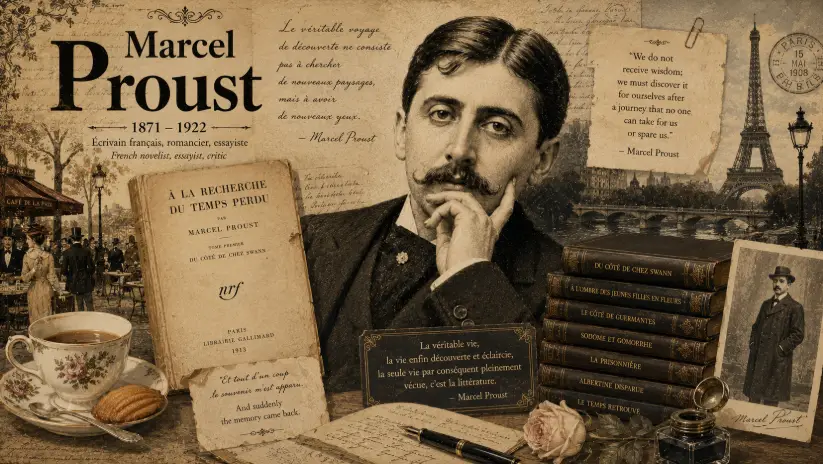
Marcel Proust以細膩而漫長的文字探索記憶、時間與情感,他的作品重新定義小說形式,成為現代文學的重要象徵。
Marcel Proust transformed modern literature through his profound exploration of memory, time, and human emotion, creating novels that continue to shape literary thought worldwide.
中文
馬塞爾·普魯斯特出生於十九世紀末的法國巴黎,成長於富裕而重視文化的家庭,自幼體弱多病,長期受到氣喘困擾,這種與外界若即若離的生活狀態,使他更傾向於觀察與思考內在世界,他年輕時活躍於巴黎上流社會,接觸藝術家、貴族與知識分子,這些人物與社交經驗後來成為他小說的重要素材,他最著名的作品《追憶似水年華》被視為二十世紀最偉大的小說之一,全書篇幅龐大,以記憶為核心,描寫主人公如何透過細微感官經驗重新回到過去,其中最著名的片段便是瑪德蓮蛋糕的氣味與味道喚起童年回憶,普魯斯特藉由這種非刻意的記憶,展現時間如何潛藏在人類感官與情感之中,他的小說並不依賴激烈情節,而是透過細膩的心理描寫與長篇句式,慢慢揭示人物的情感變化與社會關係,在他的筆下,愛情、嫉妒、孤獨與虛榮都被極度放大與分析,使讀者能深入感受人物內心最微妙的波動,他同時描繪法國貴族社會的衰落與現代世界的變遷,透過沙龍文化與人際互動,反映一個時代逐漸消逝的氣氛,普魯斯特的寫作方式打破傳統小說結構,他將時間視為流動而非線性的存在,人物與回憶不斷交錯,使作品更像意識與情感的河流,他相信真正的藝術能夠保存生命中稍縱即逝的瞬間,並透過文字讓過去再次鮮活,這種對時間與記憶的探索,深深影響後世現代主義文學與心理描寫技巧,雖然他的作品初期並未立即受到廣泛理解,但隨著時間推移,《追憶似水年華》逐漸被視為文學史上的經典之作,普魯斯特晚年大多隱居於鋪滿隔音軟木的房間內持續寫作,他幾乎將生命全部投入創作之中,最終完成這部龐大而深刻的作品,他讓小說不再只是講述故事,而成為探索記憶、感知與存在的藝術形式,普魯斯特以敏銳觀察與精密文字,捕捉人類內心深處最難以言喻的感受,使他的作品即使跨越百年,仍能讓讀者在閱讀中重新感受時間流逝與情感回聲的力量
English Version
Marcel Proust emerged as one of the most influential literary voices of modern France, crafting a body of work that transformed the novel into an exploration of memory and consciousness, born in Paris into an educated and affluent family, he spent much of his life struggling with fragile health and severe asthma, conditions that shaped his inward looking personality and heightened sensitivity to emotional and sensory experience, while he participated in the social world of Parisian salons and aristocratic circles during his youth, he often observed society from a reflective distance, carefully absorbing the gestures, conversations, ambitions, and insecurities of those around him, these observations later became the foundation of his monumental masterpiece In Search of Lost Time, a multi volume novel that examines how memory shapes identity and how the past survives within everyday sensations, one of the most celebrated moments in literature occurs when the taste of a madeleine cake unexpectedly revives forgotten childhood memories, illustrating Proust’s idea that involuntary memory possesses the power to restore entire emotional worlds, rather than relying on dramatic plot developments, his writing unfolds through intricate reflections, psychological detail, and extended sentences that mirror the flow of thought itself, he explores love, jealousy, longing, vanity, and loneliness with extraordinary precision, revealing the fragile and often contradictory nature of human emotion, alongside these intimate portraits he also documents the fading world of the French aristocracy and the transformation of society during the transition into modernity, his novels capture the passing of time not as a sequence of events but as an emotional landscape where memory constantly reshapes reality, Proust rejected traditional narrative structure and instead created a literary form that moves fluidly between past and present, allowing readers to experience consciousness as a living process, he believed that art could preserve fleeting moments and uncover deeper truths hidden beneath ordinary life, this philosophy profoundly influenced modernist writers and changed the possibilities of literary expression, although his work was initially misunderstood by some critics, it gradually came to be recognized as one of the greatest achievements in world literature, in his later years Proust isolated himself in a cork lined room where he devoted nearly all of his energy to writing and revising his vast novel cycle, his dedication resulted in a work of remarkable emotional depth and intellectual richness, through his exploration of memory and perception he demonstrated that literature could become a means of recovering lost experience and understanding the hidden patterns of human existence, his legacy continues to resonate because his writing speaks to universal questions about time, identity, and the fragile beauty of remembered life