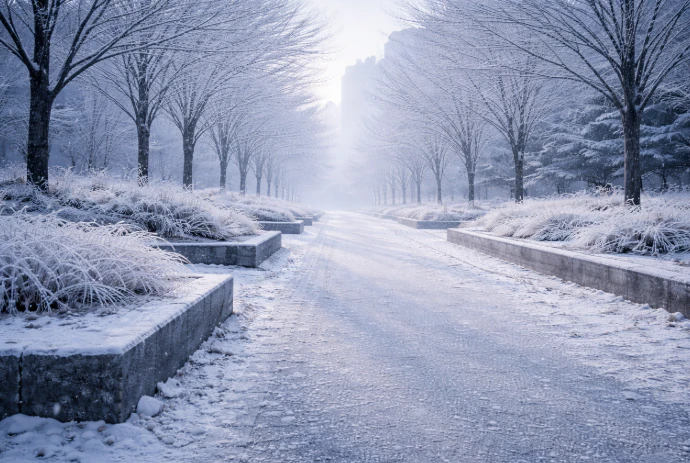
大寒,是一年之中最寒冷的時刻。氣溫降至最低,萬物幾近靜止,世界進入最深的冬。
Major Cold marks the coldest period of the year. Temperatures reach their lowest point, and the world enters the deepest stillness of winter.
中文
大寒,是整個二十四節氣循環之中最極端的一個時刻,它不只是寒冷的延續,而是寒冷的頂點。當氣溫下降到一年之中最低的狀態,冷已經不再是外在的感受,而是一種全面包圍的存在。清晨的空氣帶著刺骨的寒意,呼吸時可以感受到冷直接進入身體,甚至帶來輕微的疼痛感。這種冷,使人意識到身體的界線,也讓每一個動作變得更加謹慎。風在大寒之中顯得更加銳利,它不再只是吹拂,而是一種切割空氣的存在,帶來強烈的刺激,使人不自覺縮緊身體。大寒的光線,是一年之中最冷的光,陽光雖然存在,但幾乎不帶任何溫度,顏色偏白且清晰,照在地面上時呈現出一種乾淨而冷峻的質感。影子依然長而銳利,整個空間呈現出一種極簡而強烈的結構。城市在大寒之中進入最收縮的狀態,人們減少外出,街道顯得空曠,活動集中於室內。暖氣與燈光成為主要的依靠,室內外的差異達到最大。這種差異,使冬天的感覺更加深刻。對學生而言,大寒通常處於假期期間,時間變得鬆散,但寒冷限制了活動範圍,使生活呈現出一種靜態的節奏。對上班族而言,大寒則是新年初期的一種考驗,在最冷的環境中重新建立工作節奏,需要更多的適應與調整。大寒同時帶著一種極限的意義,當寒冷達到頂點,變化也即將開始。這種極端狀態,使人意識到循環的存在,因為任何極致都不會持續。自然界在大寒之中幾乎完全靜止,植物進入最深層的休眠,動物活動極少,整個環境呈現出一種近乎凝固的狀態。這種靜止,使時間看起來像被凍結,但實際上,變化正在內部進行。夜晚的大寒更加深刻,氣溫降至最低,空氣乾冷且透明,天空顯得極為清晰,星光明亮而銳利。這種夜晚帶著一種純粹的寒,使人感受到自然的極限。大寒的記憶,往往來自於這種極端,是刺骨的冷,是白色的呼吸,是清晰的光,也是時間幾乎停止的感覺。在這個節氣裡,人們不再與寒冷對抗,而是學會與之共存,調整節奏,減少消耗,保留能量。大寒提醒我們,當一切達到極限時,新的開始已經在準備之中,冬天最深的時刻,也同時孕育著春天的可能。
English Version
Major Cold represents the most extreme point within the entire cycle of the seasons. It is not merely a continuation of cold, but its peak. As temperatures drop to their lowest levels of the year, cold becomes more than an external sensation—it becomes an all-encompassing presence. In the early morning, the air feels piercing, and each breath carries a sharp chill that can even verge on discomfort. This intensity makes one acutely aware of the body, causing movements to become more deliberate and controlled. The wind during this period is particularly striking. It no longer feels like a gentle flow, but rather a force that cuts through the air, producing a sharp and immediate reaction. Light during this time has its own distinctive quality. Although the sun is present, it provides almost no warmth. Its tone is pale and clear, illuminating the environment with a stark, minimal brightness. Shadows remain long and sharply defined, creating a space that feels structured and reduced to its essential forms. Urban life during Major Cold contracts to its smallest scale. People limit their time outdoors, and streets often appear quiet and sparse. Indoor spaces become the center of activity, where heating and artificial light provide comfort. The contrast between interior warmth and exterior cold reaches its maximum, intensifying the experience of winter. For students, this period often falls within holiday time, where schedules loosen, yet the cold restricts movement, creating a slower and more contained rhythm. For working adults, Major Cold represents an early phase of the new year, requiring adaptation and resilience as routines are reestablished in a harsh environment. This period also carries the meaning of an extreme. When cold reaches its peak, change is already imminent. This condition highlights the cyclical nature of time, as no extreme can sustain itself indefinitely. In nature, movement is nearly absent. Plants are in deep dormancy, animals remain largely inactive, and the environment appears almost frozen. Yet within this stillness, processes of change continue unseen. Nights during Major Cold are especially intense. Temperatures reach their lowest point, the air becomes dry and transparent, and the sky appears exceptionally clear, with stars shining sharply. This kind of night expresses the pure essence of winter. The memory of Major Cold is shaped by these extremes—the biting cold, the visible breath, the clarity of light, and the sensation that time has slowed almost to a halt. During this period, people no longer resist the cold but learn to coexist with it, adjusting their pace, conserving energy, and turning inward. Major Cold reminds us that at the point of greatest extremity, a new beginning is already forming. The deepest moment of winter quietly contains the possibility of spring.