
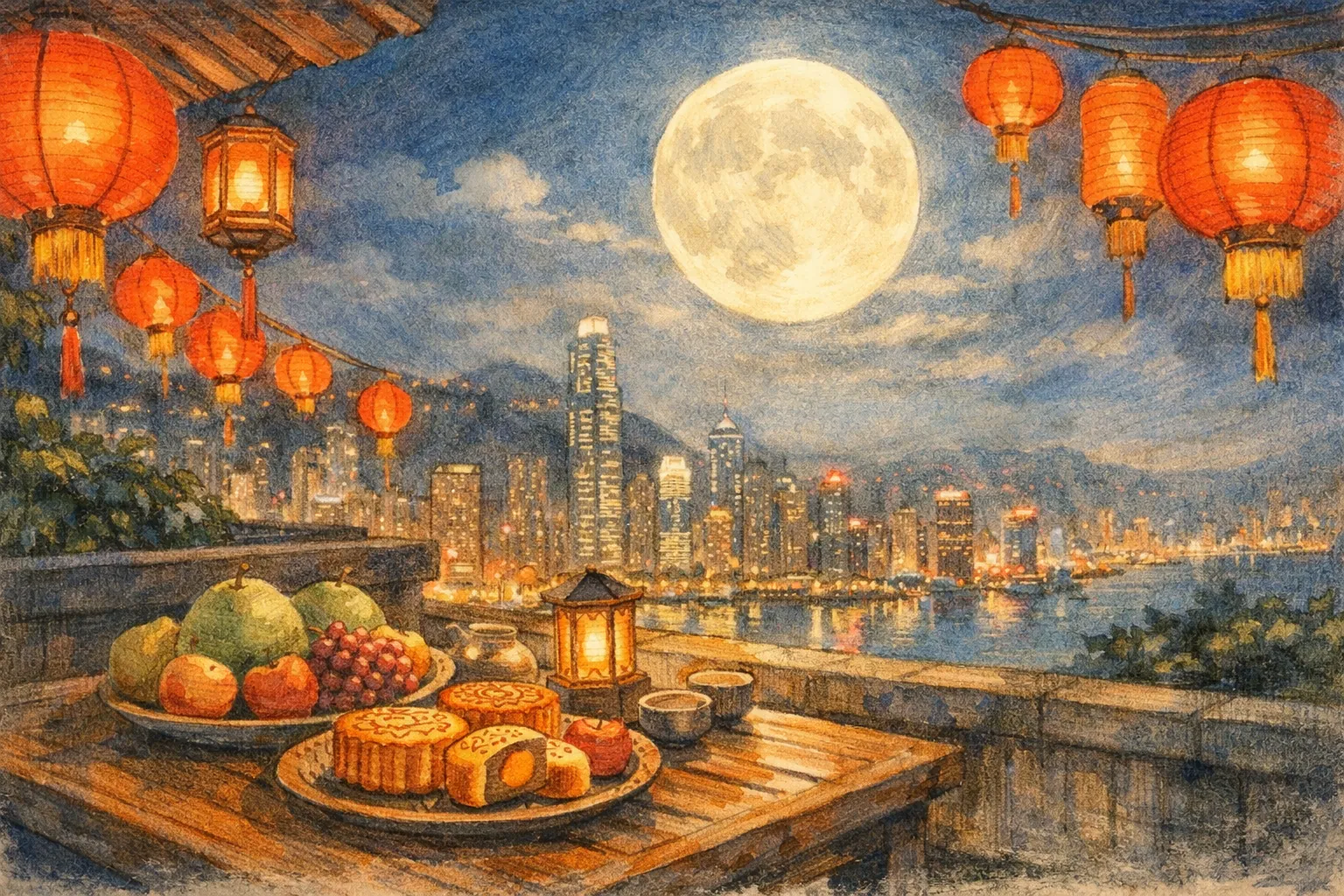
中秋節的月光與家庭|月餅、燈籠與城市屋頂的團圓夜|Mid-Autumn Festival Moonlight|Mooncakes, Lanterns and Family Moments Above the City | 包羅萬有 第20章
在華人傳統節日之中,中秋節總帶著一種安靜而明亮的氣氛。它不像農曆新年那樣熱鬧,也不像端午節那樣充滿鼓聲。中秋節更像是一個屬於夜晚的節日。當月亮升起,城市的燈光與月光交錯,人們在這樣的夜色裡分享食物與記憶。
農曆八月十五,被稱為一年之中月亮最圓的夜晚。在古代,人們相信這一天的月亮最為明亮,因此逐漸形成賞月的習俗。從庭院到屋頂,從鄉村到城市,人們抬頭望著天空,讓月光成為節日的一部分。
在很多人的童年記憶裡,中秋節總是和燈籠有關。小小的燈籠在夜色中亮起,像是一顆顆溫暖的光點。過去的燈籠多用紙和竹製成,形狀各異,有圓形、兔形,也有魚形。燈光透過紙面散開,讓夜晚顯得柔和。
孩子們提著燈籠走在街道上,燈光隨著腳步輕輕晃動。那種畫面往往成為節日最鮮明的記憶。對小孩來說,燈籠不只是裝飾,它更像是一種屬於節日的玩具。
如果說燈籠象徵光,那麼月餅便象徵團圓。圓形的月餅與滿月互相呼應,也象徵家庭的圓滿。每到中秋節前夕,餅店與商場都會擺滿各式各樣的月餅。傳統的蓮蓉、豆沙與五仁,還有後來出現的冰皮與創新口味,都成為節日的一部分。
在很多家庭裡,中秋節的夜晚會準備一個小小的桌子,上面擺著水果與月餅。橙子、柚子、葡萄與蘋果放在一起,象徵豐收。當夜色降臨,人們坐在一起賞月,一邊聊天一邊分享月餅。
這樣的畫面在城市裡顯得特別溫暖。高樓之間的天空或許不如鄉村那樣開闊,但月亮仍然會出現在樓宇之上。屋頂、天台、海旁與公園,都是賞月的地方。
在香港這樣的城市裡,中秋節的夜晚常常帶著熱鬧的氣氛。許多家庭會到海旁、公園或屋苑的空地賞月。孩子提著燈籠在草地上跑動,大人則圍坐在一起聊天。城市的夜晚因為節日而變得溫柔。
除了家庭聚會,中秋節也帶著一些古老的傳說。最著名的故事是嫦娥奔月。傳說嫦娥因為吞下仙藥而飛上月宮,從此住在月亮之上。人們在賞月的時候,也會想起這個古老的故事。月亮因此不只是天上的星體,也成為文化與想像的一部分。
時間讓很多節日習俗慢慢改變。今天的燈籠多用塑膠與電燈製作,月餅的口味也越來越多樣。但節日的核心似乎仍然沒有改變。中秋節依然是關於月亮、家庭與分享的節日。
當夜晚慢慢變深,月亮高掛在天空之中。城市的燈光與月光混在一起,讓整個夜晚顯得柔和。人們在這樣的光下分享月餅,也分享故事。
或許正因為如此,中秋節總帶著一種特別的情感。它不像其他節日那樣喧鬧,而是一種溫暖的聚會。在忙碌的生活裡,人們在這一天停下來,抬頭看一看天空,也看看身邊的人。
當月亮慢慢移動,節日也逐漸接近尾聲。燈籠的光一盞一盞熄滅,人們收起桌上的月餅與水果。城市恢復平日的節奏,但那一夜的月光仍然留在記憶之中。
中秋節或許正是這樣的一個節日。它不只是關於月亮,而是關於家庭、記憶與時間。在每一年農曆八月十五的夜晚,人們再次聚在一起,在月光之下分享團圓的時刻。
English Version
As the full moon rises during the Mid-Autumn Festival, a softer and more intimate atmosphere settles over the city, offering a contrast to the intensity of everyday urban life and creating a moment where light, space, and human connection come together in quiet harmony. Unlike large-scale celebrations defined by movement and spectacle, this festival is often experienced through stillness and gathering, where families and friends come together in shared spaces such as rooftops, balconies, parks, and waterfronts, turning ordinary locations into temporary places of reflection and connection. The moon itself becomes the central focus, not only as a natural phenomenon but as a cultural symbol that carries layers of meaning related to reunion, completeness, and emotional continuity across distance and time. Its presence above the dense skyline creates a visual relationship between nature and the built environment, reminding observers of a rhythm that exists beyond the structures of the city. Mooncakes, one of the most iconic elements of the festival, serve as both a culinary tradition and a symbolic object, representing unity through their round shape and shared consumption, where the act of cutting and distributing the cake becomes a gesture of togetherness and mutual presence. Over time, the variety of mooncakes has expanded, reflecting changing tastes and contemporary influences, yet the underlying symbolism remains consistent, reinforcing the connection between food and cultural meaning. Lanterns add another layer to the visual and emotional landscape of the festival, introducing color, movement, and a sense of playfulness that contrasts with the stillness of moonlight, as children carry glowing lanterns through streets and open spaces, creating small points of light that echo the larger presence of the moon above. In urban settings, these lanterns often coexist with modern lighting, blending traditional imagery with contemporary environments and demonstrating how cultural practices adapt without losing their identity. The spatial experience of the festival is particularly significant, as the act of looking upward toward the moon encourages a shift in perspective, momentarily breaking away from the horizontal flow of city life and inviting a more contemplative state of mind. Rooftops and elevated spaces become especially meaningful, offering clearer views of the sky while symbolically placing participants between the ground of daily existence and the openness of the night above. Conversations during this time often take on a reflective tone, shaped by the symbolism of the festival and the shared awareness of time passing, where memories, expectations, and emotions intersect. Despite its traditional roots, the Mid-Autumn Festival continues to evolve within modern cities, where new forms of celebration emerge alongside established customs, including themed decorations, public installations, and community events that extend participation beyond private gatherings. At the same time, the essence of the festival remains grounded in simplicity, requiring no elaborate structure or large-scale coordination, but rather relying on the presence of people, the visibility of the moon, and the act of sharing space and time. This balance between tradition and adaptability contributes to its enduring relevance, allowing it to resonate across generations and cultural contexts. In a broader sense, the Mid-Autumn Festival represents a moment of pause within the annual cycle, where the focus shifts from productivity and movement to connection and presence, offering an opportunity to realign with both personal relationships and the natural world. Ultimately, it is this combination of light, symbolism, and shared experience that defines the festival, transforming the city into a landscape of quiet illumination where the glow of lanterns and the radiance of the moon together create a sense of warmth, continuity, and belonging that extends beyond the immediate moment.