當事情出現問題,而範圍只限於少數人時,責任往往無法推卸。《兩公婆見鬼:唔係你就係我》正是這種情境的生動寫照。
When something goes wrong within a very small circle, responsibility becomes unavoidable. This Cantonese saying vividly captures that moment when blame can’t be shifted elsewhere.
意思
中文
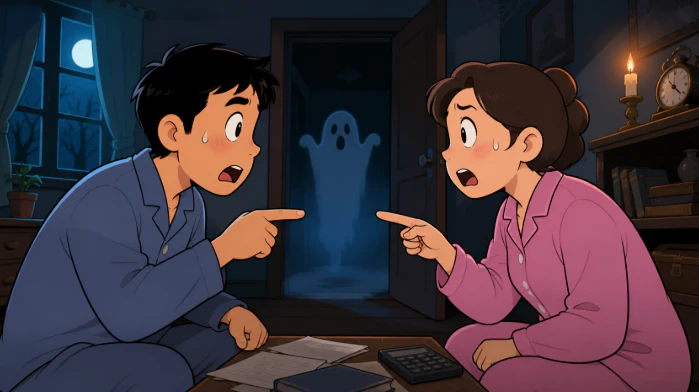
「兩公婆見鬼:唔係你就係我」這句廣東話歇後語,以誇張而帶點幽默的畫面,描繪一對夫妻同時遇到「見鬼」的情況。在這種極端而封閉的情境中,不可能有第三者介入,因此問題的來源只能在兩人之間。這句話的引申意思是:當事情發生在一個範圍極小的環境中,責任不可能外推,必定是當事人之一所造成。它常用於指出責任歸屬清晰,無法推諉的情況,也帶有一點直白甚至帶刺的語氣。在日常生活中,這種說法多見於對話或爭論之中,例如當兩個人共同負責某件事卻出現錯誤時,就會用這句話來提醒對方或自己:問題一定在彼此之中,不能再找藉口。這句歇後語同時反映出人際關係中的一種現實,即在親密或緊密合作的關係中,責任與影響往往彼此交織,難以完全分開,因此更需要坦誠面對與共同承擔。
English Version
This idiom paints a dramatic and slightly humorous image of a couple encountering something eerie together. In such a closed and limited situation, there is no room for outsiders, meaning the cause must lie with one of them. Figuratively, it expresses the idea that when a problem occurs within a very small group, responsibility cannot be shifted elsewhere—it must belong to someone directly involved. The phrase is often used in situations where accountability is clear and excuses are no longer convincing. It carries a direct tone, sometimes slightly sharp, emphasizing honesty and ownership. In everyday interactions, it may appear during disagreements or problem-solving moments, reminding those involved that the issue lies within their shared responsibility. Beyond blame, it also reflects the nature of close relationships, where actions and consequences are intertwined, making transparency and mutual accountability essential.
用法
中文
這句歇後語常用於指出責任範圍明確的情況,例如兩人合作出錯或只有少數人參與的事件中,用來強調不能推卸責任。語氣可嚴肅亦可帶點調侃,例如:「呢件事兩公婆見鬼,唔係你就係我。」
English Version
This expression is used when responsibility is clearly limited to a small number of people, often in teamwork or shared tasks. It highlights that blame cannot be avoided or passed on, and is typically used in a direct or lightly humorous tone.
小故事:
中文
阿傑與阿玲一起經營一家小店,平日分工清晰,一人負責採購,一人負責帳目。有一天,他們發現帳目出現差錯,金額對不上。兩人一開始都以為是系統問題,但檢查後發現沒有外部因素。阿玲皺著眉說:「呢單嘢兩公婆見鬼,唔係你就係我。」氣氛一度變得有些緊張。阿傑深吸一口氣,重新檢查採購單據,終於發現自己在記錄時漏了一筆。確認後,他坦白承認錯誤。阿玲沒有責怪,只是點點頭,一起把帳目修正。事情解決後,他們反而更清楚彼此的責任,也明白在合作關係中,問題不可避免,但面對與解決才是關鍵。這次經歷讓他們學會在壓力之下保持冷靜,並以更坦誠的態度面對未來的挑戰。
English Version
Ah Kit and Ah Ling ran a small shop together, dividing responsibilities between purchasing and accounting. One day, they discovered a discrepancy in their financial records. At first, they suspected a system error, but after checking thoroughly, no external issue was found. Ah Ling frowned and said, “It’s just the two of us—so it has to be one of us.” The atmosphere grew tense. Taking a deep breath, Ah Kit reviewed the purchase records again and eventually found that he had missed an entry. He admitted the mistake honestly. Instead of blaming him, Ah Ling simply nodded, and together they corrected the records. Afterward, they felt more aligned in their responsibilities and realized that mistakes are inevitable in close partnerships, but facing them openly is what truly matters. The experience strengthened their trust and prepared them for future challenges.
結語 中文
責任清晰時,逃避只會拖延問題。坦誠面對,往往才是解決的開始。
English Version
When responsibility is clear, avoidance only delays solutions. Facing it honestly is the first step forward.