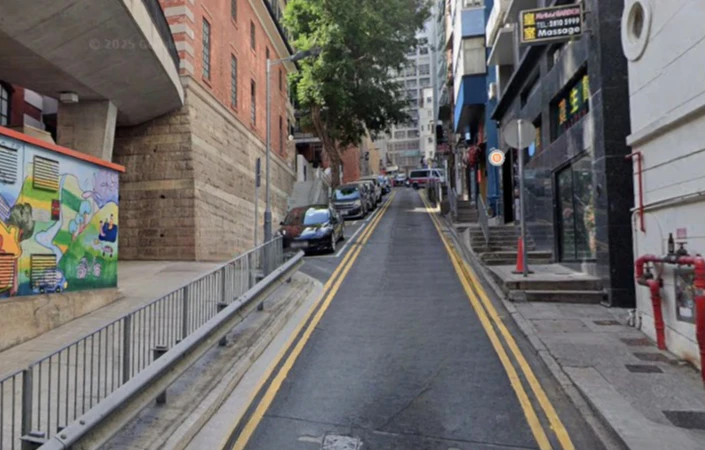
在香港中環與上環交界之間,奧卑利街靜靜延伸,其名稱來自英國著名司法地標,隱約映照出殖民時代法律制度如何滲透城市空間。
Set between Central and Sheung Wan, Old Bailey Street carries a name borrowed from London’s legal heritage, quietly reflecting how colonial law once shaped Hong Kong’s urban identity.
中文
奧卑利街(Old Bailey Street)位於香港島中環與上環交界,是一條規模不大但歷史意涵濃厚的街道,其名稱源自英國倫敦著名的刑事法院所在地「Old Bailey」,這種以英國本土地標命名香港街道的方式,是19世紀殖民時期常見的做法之一,反映出當時英國在城市規劃中,刻意將本國制度與文化符號移植至殖民地,以建立熟悉的行政與法律秩序。Old Bailey Street 的形成可追溯至香港開埠初期,當時中環與上環逐漸發展為政府、商業與華人社區交織的地帶,街道網絡隨之建立,而奧卑利街作為其中一條支街,承擔連接主要幹道與居住區的功能。19世紀中後期,隨著香港成為重要的貿易港口,該區人口迅速增加,建築密度提升,奧卑利街周邊逐漸出現住宅與小型商業活動,形成一種混合用途的城市空間。與中環核心的權力與金融象徵不同,這條街更貼近基層與日常生活,其存在反映出城市運作中不可或缺的「次要空間」。進入20世紀後,香港經歷戰爭與重建,城市結構逐步現代化,舊式建築被部分重建或改造,但奧卑利街仍然維持原有街道走向與尺度,使其成為觀察城市歷史延續的重要切片。從城市變化角度來看,奧卑利街見證了香港由殖民地港口轉型為國際都市的過程,昔日以法律與行政制度為核心的殖民象徵,逐漸轉化為多元而開放的城市文化,而街道本身則從單純功能性空間轉變為具有歷史與文化意義的場域。街道特色方面,奧卑利街呈現典型中上環風格,道路狹窄且帶有坡度,兩旁建築密集,既有舊式唐樓,也有經翻新的住宅與小型商業空間,部分牆面與細節仍保留過去的痕跡,營造出一種介於舊與新之間的城市氛圍,街道上人流不算密集,更多是居民與上班族的日常穿梭,使整體節奏相對平緩。今日的奧卑利街,不再直接與司法制度相關,但其名稱仍然提醒人們這座城市曾經深受英國法律體系影響,在快速變化的都市環境之中,這條街以低調的方式保存着歷史的記憶,讓人於行走之間感受到時間的層層疊加與文化的延續。
English Version
Old Bailey Street, located between Central and Sheung Wan on Hong Kong Island, is a modest yet historically resonant street whose name reflects the transplantation of British legal identity into the colonial city. The name “Old Bailey” originates from London’s famous criminal court, symbolizing law and judicial authority, and its adoption in Hong Kong illustrates a broader colonial strategy of embedding familiar institutional references into newly developed urban spaces. Emerging during the early phases of Hong Kong’s development in the mid-19th century, Old Bailey Street formed part of the expanding street network that supported the growth of administrative, commercial, and residential zones. While Central evolved into the epicenter of governance and finance, adjacent areas like Sheung Wan developed a more mixed character, accommodating both Chinese communities and smaller-scale businesses. Within this urban fabric, Old Bailey Street functioned as a connector—less prominent than major roads, yet essential in maintaining the flow and structure of the city. Throughout the late 19th and early 20th centuries, the area became increasingly dense, with tenement buildings, small shops, and local activities shaping its identity. Unlike grand boulevards associated with power and prestige, Old Bailey Street reflected the everyday reality of urban life. Following World War II and into the period of rapid economic growth, the district underwent gradual redevelopment, introducing modern buildings while retaining elements of its historical layout. This continuity allows the street to serve as a microcosm of Hong Kong’s transformation—from a colonial trading port to a global metropolis. Architecturally, the street features a mix of older residential structures and updated urban forms, with narrow passages, sloping terrain, and layered façades that capture different periods of development. The atmosphere remains relatively subdued compared to busier parts of Central, offering a more intimate perspective on the city. Today, Old Bailey Street no longer carries a direct association with the legal system, yet its name preserves a symbolic link to the colonial past. It stands as a subtle reminder that even in a highly modernized environment, traces of historical identity continue to shape the character of Hong Kong’s streets, quietly connecting past and present within the flow of everyday life.