
香港茶餐廳的年代:絲襪奶茶、菠蘿包與城市節奏的集體記憶 | The Era of Hong Kong Cha Chaan Teng: Silk-Stocking Milk Tea, Pineapple Buns, and the Rhythm of the City | 今日回望 | 第21章
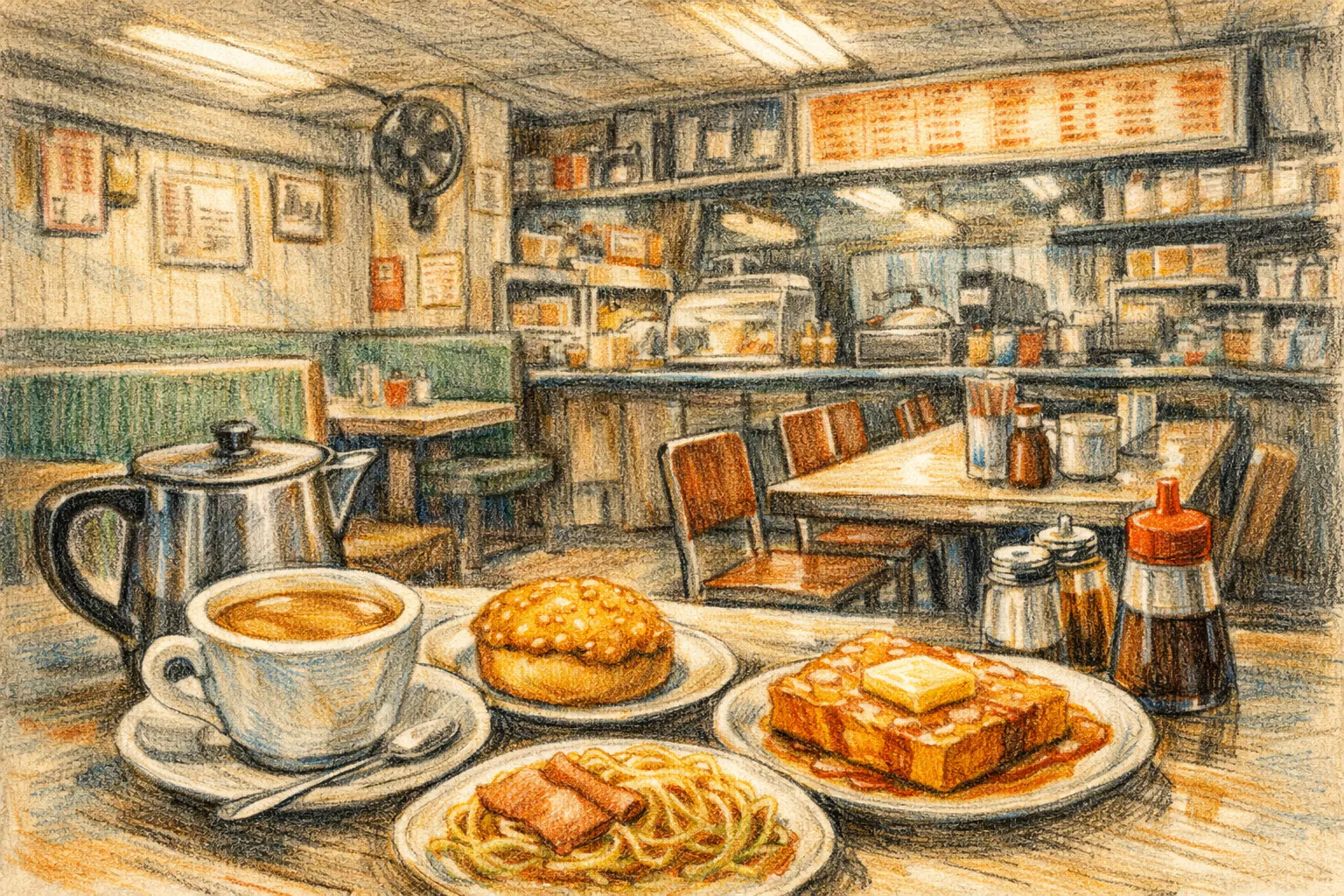
茶餐廳,是香港城市文化中最具代表性的日常空間之一。從戰後年代開始,茶餐廳逐漸取代舊式冰室與西餐廳,成為市民生活不可或缺的一部分。絲襪奶茶、菠蘿包、西多士與常餐,陪伴着無數香港人的早餐、午餐與深夜時光。茶餐廳不只是吃飯的地方,更是一種城市節奏的象徵——快速、實際、親民。無論是學生、上班族、街坊鄰里,還是剛下班的夜歸人,都能在這些燈光明亮的小店裡找到熟悉的味道與人情。回望茶餐廳的年代,其實也是回望香港最真實的日常生活。
Few places capture the spirit of Hong Kong quite like the cha chaan teng. With the aroma of silk-stocking milk tea and the comfort of pineapple buns, these cafés became part of everyday life. Fast-paced yet familiar, they reflected the city’s rhythm—where East meets West, and simple meals carried the warmth of shared routines and collective memory.
在香港的街角與鬧市之間,有一種餐廳幾乎陪伴着整個城市成長,那就是茶餐廳。對很多香港人來說,茶餐廳不只是一間餐廳,而是一種生活節奏,一種屬於城市的日常文化。
茶餐廳的歷史,可以追溯到戰後的香港。當時經濟開始復甦,大量市民投入工業與商業工作,生活節奏逐漸加快。舊式的冰室與西餐廳雖然存在,但價格較高,而且用餐時間較長,不太適合忙碌的城市生活。於是,一種融合中西飲食、價格親民、出餐快速的餐廳形式逐漸出現,這就是茶餐廳。
茶餐廳的最大特色,是中西合璧的餐單。這種飲食文化,是香港獨特歷史背景的產物。香港曾長期與西方文化接觸,西式飲食逐漸進入本地生活,但同時又保留了中國人的飲食習慣。於是,在茶餐廳的餐牌上,會同時看到西多士、三文治、火腿通粉,也會看到炒麵、炒飯、碟頭飯與即食麵。
其中最具代表性的飲品,就是絲襪奶茶。這種奶茶以濃茶加淡奶調製,再以細密的茶袋反覆沖泡,因茶袋形似絲襪而得名。沖製得好的奶茶,茶味濃郁而順滑,既香又醇,是不少香港人每天必喝的飲品。
除了奶茶,菠蘿包也是茶餐廳的象徵。這種麵包表面有一層酥皮,看起來像菠蘿外殼,但其實沒有菠蘿成分。剛出爐的菠蘿包外脆內軟,如果再夾上一塊厚厚的牛油,就成為不少人心中的經典早餐。
西多士也是茶餐廳的代表食品。兩片麵包夾上花生醬或其他餡料,再沾上蛋漿油炸,最後淋上糖漿或煉奶。這種看似簡單的小食,卻帶着濃厚的香港味道,常常成為下午茶的熱門選擇。
在茶餐廳裡,早餐文化尤其重要。香港人習慣吃「常餐」、「A餐」或「B餐」,通常包括通粉、炒蛋、多士與一杯奶茶或咖啡。這些早餐份量適中、價格合理,而且出餐速度很快,非常適合趕時間的上班族。
中午時分,茶餐廳則會推出各種碟頭飯,例如叉燒飯、豬扒飯、咖喱雞飯、滑蛋牛肉飯等。這些菜式份量充足,價格實惠,因此深受學生與打工仔歡迎。許多茶餐廳中午時段總是人聲鼎沸,店內店外都排滿等候用餐的人。
下午茶時段,是茶餐廳另一個熱鬧時刻。很多茶餐廳會推出特別的下午茶套餐,例如奶茶配多士、檸檬茶配蛋撻、或者西多士配咖啡。這些套餐通常價格較低,因此吸引不少學生與街坊。
到了晚上,茶餐廳依然忙碌。部分茶餐廳甚至營業到深夜,成為夜歸人的食堂。剛下班的工人、夜班司機、或者剛看完電影的年輕人,都可能走進茶餐廳吃一碗麵或喝一杯熱奶茶。
茶餐廳的另一個特色,是其獨特的語言文化。香港茶餐廳裡有許多只有本地人才聽得懂的用語。例如「飛沙走奶」代表奶茶不加糖不加奶,「齋啡」是黑咖啡,「凍檸茶少甜」則是常見的點單方式。這些語言簡潔直接,也反映了香港快節奏的生活方式。
在茶餐廳裡,座位通常擺放得比較密集,客人經常需要與陌生人「搭枱」。這種情況在香港十分普遍,大家很少感到尷尬。反而在這種環境下,城市的距離似乎被拉近,人與人之間形成一種默契。
許多老牌茶餐廳已經營數十年,成為社區的一部分。街坊每天在同一間茶餐廳吃早餐、看報紙、聊天,店員也記得常客的口味。這種熟悉的人情味,使茶餐廳不只是餐廳,更像是一個小型社區中心。
隨着時代變化,香港的飲食文化也在改變。連鎖快餐店與國際餐飲品牌逐漸增加,一些傳統茶餐廳也因租金上升而結業。然而,茶餐廳依然在城市中佔有重要地位。
近年不少新式茶餐廳開始出現,裝修更現代化,餐單也加入創新元素,例如黑松露炒蛋、特色奶茶或融合料理。雖然形式有所改變,但茶餐廳那種親民、快速與多元的精神依然存在。
對很多香港人來說,茶餐廳的味道就是家的味道。無論是清晨的一杯奶茶,還是深夜的一碗麵,都承載着城市生活的點滴。
回望香港茶餐廳的年代,其實也是回望香港的日常生活。那些擁擠的座位、熱騰騰的通粉、還有杯中冒着香氣的奶茶,都在默默記錄着這座城市的故事。
當人們走進一間茶餐廳,點一份簡單的早餐時,也許不會想到自己正在參與一段歷史。然而正是這些平凡的日子,構成了香港最真實的記憶。茶餐廳的燈光,也許普通,但它照亮的,是整個城市的生活。
English Version
In the ever-moving landscape of Hong Kong, cha chaan tengs emerged as one of the most defining spaces of local culture, embodying both the pace and personality of the city. These cafés, known for their wide-ranging menus and efficient service, were more than places to eat—they were reflections of Hong Kong’s unique identity, where Eastern traditions and Western influences blended seamlessly. From early morning breakfasts to late-night meals, cha chaan tengs operated as constant fixtures in daily life, accommodating people from all walks of society with an ease that felt both natural and essential. At the heart of the cha chaan teng experience is its food and drink, particularly the iconic silk-stocking milk tea. Brewed through a fine cloth filter that resembles a stocking, this tea achieves a smooth, rich texture that has become synonymous with Hong Kong itself. Paired with it is the equally beloved pineapple bun, a soft, slightly sweet bread topped with a crisp, golden crust. Often served warm with a slice of butter melting inside, it offers a simple yet deeply satisfying contrast of textures. These items are more than just menu staples—they are cultural symbols, representing the everyday pleasures that define life in the city. The menu of a cha chaan teng extends far beyond these classics, encompassing a wide array of dishes that reflect Hong Kong’s adaptability and creativity. Instant noodles served with luncheon meat or eggs, baked rice dishes topped with cheese, stir-fried noodles, sandwiches, and Western-style breakfasts all coexist within the same space. This diversity is not random but rooted in history, shaped by a period when Western cuisine was reinterpreted through local tastes and available ingredients. The result is a culinary style that feels both familiar and distinctive, offering comfort through its variety and accessibility. The atmosphere of a cha chaan teng is equally significant. Tables are often closely arranged, service is brisk, and orders are taken and delivered with remarkable speed. Yet within this efficiency lies a sense of familiarity. Regular customers are recognized, their preferences remembered, and their routines quietly acknowledged. Conversations overlap with the clatter of dishes and the calls of staff, creating a lively soundscape that mirrors the city outside. Unlike more formal dining establishments, cha chaan tengs encourage a certain informality—a space where people can eat quickly, linger briefly, or simply exist within the flow of daily life. Historically, cha chaan tengs developed during a time when Hong Kong was rapidly modernizing, absorbing external influences while forming its own cultural identity. They provided an accessible way for the general public to experience Western-style food, adapted to local preferences and budgets. Over time, they evolved into a distinctly Hong Kong institution, maintaining their relevance through consistency and adaptability. Their enduring popularity speaks to their ability to meet the needs of a city that is constantly in motion, offering both speed and comfort in equal measure. As Hong Kong continues to evolve, cha chaan tengs face new challenges. Rising costs, changing consumer habits, and the growth of international café chains have altered the competitive landscape. Some traditional establishments have closed, while others have adapted by modernizing their interiors or menus. Despite these changes, the essence of the cha chaan teng remains intact. It continues to serve as a space where people gather, where routines are formed, and where the rhythm of the city is both reflected and reinforced. For many, the experience of sitting in a cha chaan teng—holding a cup of hot milk tea, tearing into a warm pineapple bun, and listening to the surrounding hum—is deeply tied to memory and identity. It represents a version of Hong Kong that is immediate, unpretentious, and alive with human interaction. Even as the city changes, these cafés continue to anchor a sense of continuity, reminding people of the everyday moments that define who they are. Remembering the era of Hong Kong’s cha chaan tengs is not just about recalling food, but about understanding a way of life. It is about recognizing how culture is shaped through routine, how identity is expressed through taste, and how shared spaces create lasting connections. In their simplicity and energy, cha chaan tengs capture the essence of Hong Kong—dynamic, resilient, and deeply human.