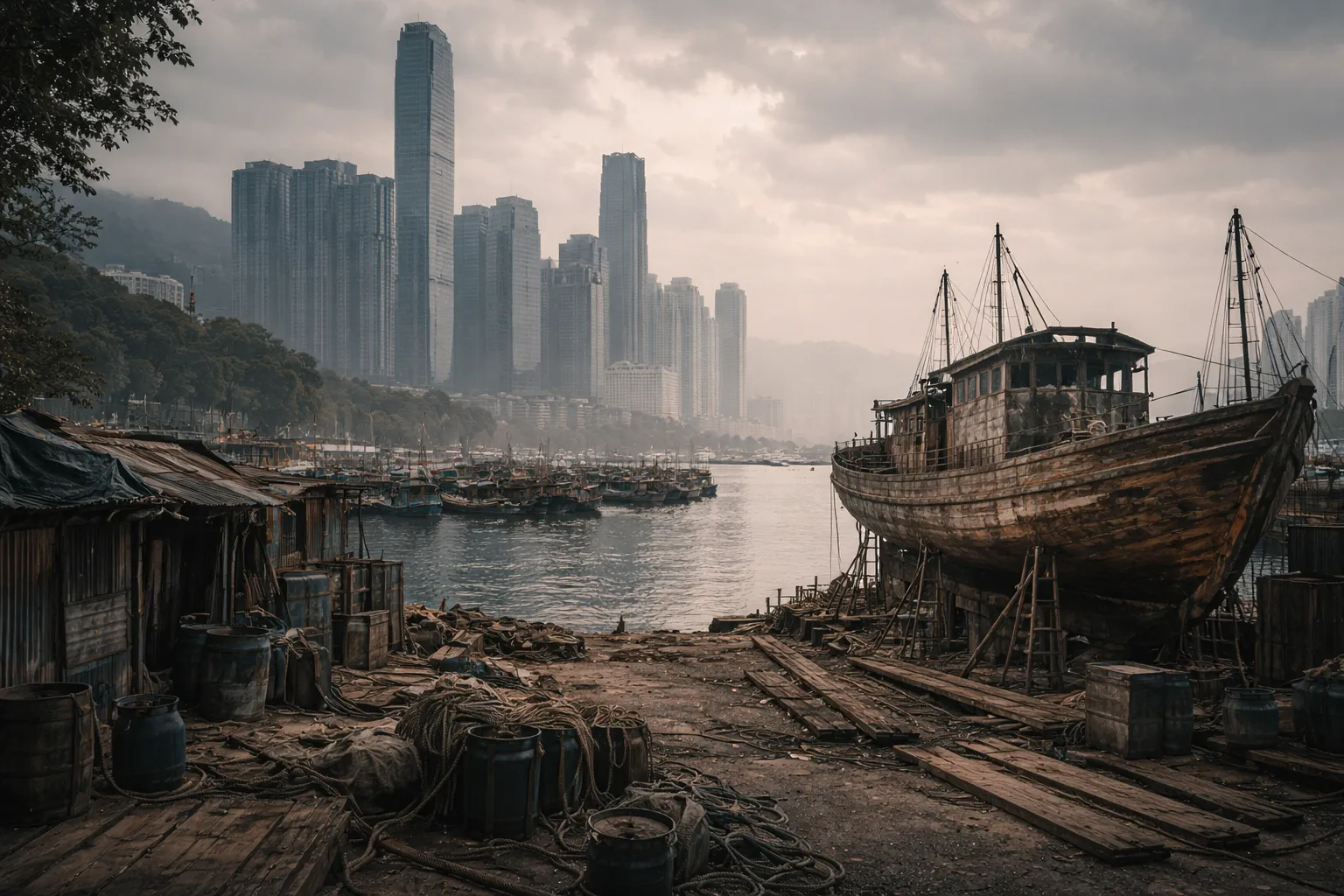
從海邊到寫字樓 | From Shorelines to Skyscrapers: Hong Kong’s Transformation from Coastal Living to Urban Skyline | 今日回望 | 第六章
那一代人從海邊走向寫字樓的過程,是一個城市發展的縮影,也是社會轉型的必然結果。這並非一個突如其來的改變,而是經過長時間的漸進式調整,逐步形成的現象。在這樣的背景下,個人選擇與集體命運交織,構成了一個時代的記憶。
Hong Kong’s story is one of constant transformation, where quiet shorelines gave way to towering office buildings. This shift reflects more than physical change—it reveals the evolution of livelihoods, identity, and urban rhythm. From fishing villages to financial districts, the city’s landscape tells a story of movement, ambition, and adaptation across generations.
在早期,海邊是許多人的生活核心。無論是造船、打魚還是其他與海洋相關的工作,這些都構成了他們日常生活的重要部分。海風、潮汐和船隻的聲音,都是那個年代不可或缺的背景音。對於他們來說,海不僅僅是一片水域,更是一種依賴、一種熟悉的節奏。然而,隨著城市化進程加速,許多人不得不告別這樣的生活方式。他們並不是突然之間就放下手中的工具,而是逐漸地,從每天的習慣中慢慢改變方向。
這種轉變並沒有明確的起點,也沒有一個特定的日子可以標記為分水嶺。就像潮水一樣,它悄然推進,當人們意識到時,已經身處另一個世界了。那些曾經習慣於在海邊生活的人們,開始穿上西裝,走進寫字樓。他們習慣了早上搭乘巴士穿越城市,進入高樓大廈裡工作。這些建築物有電梯、有空調、有固定的上下班時間,看似穩定且有秩序,但對於曾經習慣了自然節奏的人來說,卻顯得有些陌生。
初期,許多人並未完全割捨過去。他們把船上的工具留在家中,就像是一條心理上的退路。他們或許認為,這種新的生活方式只是暫時的,總有一天還會回到熟悉的海邊。然而,隨著時間推移,這條退路逐漸變得模糊不清。人們開始適應新的生活方式,開始習慣於用尺規量文件邊距,而不是測量鋼板的厚度;窗外的景色也從潮汐變成了對面大廈的玻璃反光。
這些變化並非人為強加,而是隨著城市發展自然發生的。當時的社會正在追求一種新的節奏,一種與過去截然不同的生活方式。準時、效率與穩定成為了新的價值標準,而工作的意義也從實物的重量轉移到數字、文件和簽名上。這樣的轉型對於某些人來說並不困難,他們很快融入其中;但對於另一些人來說,卻是一生都無法完全適應的過程。他們的身體或許仍記得海邊的感覺,但他們的生活卻早已遠離了那片水域。
週末時,有人會回到海邊,看著船隻駛過。然而,那些船對他們來說已經變得陌生。它們太新、太整齊,再也找不到當年那種「這艘船可能有我一部分」的連結感。他們只能遠遠地看著,感嘆那段日子已經成為過去。
這樣的轉變並不能簡單地被定義為進步或退步。它更多的是一種選擇,是城市在發展過程中必然要走的一條路。而那些曾經在海邊工作的人,只是恰好站在這條路上的某個位置。他們沒有被記錄在歷史書中,也很少出現在照片裡,但他們的選擇和轉變卻深刻地影響了城市的面貌。
香港之所以成為今天的模樣,不是因為某一次巨大的變革,而是因為無數個人默默地做出了選擇。他們放下了手中的工具,走進了寫字樓;他們改變了自己的生活,也改變了整座城市。在這樣的背景下,每一個人的故事都值得被記住,因為這些故事共同構成了一個時代、一座城市的記憶。
這段歷史提醒我們,在任何一個時代,個人的選擇都與社會發展息息相關。我們每個人或許都無法單獨改變世界,但我們的每一步,都在塑造著未來。而當我們回首過去時,那些看似微不足道的選擇,其實早已成為歷史的重要部分。
English Version
Hong Kong’s transformation from coastal settlements to a dense urban skyline represents one of the most striking shifts in its history. In earlier times, much of the city’s life was centered along the shoreline, where fishing villages, small docks, and maritime trade defined the rhythm of daily existence. The sea was not just a backdrop but a vital resource, shaping livelihoods and influencing the structure of communities. Boats lined the waters, and homes were often situated close to the coast, allowing residents to maintain a direct connection with the environment that sustained them. Life moved in accordance with natural cycles, guided by tides, weather, and the demands of fishing and trade. These coastal communities were tightly knit, built on shared labor and mutual dependence. Families often worked together, passing down skills and knowledge through generations. The pace of life, while demanding, allowed for a sense of continuity and familiarity. Interactions were personal, and relationships were reinforced through daily routines. The shoreline functioned as both workplace and social space, where people gathered, exchanged goods, and maintained a collective sense of identity rooted in the sea. As Hong Kong began to develop into a major port and trading hub, the importance of its coastal location intensified. Infrastructure expanded to support increasing maritime activity, with docks, warehouses, and transport networks gradually reshaping the landscape. Over time, land reclamation projects extended the shoreline outward, creating new space for development. This marked the beginning of a significant transition, as areas once dominated by water and small-scale activity were transformed into zones of commerce and industry. The relationship between land and sea began to shift, reflecting broader economic changes. The rise of office buildings and commercial districts signaled a new phase in Hong Kong’s evolution. As the economy diversified and global connections strengthened, the city’s focus moved toward finance, services, and international business. Skyscrapers emerged as defining features of the skyline, representing efficiency, ambition, and modernity. These structures replaced many of the earlier coastal environments, introducing a vertical dimension to urban life that contrasted sharply with the horizontal spread of fishing villages and docks. The transition from shorelines to skyscrapers was not merely architectural—it was deeply social and cultural. People moved from maritime occupations to office-based work, adapting to new routines and expectations. The rhythm of life changed, becoming more structured and time-driven, influenced by schedules, deadlines, and the demands of a globalized economy. Public spaces evolved as well, shifting from open coastal areas to dense urban environments where movement was more controlled and interactions more transient. This transformation brought both opportunities and challenges, reshaping how individuals experienced the city and their place within it. Despite the scale of this change, traces of the past remain embedded within the urban landscape. Place names, historical sites, and fragments of older infrastructure serve as reminders of Hong Kong’s coastal origins. In some areas, remnants of fishing culture and maritime life continue to exist, offering glimpses into a way of life that has largely receded. These elements provide continuity, linking the present to the past and preserving aspects of the city’s identity that might otherwise be lost. The transformation of Hong Kong also reflects broader themes of adaptation and resilience. The ability to shift from one economic model to another, to reimagine space and function, has been central to the city’s development. This adaptability has allowed Hong Kong to remain relevant in a rapidly changing global context, while also presenting ongoing questions about balance—between growth and preservation, efficiency and community, progress and memory. Reflecting on the journey from shoreline communities to towering office buildings offers insight into the complexity of urban change. It highlights how physical spaces are intertwined with social structures, and how shifts in one inevitably influence the other. The skyline, impressive as it is, represents only one layer of the city’s identity. Beneath it lies a history shaped by water, labor, and collective experience. In understanding this transformation, one gains a deeper appreciation for the multiple dimensions of Hong Kong—past and present, coastal and urban, grounded and aspirational.