重陽節的私人記憶|登高、秋風與敬老的傳統節日|Chung Yeung Festival Memories|Climbing Heights, Autumn Winds and Traditions of Respect | 包羅萬有 第18章
農曆九月初九的重陽節,在中國傳統節日之中,總帶著一種特別的季節感。它不像春節那樣熱鬧,也不像中秋那樣明亮,而是一個與秋天一起出現的節日。風開始變得清涼,天空顯得更高,山上的樹葉也慢慢轉色。重陽節總在這樣的時節到來。
很多人對重陽節的記憶,往往與登高有關。古人相信在九月初九登上高處,可以避邪,也象徵步步高升。於是登山便成為節日的一種習俗。當人們站在山頂,看見遠處的城市與田野,那種開闊的景象也像是在迎接秋天。
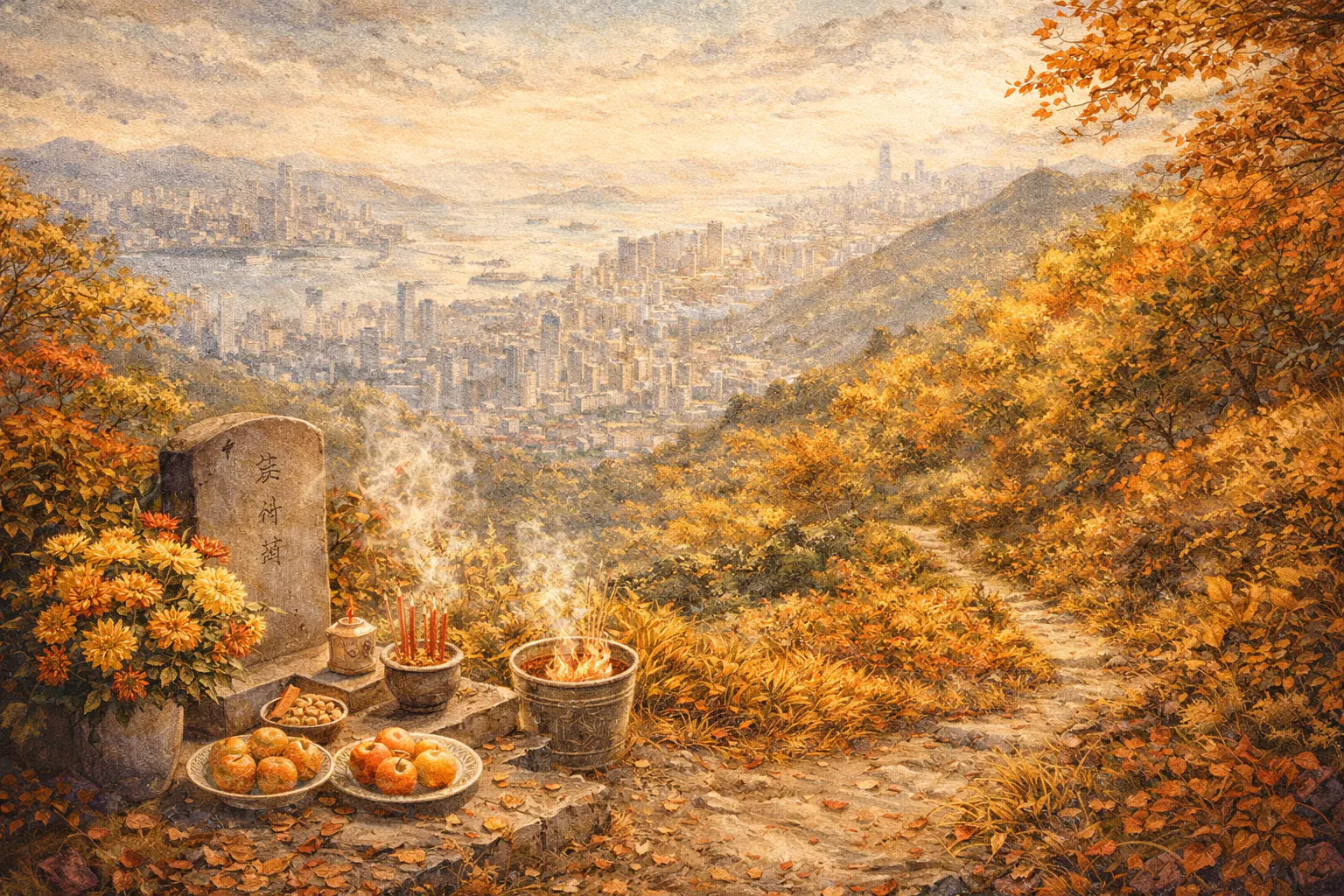
在香港,重陽節的景象常常出現在山坡與墓園之中。很多家庭會在這一天掃墓祭祖。人們帶著香燭、水果與紙錢,沿著山路慢慢走上墓地。那些山路在秋天的陽光下顯得格外清晰,草叢裡帶著一點乾燥的味道。
掃墓的儀式其實很簡單。先把墓碑周圍的雜草清理乾淨,再用水擦拭石碑。然後擺上水果與食物,點起香燭。紙錢在鐵桶裡慢慢燃燒,煙霧在山坡上飄散。這些畫面在很多人的記憶裡都十分熟悉。
對小孩來說,重陽節往往不像其他節日那樣容易理解。沒有煙花,也沒有燈籠。整個節日顯得安靜而莊重。但隨著年紀增長,人們慢慢明白這個節日的意義。它其實是一個與時間有關的節日。
重陽節也常被稱為「敬老節」。九在中國文化裡象徵長久,而九月初九的重陽節便被視為長壽與敬老的日子。許多地方會在這一天探望長輩,或是舉行敬老活動。這種習俗提醒人們,家庭與長輩在文化中的重要位置。
在古代,人們還會在重陽節佩戴茱萸,或是飲菊花酒。茱萸被認為可以驅邪,而菊花則象徵長壽。這些習俗雖然在今天已經不常見,但它們仍然存在於節日的歷史之中。
如果說春節是熱鬧的開始,那麼重陽節更像是一個沉靜的節日。它沒有喧鬧的慶祝,而是與自然的季節一起出現。當秋風吹過山坡,當天空顯得格外清澈,人們便知道秋天已經走得很深。
很多家庭的重陽節,其實也是一種記憶的延續。掃墓的時候,人們會談起祖先與長輩的故事。那些名字刻在石碑上,也存在於家族的回憶裡。孩子在旁邊聽著這些故事,慢慢理解家族的歷史。
在城市裡生活的人,平日很少有機會停下來思考時間。但在重陽節的山坡上,時間似乎變得清晰。墓碑上的年份提醒人們,生命是一條很長的線。每一代人都在這條線上留下自己的位置。
當掃墓結束,人們往往會在山上停留一會兒。有人看著遠處的海,也有人望著城市的高樓。秋天的陽光落在山坡上,空氣裡帶著微涼。那是一種平靜而清楚的感覺。
重陽節或許不像其他節日那樣被廣泛慶祝,但它有著一種獨特的意義。它提醒人們記得祖先,也提醒人們尊重長輩。在時間不斷向前的生活裡,這種記憶與尊重讓家庭保持聯繫。
當秋天慢慢走向深處,重陽節也悄悄過去。山上的香火逐漸散去,城市恢復平日的節奏。但那些在秋風裡留下的畫面——山路、墓碑、煙霧與陽光——仍然會在記憶裡停留很久。
也許正因為如此,重陽節總帶著一種溫和的情感。它不像節日的喧鬧,更像是一段安靜的回望。在秋天的天空之下,人們登上高處,看見過去,也看見未來。
English Version
As autumn deepens and the air begins to carry a subtle coolness, the Chung Yeung Festival introduces a quieter and more reflective dimension to the seasonal cycle, offering a moment where personal memory, cultural tradition, and the passage of time come together in a uniquely introspective way. Unlike more visually vibrant festivals, this occasion is often experienced through simple yet meaningful actions, most notably the act of climbing to higher ground, a tradition that symbolizes both physical elevation and a metaphorical distancing from misfortune, while also providing a space for contemplation and connection with the surrounding landscape. Hills, mountains, and elevated viewpoints become temporary gathering places, where individuals and families move away from the density of the city and into environments shaped by wind, light, and open sky, creating a contrast that enhances the emotional resonance of the experience. The presence of autumn wind plays a subtle yet significant role, shaping the sensory atmosphere of the festival, as it moves through trees and across paths, reinforcing a sense of transition and impermanence that aligns with the broader themes of the season. Beyond the physical act of climbing, the Chung Yeung Festival is deeply associated with remembrance and respect, particularly toward elders and ancestors, reflecting values that emphasize continuity, gratitude, and the acknowledgment of those who came before. Visiting ancestral graves, cleaning burial sites, and making offerings are practices that transform the festival into a moment of reconnection, where memory is not only recalled but actively maintained through ritual and presence. These actions, while quiet in nature, carry profound emotional weight, linking individuals to family histories and shared narratives that extend beyond immediate experience. In urban contexts, where space and time are often constrained, the festival creates an opportunity to pause and engage with these traditions, allowing moments of reflection to emerge within a fast-paced environment. The simplicity of the festival’s practices contributes to its accessibility, requiring no elaborate preparation or large-scale organization, yet offering a depth of meaning that resonates across generations. Food and seasonal elements also play a role, though less prominently than in other festivals, serving as subtle reminders of cultural continuity rather than central focal points. The visual landscape of the festival is shaped less by decoration and more by natural elements, with autumn colors, open vistas, and shifting light forming the backdrop against which activities take place, reinforcing a connection to the natural world that is often less visible in daily urban life. This emphasis on nature, elevation, and remembrance creates a layered experience that balances external movement with internal reflection, allowing participants to engage with both physical and emotional dimensions simultaneously. Over time, the Chung Yeung Festival has adapted to contemporary lifestyles, with modern transportation making elevated locations more accessible and urban cemeteries integrating traditional practices into structured environments, yet the core meaning remains unchanged, rooted in the act of remembering and honoring. The festival also highlights the role of personal interpretation, as individuals may choose to participate in different ways, from hiking and outdoor activities to quiet visits and private reflection, demonstrating the flexibility of tradition within modern contexts. In a broader cultural sense, the Chung Yeung Festival represents a moment within the annual cycle where attention shifts inward, focusing on memory, respect, and the relationship between past and present, offering a counterbalance to more outward-facing celebrations. Ultimately, it is this combination of movement, atmosphere, and emotional depth that defines the festival, transforming simple acts into meaningful experiences and allowing individuals to reconnect with both their surroundings and their own sense of continuity within time.