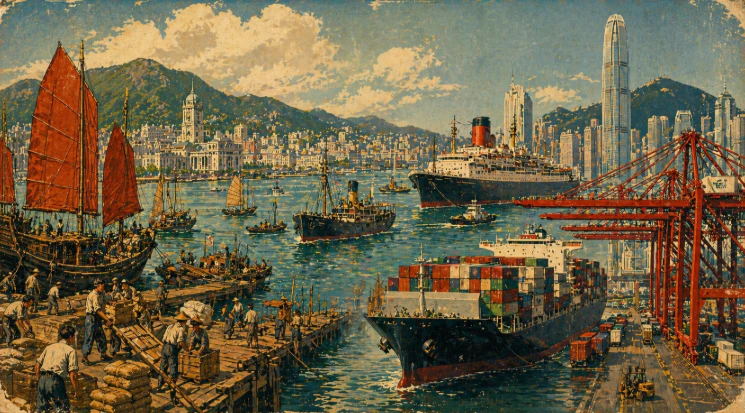
香港自開埠以來憑藉天然深水港優勢,迅速發展為重要航運中心,港口與海運活動不僅促進貿易往來,更塑造出城市的經濟命脈與國際地位。
With its deep natural harbour, Hong Kong quickly rose as a maritime powerhouse, where shipping routes and port activity became the backbone of its economy and a key link in global trade networks.
中文
香港的港口與航運發展,源於其得天獨厚的地理條件,維多利亞港水深港闊、避風良好,自十九世紀開埠後迅速吸引各國商船停泊與補給,使香港成為東亞重要的轉運港口之一,早期航運活動以帆船與蒸汽船為主,來自英國、印度與中國沿海的船隻在此交匯,貨物在港口裝卸與轉運,形成繁忙的海上交通網絡,港口周邊逐漸出現碼頭、倉庫與修船設施,支撐著不斷擴大的貿易需求,同時華人勞工在航運體系中扮演重要角色,從碼頭裝卸工到船員,構成整個港口運作的基礎力量,隨著航運技術進步與貿易規模擴大,香港逐漸建立起完善的港口管理與服務系統,包括航道規劃、燈塔設置以及海事管理制度,使船舶進出更加安全與高效,十九世紀末至二十世紀初,航運公司與船務代理相繼成立,提供貨運、保險與金融服務,進一步推動航運業專業化與國際化,香港不僅成為貨物流通的中轉站,也成為資訊與資本流動的重要節點,在二十世紀中葉,隨著全球貿易模式改變與工業化發展,香港港口迎來新一輪擴張,貨櫃化運輸的引入大幅提升效率,使香港躍升為世界主要貨櫃港之一,大量貨櫃碼頭建設於葵涌與青衣一帶,形成現代化港口設施,能夠處理來自全球的貨物流動,這一時期航運業與製造業緊密結合,香港出口商品透過港口迅速運往世界各地,鞏固其國際貿易地位,進入二十世紀後期至二十一世紀,隨著全球化深化與中國經濟崛起,香港港口角色進一步轉變,成為中國與世界之間的重要門戶,大量內地貨物經香港轉運至國際市場,同時香港亦發展高端航運服務,包括船舶管理、物流規劃與海事法律服務,使航運業由單純運輸升級為綜合服務體系,儘管面對區域競爭加劇,香港仍憑藉效率、制度與國際網絡保持競爭優勢,港口不僅是經濟基礎,更是城市身份的重要象徵,從早期帆船林立的海港,到今日巨型貨櫃船穿梭的航道,香港的航運發展見證了其從殖民地港口到全球物流中心的轉變,也反映出城市在不同歷史階段中不斷調整與升級的能力,使其在國際航運版圖中持續佔據關鍵位置
English Version
Hong Kong’s rise as a port and maritime hub is rooted in its exceptional natural harbour, where deep waters and sheltered conditions created an ideal anchorage that attracted vessels from across Asia and beyond following its establishment as a trading port in the nineteenth century, early shipping activity revolved around sailing ships and steam vessels connecting Britain, India, and the Chinese coast, with goods constantly being loaded, unloaded, and redistributed, forming a dense web of maritime exchange, along the waterfront, infrastructure such as docks, warehouses, and ship repair facilities expanded rapidly to meet growing demand, while Chinese labourers played a crucial role in sustaining operations, working as dockhands, sailors, and support workers who kept the port functioning efficiently, as trade volumes increased and maritime technology advanced, Hong Kong developed a more structured system of port management, including navigational routes, lighthouse installations, and regulatory frameworks that enhanced safety and efficiency, by the late nineteenth and early twentieth centuries, shipping companies and maritime agencies had emerged, offering integrated services that included cargo handling, insurance, and financial support, transforming the port into a sophisticated node within global trade networks, the mid-twentieth century marked another phase of expansion as industrial growth and changing trade patterns drove demand for more efficient logistics, the introduction of containerization revolutionized port operations, dramatically increasing capacity and speed, modern container terminals were constructed in areas such as Kwai Chung and Tsing Yi, enabling Hong Kong to become one of the world’s leading container ports, during this period, shipping and manufacturing were closely intertwined, with locally produced goods exported worldwide through the port, reinforcing its central role in international commerce, in the late twentieth and early twenty-first centuries, as globalization intensified and China’s economy surged, Hong Kong’s port evolved into a strategic gateway linking mainland production with global markets, while also expanding into high-value maritime services such as ship management, logistics coordination, and maritime law, despite increasing competition from regional ports, Hong Kong has maintained its relevance through efficiency, institutional strength, and global connectivity, the harbour remains not only an economic engine but also a defining feature of the city’s identity, from the age of crowded sailing junks to the era of massive container ships navigating busy sea lanes, Hong Kong’s maritime development tells a story of adaptation and resilience, illustrating how the city has continuously repositioned itself within the shifting landscape of global trade.