閉眼射靶:不妙的盲目行動|Shooting with Eyes Closed: When Blind Action Leads to Trouble|廣東話歇後語

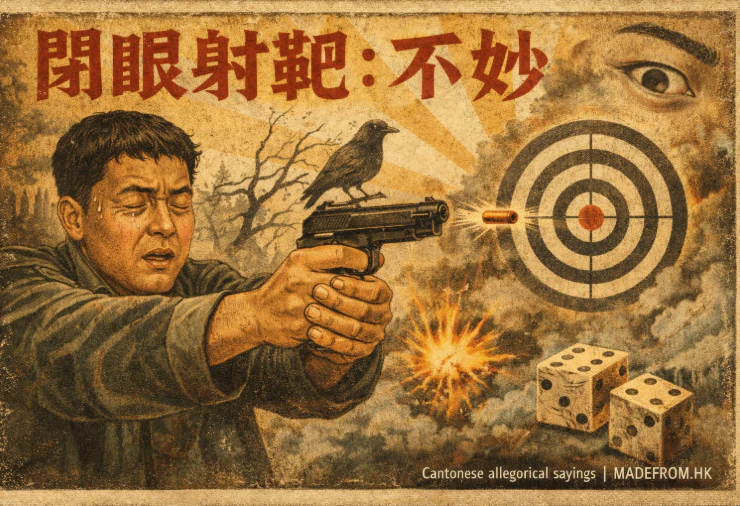
廣東話歇後語以生動場景反映人情世故,「閉眼射靶」就是一個典型例子。畫面中射手閉上雙眼仍試圖命中目標,看似勇敢,其實暗藏風險與荒謬。這句話常用來形容那些在缺乏判斷與準備下仍貿然行動的人,帶出對盲目行為的警醒。
Cantonese allegorical sayings often turn vivid imagery into sharp insight about human behavior. “Shooting at a target with eyes closed” paints a striking picture—one that seems bold but is fundamentally reckless. It captures the idea of acting without awareness or preparation, serving as a caution against blind confidence and careless decisions.
意思
「閉眼射靶:不妙」所表達的,是一種對盲目行動的批判。射靶本應講求準確與專注,需要觀察距離、風向與目標位置,但若閉上雙眼,便等同放棄所有判斷依據,只憑運氣行事。這種行為並非勇敢,而是缺乏理性與準備的表現。因此,這句歇後語常用來形容那些在資訊不足、計劃不周的情況下仍貿然決定的人。他們可能自信過頭,或急於求成,忽略了必要的分析與風險評估。在現實生活中,這種情況屢見不鮮,例如投資時不做研究、工作中草率決策、甚至在人際關係中憑感覺行事。這句話提醒人們,行動之前應先看清方向,否則再努力也可能事倍功半,甚至帶來反效果。它同時也帶有一種幽默的諷刺意味,讓人一聽便明白其中的不合理與危險。
English Version
The phrase “shooting at a target with eyes closed” criticizes actions taken without awareness or preparation. Shooting accurately requires focus, observation, and adjustment—distance, angle, and conditions all matter. Closing one’s eyes removes all these factors, turning the act into pure chance. Rather than bravery, it reflects a lack of judgment and readiness. This saying is often used to describe people who rush into decisions without sufficient information or planning. They may be overconfident or impatient, ignoring the need for careful thought and risk assessment. In everyday life, this can be seen in impulsive investments, poorly planned projects, or decisions driven purely by instinct without verification. The expression serves as a reminder that direction matters as much as effort. Without clarity, even determined action can lead to poor outcomes. It also carries a touch of humor, making the warning both memorable and relatable.
用法
這句歇後語常用於提醒或批評他人做事過於草率。例如當有人未經思考便作出重大決定時,可以說「你咁做等於閉眼射靶」。在朋友之間可作輕鬆調侃,但在工作或正式場合則帶有警告意味。它亦適用於描述整體策略失誤或缺乏方向的情況。
English Version
This saying is commonly used to warn or criticize hasty behavior. When someone makes an important decision without proper thought, one might say, “That’s like shooting with your eyes closed.” Among friends, it can be lighthearted teasing, while in professional settings it carries a more serious tone of caution. It is also useful for describing broader situations where planning or direction is clearly lacking.
小故事:
阿明一直想創業,最近聽朋友說某個項目很賺錢,便急不及待投入所有積蓄。他沒有仔細了解市場,也沒有做任何風險評估,只是憑著別人的一句話就決定行動。起初他信心滿滿,覺得自己很有膽識,但很快便發現問題重重,資金周轉困難,客源也不穩定。幾個月後,他不得不結束生意,損失慘重。朋友安慰他時說:「你今次真係閉眼射靶。」阿明這才明白,原來不是努力不夠,而是方向錯了。之後他重新規劃,學習市場分析,逐步累積經驗,終於在第二次創業時取得成功。這個經歷讓他深刻體會到,行動前的準備與判斷,比單純的勇氣更重要。
English Version
Ming had always dreamed of starting his own business. One day, he heard from a friend about a supposedly profitable opportunity and quickly invested all his savings. He did no research, no market analysis, and made no effort to understand the risks—he simply acted on a single recommendation. At first, he felt confident and bold, but problems soon emerged. Cash flow became unstable, customers were inconsistent, and the business struggled to survive. Within months, he had to shut it down, suffering significant losses. A friend later remarked, “That was like shooting with your eyes closed.” Ming realized that the issue wasn’t a lack of effort—it was a lack of direction. Determined to improve, he began studying the market and planning more carefully. When he tried again, he succeeded. The experience taught him that preparation and clarity matter far more than impulsive courage.
結語
「閉眼射靶」提醒我們,行動若缺乏方向與判斷,只會增加失敗的機會。與其盲目前進,不如先看清目標,再穩步出發。
English Version
“Shooting with eyes closed” reminds us that action without direction invites failure. Instead of rushing blindly, it is wiser to understand the target first and then move forward with clarity.